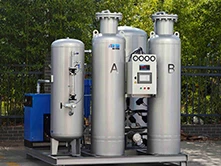
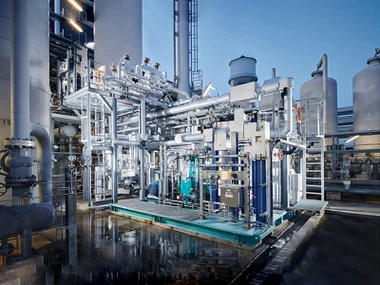
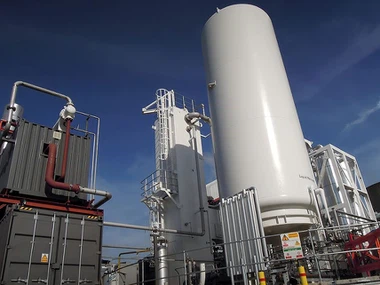
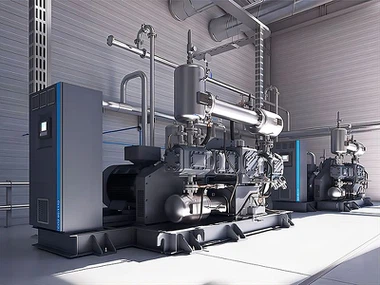
Industrial Liquid Oxygen and Nitrogen Producing Plant


Product Purity:
Liquid Oxygen: Industrial Grade ≥99.5% O₂, Food Grade ≥99.9% O₂, Electronic Grade ≥99.999% O₂;
Liquid Nitrogen: Industrial Grade ≥99.99% N₂, High Purity Grade ≥99.999% N₂, Ultrapure Grade ≥99.9999% N₂.


Flow rate: Customizable

Air Separation Unit in Steel Smelting


Core parameters


Product Type: cryogenic air separation plant
Available product: oxygen gas,liquid oxygen,nitrogen gas,liquid nitrogen
Oxygen purity: 99.60%
Nitrogen purity: 99.999%
Capacity: 50Nm/h-5000Nm3/h
Warranty time: 18 months
Service: Engineer oversea service available
Design: As your request


Liquid Oxygen and Nitrogen Plant Manufacturer


 Our equipment features a compact design, easy and efficient installation, and can quickly adapt to various industrial site layout requirements.

 Built-in high-efficiency liquid oxygen and liquid nitrogen pumps directly handle high-pressure gas filling conditions, eliminating the need for additional boosting equipment and significantly improving production continuity.

 The special stainless steel distillation tower, constructed to international industrial-grade material standards, offers excellent corrosion resistance and ensures output liquid oxygen purity exceeding 99.6% and liquid nitrogen purity exceeding 99.99%, perfectly meeting the stringent requirements of core industries such as metallurgy and chemical engineering.

 As a professional manufacturer with over 30 years of industry experience, our technical team has dedicated themselves to the research and development of industrial gas equipment. Our equipment reduces energy consumption by 15%-20% compared to traditional equipment, and its modular design of key components significantly reduces maintenance costs to the industry average.

 Integrating the latest energy-saving distillation technology with an intelligent control system, the equipment automatically adjusts operating parameters based on operating conditions, making it the preferred equipment for applications in industries such as steelmaking, coal chemical engineering, and electronics manufacturing. In addition to its stable high output capacity, the device's main structure has a service life of over 30 years, and its core components have a warranty period far exceeding industry standards.

 Furthermore, the equipment maintains a stable operating pressure of 8-10 bar, fully meeting the diverse gas pressure requirements of industrial production. Its operational safety and reliability have been proven under rigorous operating conditions.


Common model technical parameters


MODEL LIQUID OXYGEN CAPACITY PURITY OF OXYGEN
NEK-50 55 Liters / hr 1.5 Tons per day 99.7%
NEK-80 90 Liters / hr 2.5 Tons per day 99.7%
NEK-100 100 Liters / hr 3 Tons per day 99.7%
NEK-150 180 Liters / hr 5 Tons per day 99.7%
NEK-200 215 Liters / hr 6 Tons per day 99.7%
NEK-250 290 Liters / hr 8 Tons per day 99.7%
NEK-300 360 Liters / hr 10 Tons per day 99.7%
NEK-400 425 Liters / hr 12 Tons per day 99.7%
NEK-500 540 Liters / hr 15 Tons per day 99.7%
NEK-1000 1170 Liters / hr 30 Tons per day 99.7%
NEK-1500 1755 Liters / hr 45 Tons per day 99.7%
NEK-2000 2340 Liters / hr 60 Tons per day 99.7%
NEK-3000 3515 Liters / hr 90 Tons per day 99.7%
NEK-4000 4685 Liters / hr 120 Tons per day 99.7%
NEK-5000 5850 Liters / hr 150 Tons per day 99.7%


NOTE : THE SAME PLANT CAN ALSO PRODUCE LIQUID NITROGEN ALONG WITH 99.9% PURITY.



Reasons to choose us first, you might be interested


Contents
  1. What is the maximum production capacity of a single unit of liquid oxygen and liquid nitrogen production equipment? Can the capacity be customized to meet our needs?
  2. What is the energy consumption of the equipment? What are the estimated operating costs (e.g., electricity and maintenance)?
  3. What is the purity of the liquid oxygen and liquid nitrogen produced? Does it meet industry standards (e.g., for medical and industrial use)?
  4. How do we ensure product quality stability during long-term operation?
  5. Liquid oxygen and liquid nitrogen are hazardous materials. What safety measures are included in the equipment's design?
  6. Does the equipment installation and production comply with national and local environmental protection and safety regulations? Can we assist with relevant approval procedures?
  7. What is the lifespan of the equipment's core components? What are the maintenance cycles and costs?
  8. If the equipment fails, what is the after-sales service response time? Can backup equipment be provided?
  9. What is the initial investment for a medium-sized liquid oxygen and liquid nitrogen production facility? How long does it take to recoup the investment?
  10. What are the core advantages of building our own facility compared to purchasing liquid oxygen and liquid nitrogen from external suppliers?
  11. In addition to production equipment, can we provide a complete solution (such as storage tanks, transportation, and filling systems)?
  12. If future capacity expansion is needed, can the existing equipment be upgraded?

What is the maximum production capacity of a single unit of liquid oxygen and liquid nitrogen production equipment? Can the capacity be customized to meet our needs?


Our equipment capacities range from small (e.g., tens of cubic meters per hour) to large (thousands of cubic meters per hour). We can customize designs based on the customer's actual gas usage (e.g., chemical, medical, food, and other applications), ensuring a precise match between production capacity and demand, avoiding resource waste or supply shortages.


What is the energy consumption of the equipment? What are the estimated operating costs (e.g., electricity and maintenance)?


We use advanced low-energy compression technology and heat exchange design, which can reduce energy consumption by 10%-15% compared to traditional equipment. Operating costs should be calculated based on the specific production capacity and local energy prices. For example, for a 1000 Nm³/h liquid nitrogen unit, electricity costs account for approximately 60%-70% of the total cost, and annual maintenance costs typically do not exceed 2% of the total equipment price.


What is the purity of the liquid oxygen and liquid nitrogen produced? Does it meet industry standards (e.g., for medical and industrial use)?


Industrial-grade liquid oxygen can achieve purity exceeding 99.6%, while medical-grade liquid oxygen has a purity of ≥99.6% and complies with the national standard for "Medical Oxygen." Liquid nitrogen purity is typically 99.999% and can be increased to 99.9999% upon request. The equipment is equipped with an online purity monitoring system to ensure stable product quality.


How do we ensure product quality stability during long-term operation?


The equipment utilizes a fully automatic control system that monitors parameters such as temperature, pressure, and purity in real time, automatically adjusting when deviations occur. Key components (such as distillation columns and filters) are constructed from corrosion-resistant, low-polluting materials. We also provide regular quality inspection services and cooperate with customers in third-party testing to ensure consistent quality compliance.


Liquid oxygen and liquid nitrogen are hazardous materials. What safety measures are included in the equipment's design?


The equipment is equipped with multiple safety features: vacuum insulation in cryogenic piping to prevent frostbite; overpressure relief valves and liquid level alarms are installed in storage tanks; the electrical system meets explosion-proof standards; and an emergency shutdown system is installed to quickly shut off the gas supply in the event of an abnormality. We also provide safety operation training and assist customers in developing emergency response plans.


Does the equipment installation and production comply with national and local environmental protection and safety regulations? Can we assist with relevant approval procedures?


The equipment design fully complies with regulations such as the "Regulations on the Safety Management of Hazardous Chemicals" and the "Special Equipment Safety Law," and emission indicators (such as noise and exhaust gas) meet environmental protection requirements. We can provide a full set of technical documentation (such as equipment certificates and environmental impact assessment report templates) to assist customers in obtaining approvals from emergency management and environmental protection departments to ensure compliant production.


What is the lifespan of the equipment's core components? What are the maintenance cycles and costs?


The main equipment (such as air compressors and distillation towers) has a design lifespan of 15-20 years, while consumable parts (such as seals and filters) have a lifespan of 1-3 years and can be replaced individually. Regular maintenance is performed every three months (for valve and instrument inspections), with an annual overhaul. Maintenance costs vary with equipment size, but average annually they are approximately 1%-3% of the total equipment price.


If the equipment fails, what is the after-sales service response time? Can backup equipment be provided?


We offer 24/7 online technical support and have spare parts warehouses in key locations for rapid component dispatch. For customers with continuous production, we can negotiate the provision of backup storage tanks or small oxygen concentrators to minimize downtime losses.


What is the initial investment for a medium-sized liquid oxygen and liquid nitrogen production facility? How long does it take to recoup the investment?


A medium-sized facility (e.g., 500-1000 Nm³/hour) costs approximately 5-15 million RMB (including equipment, installation, and auxiliary materials). The payback period is typically 3-5 years, depending on local energy prices, gas demand stability, and market prices. (Compared to purchasing liquid oxygen and liquid nitrogen from external suppliers, building our own facility can reduce long-term costs by 30%-50%).


What are the core advantages of building our own facility compared to purchasing liquid oxygen and liquid nitrogen from external suppliers?


Building our own facility ensures stable supply (avoiding the risk of shipping delays or supply disruptions associated with external procurement), manageable costs (unaffected by market price fluctuations), and customized purity (meeting specific needs). In the long term, this makes it particularly suitable for customers with large gas consumption (e.g., over 10 tons per day) or who require a high level of supply stability.


In addition to production equipment, can we provide a complete solution (such as storage tanks, transportation, and filling systems)?


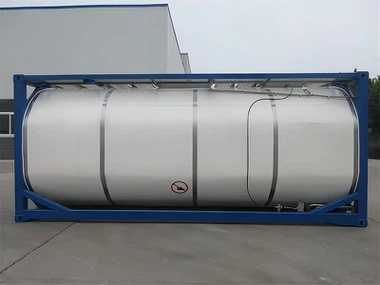
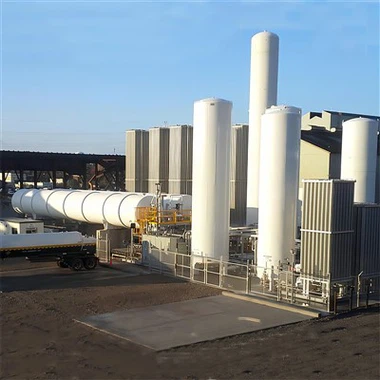
We offer a one-stop service, including equipment production, storage tank design (vertical/horizontal, 1-100m³), pipeline laying, filling equipment (such as cryogenic pumps and filling guns), and even assistance with transportation route planning and vehicle selection, meeting the needs of the entire supply chain from production to end-use.


If future capacity expansion is needed, can the existing equipment be upgraded?


The equipment design includes expansion ports. Capacity can be increased by adding distillation trays, upgrading the air compressor power, and other methods (typically by 30%-50%), avoiding duplicate investment. We will discuss future plans with customers during the initial design phase to ensure the feasibility of the upgrade.

As one of the most professional liquid oxygen and nitrogen plant manufacturers and suppliers in China, we warmly welcome you to wholesale high purity liquid oxygen and nitrogen plant from our factory. All custom made products are with high quality and competitive price.

ASU Oxygen Plant, Nitrogen Air Separation Unit, Air Liquide Air Separation Unit