

 日本語
日本語 한국어
한국어 Français
 Deutsch
 Español
 Italiano
 Português
 Việt Nam
 Türkçe
 عربي
عربي  русский
  简体中文
简体中文 Čeština
 ไทย
ไทย Eesti
Eesti Gaeilgenah Éireann
 Bai Miaowen
 íslenska
 Cymraeg
 Български
 اردو
اردو Polski
 hrvatski
 українська
 bosanski
 فارسی
فارسی Lietuvių
 Latviešu
 עברית
עברית România limbi
 Ελληνικά
 dansk
dansk magyar
 Norsk
Norsk suomi
suomi Nederlands
 Svenska
 slovenčina
 slovenščina
 हिंदी
हिंदी Indonesia
 Melayu
 Malti
Malti Kreyòl Ayisyen
 Català
 বাংলা
বাংলা Srbija jezik (latinica)
 O'zbek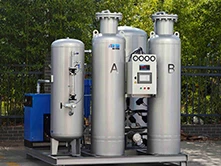
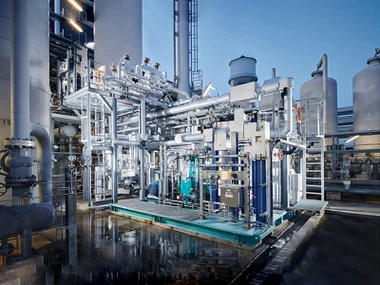
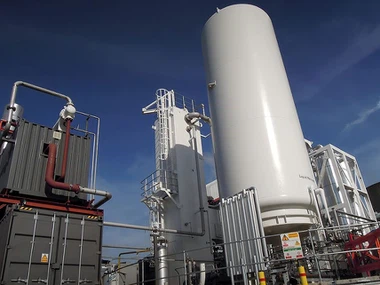


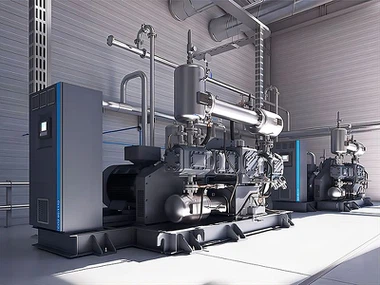
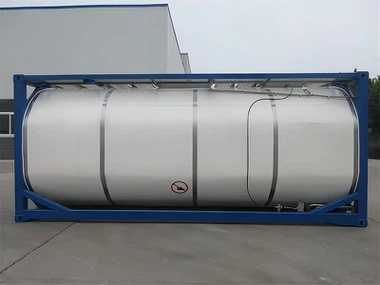


Liquid Oxygen Air Separation Plant
●Nitrogen purity: 99.999%
●Capacity: 50Nm3/h-5000Nm3/h
●Application areas: Chemical, electronics, food, medical, new energy, petroleum, pharmaceuticals
Description
Technical Parameters
Liquid Oxygen Air Separation Plant Features
●Efficient separation: With deep freezing technology, the oxygen purity can reach more than 99.6%, and the oxygen production per hour covers several cubic meters to thousands of cubic meters, which is suitable for various needs from laboratory to industrial level.
●Energy-saving and stable: Equipped with intelligent temperature control system, the energy consumption is reduced by more than 15% compared with traditional equipment; the core components are designed to be wear-resistant, and the continuous operation life exceeds 10,000 hours.
●Flexible adaptation: Supports modular assembly and can adjust the scale according to the site; compatible with diesel, mains and other power modes, meeting the needs of field operations or fixed factory scenes.
●Safe and reliable: Built-in pressure warning and low-temperature leakage monitoring devices meet international safety standards such as ASME and GB.

Core technical details
Cryogenic Distillation Core
The cryogenic distillation tower is the core of separation, and it achieves efficient separation through a "double tower structure" - the lower tower first separates the oxygen-rich liquid air, and the upper tower further purifies it to a purity of more than 99.6%. The tower is filled with high-efficiency structured packing, which increases the separation efficiency by 20% compared to traditional sieve plate towers and reduces pressure drop losses.
Air Pre-treatment Tech
The pretreatment system includes three-stage filtration (dust removal, oil removal, and water removal) and molecular sieve adsorption, which can reduce the content of impurities such as moisture and carbon dioxide in the air to below 0.1ppm, avoiding clogging of cryogenic equipment or affecting oxygen purity.
Refrigeration System
The turbine expansion mechanism is used for refrigeration, which is 30% more efficient than piston refrigeration and has an operating noise level of less than 85dB. Some large equipment is equipped with a "double expander" design to ensure refrigeration stability under extreme working conditions.
Key indicators for selection
Oxygen Purity Requirement
Medical scenarios require ≥99.5%, metallurgical industry generally requires 99.2%-99.6%, if used in the electronics industry (such as semiconductor oxidation process), it needs to be matched with a deep purification device to reach 99.999%.
Production Capacity Matching
Calculated according to "peak demand × 1.2" - for example, if the average daily oxygen consumption in a hospital is 500m³, it is recommended to select equipment with an hourly capacity of more than 30m³ to reserve emergency reserves.
Energy Supply Condition
Electric models are preferred in areas with stable mains power; remote mining areas, construction sites, etc. can choose "diesel + mains" dual-power models to ensure continuous oxygen supply during power outages
FAQ
1. Will the noise generated by the equipment be very loud when it is running? Is it necessary to do additional sound insulation when it is used near residential areas?
The operating noise of mainstream equipment is controlled below 85dB, which is equivalent to the sound of normal conversation. If it is used near residential areas, additional sound insulation is generally not required when it is more than 10 meters away from the residential area; if the distance is closer (within 5 meters), a soundproof cover can be installed to further reduce the noise by 20-30dB.
2. If there is a sudden power outage, will there be safety problems with the liquid oxygen in the equipment?
No. The equipment is equipped with an emergency pressure maintenance system, which can automatically seal the oxygen storage components after a power outage to maintain a low temperature environment; at the same time, it is equipped with a pressure relief valve, which will automatically release pressure if the internal pressure rises abnormally to ensure safety. If it is equipped with a dual-power model, it can also quickly switch to diesel power to reduce the impact of downtime.
3. Are there any special requirements for the storage of liquid oxygen? Do the accompanying Liquid Oxygen Storage Tanks need to be inspected regularly?
Liquid oxygen needs to be stored in a special vacuum-insulated storage tank to avoid violent collisions and high temperature environments. The storage tank needs to be tested for vacuum and pressure once a year to ensure insulation and sealing effects, and a comprehensive safety assessment should be conducted every 3 years.
4. Will the operation of the equipment in a low-temperature environment in winter affect the separation efficiency and service life?
In an environment above -10℃, the operation of the equipment is basically unaffected; if the temperature is lower than -10℃, the equipment's own insulation and heating device can be turned on to prevent the pipes from freezing. As long as low-temperature protection is done well, the separation efficiency will not decrease, and there will be no additional impact on the service life.
Hot Tags: liquid oxygen air separation plant, China liquid oxygen air separation plant , suppliers, factory, Liquid Oxygen and Nitrogen Plant, Air Liquide Air Separation Unit, Nitrogen Air Separation Unit, ASU Oxygen Plant
Previous
Liquid Nitrogen Production UnitNext
ASU Oxygen PlantSend Inquiry
Get in Touch
Write Your Message


