

 日本語
日本語 한국어
한국어 Français
 Deutsch
 Español
 Italiano
 Português
 Việt Nam
 Türkçe
 عربي
عربي  русский
  简体中文
简体中文 Čeština
 ไทย
ไทย Eesti
Eesti Gaeilgenah Éireann
 Bai Miaowen
 íslenska
 Cymraeg
 Български
 اردو
اردو Polski
 hrvatski
 українська
 bosanski
 فارسی
فارسی Lietuvių
 Latviešu
 עברית
עברית România limbi
 Ελληνικά
 dansk
dansk magyar
 Norsk
Norsk suomi
suomi Nederlands
 Svenska
 slovenčina
 slovenščina
 हिंदी
हिंदी Indonesia
 Melayu
 Malti
Malti Kreyòl Ayisyen
 Català
 বাংলা
বাংলা Srbija jezik (latinica)
 O'zbek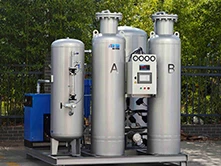
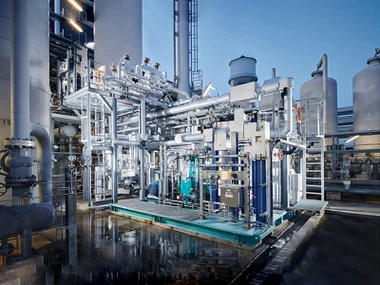
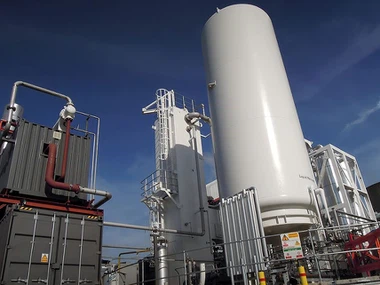


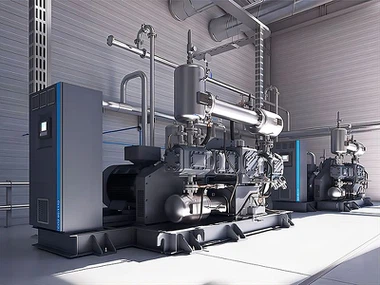
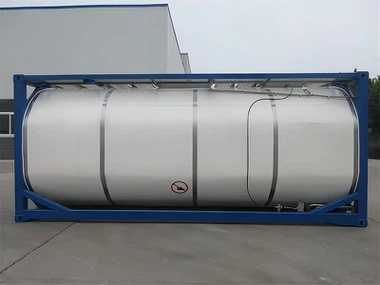


Liquid Nitrogen Production Unit
Description
Technical Parameters
Core Advantages
●High-Purity Liquid Nitrogen Production: The equipment consistently produces liquid nitrogen with a purity of ≥99.9%, with some high-end models exceeding 99.999%, meeting the demands of industries with extremely high purity requirements, such as the biomedical and electronics industries.
●Energy-Efficient Design: Advanced heat exchanger and refrigeration technologies improve energy efficiency and reduce energy consumption per unit of liquid nitrogen production. For example, some equipment achieves energy savings of 15%-20% compared to traditional equipment by optimizing compressor operating parameters and improving the refrigeration cycle, effectively controlling operating costs.
●Modular and Flexible Configuration: The equipment utilizes a modular design, allowing users to flexibly select and combine different production capacity modules based on actual liquid nitrogen usage and site conditions. This adaptability ranges from small laboratory equipment (3-50 L/H flow rate) to large industrial plants (10-200 m³/H flow rate), making it easy to expand and upgrade over time.
●Stable and Reliable Operation: Key components are manufactured from high-quality materials, such as the compressor's durable screw structure and the molecular sieve's long-lasting adsorption life. An intelligent control system monitors operating parameters (temperature, pressure, flow, etc.) in real time and automatically adjusts operating conditions to ensure long-term stable operation and minimize downtime.

There are two common separation methods:
|
Separation Technology |
Core Principle |
Key Params |
Core Process |
Technical Features |
|
PSA Technology |
Molecular sieves adsorb O₂/CO₂ under pressure; N₂ passes |
LN₂ temp: ~-196℃; Adsorption needs pressurization |
1. Air pretreatment → 2. Pressurized adsorption → 3. High-purity N₂ → 4. Cooling & liquefaction → 5. LN₂ collection |
Simple process; flexible start-stop; sieves need replacement; small-medium scale |
|
Cryogenic Distillation |
N₂ (-196℃) & O₂ (-183℃) separated via repeated evaporation-condensation in column |
Air liquefaction temp: ≤-180℃ |
1. Air pretreatment → 2. Cooling to liquefy → 3. Distillation separation → 4. N₂ liquefaction → 5. Storage |
High efficiency; large-scale continuous production; deep cooling needed; long start-stop cycle |
liquid nitrogen production unit application
Biomedical
Used for ultra-low temperature long-term preservation of biological samples such as cells, tissues, blood, and embryos, maintaining sample viability and preventing ice crystal damage. In cryogenic surgery, such as liquid nitrogen cryotherapy for treating skin lesions (moles, warts, benign tumors, etc.), it provides a precise cryogenic treatment environment.
Food Processing
Rapidly freezing seafood, meat, fruits, and vegetables, rapidly passing through the ice crystal zone, reduces ice crystal formation, and maximizes the preservation of the food's original flavor, texture, and nutritional content. In food packaging, it is sprayed as a refrigerant to reduce humidity within the package, prevent moisture and oxidation, and extend shelf life.
Industrial Manufacturing
Liquid nitrogen is used to rapidly cool metal surfaces during metal casting, welding, and cutting, reducing thermal deformation and cracking while enhancing metal strength and toughness. In plastic molding, it is used for mold cooling and freezing plastic pellets to optimize the quality of plastic products.
Research Experiments
Provides the necessary conditions for low-temperature experiments in physics, chemistry, materials science, and other fields. As a cryogenic medium or reaction atmosphere, it helps researchers explore the properties and reaction patterns of substances at extreme low temperatures.
fAQ
For small-scale LN₂ needs (e.g., lab or small factory), which separation technology (PSA or Cryogenic Distillation) is more suitable?
PSA Technology is better. It has flexible start-stop (no long pre-cooling time) and smaller equipment footprint, which matches the intermittent, low-volume LN₂ demand of labs or small factories.
How often do molecular sieves in PSA-type LN₂ units need replacement? Are there factors that affect the cycle?
Typically 2-3 years. The cycle is affected by air quality (more dust/moisture shortens life) and usage frequency (continuous operation may reduce it to 1.5-2 years).
Does Cryogenic Distillation-type LN₂ unit really need a long startup time? Why is that?
Yes, it usually takes 8-12 hours to start. Because it needs to cool the system to ≤-180℃ (for air liquefaction) step by step, which is why it's more suitable for large-scale continuous production (avoid frequent startups).
What's the key temperature for LN₂ liquefaction in PSA units? Is this temperature fixed?
The key temperature is approximately -196℃ (nitrogen's boiling point). It's basically fixed, but the cooling time may vary slightly based on the unit's cooling capacity and ambient temperature.
Hot Tags: liquid nitrogen production unit, China liquid nitrogen production unit , suppliers, factory, ASU Oxygen Plant, Liquid Oxygen and Nitrogen Plant, Nitrogen Air Separation Unit, Air Liquide Air Separation Unit
Previous
No InformationSend Inquiry
Get in Touch
Write Your Message


