

 日本語
日本語 한국어
한국어 Français
 Deutsch
 Español
 Italiano
 Português
 Việt Nam
 Türkçe
 عربي
عربي  русский
  简体中文
简体中文 Čeština
 ไทย
ไทย Eesti
Eesti Gaeilgenah Éireann
 Bai Miaowen
 íslenska
 Cymraeg
 Български
 اردو
اردو Polski
 hrvatski
 українська
 bosanski
 فارسی
فارسی Lietuvių
 Latviešu
 עברית
עברית România limbi
 Ελληνικά
 dansk
dansk magyar
 Norsk
Norsk suomi
suomi Nederlands
 Svenska
 slovenčina
 slovenščina
 हिंदी
हिंदी Indonesia
 Melayu
 Malti
Malti Kreyòl Ayisyen
 Català
 বাংলা
বাংলা Srbija jezik (latinica)
 O'zbek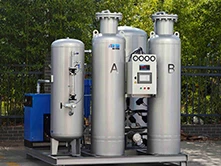


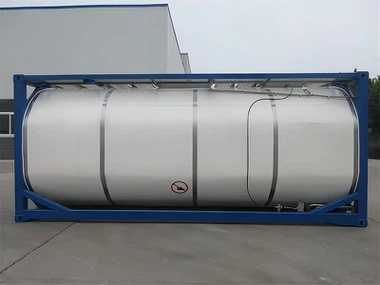


Air Separation Units (ASU) - Industrial Gas
Your Professional Air Separation Unit Manufacturers
As a leader in advanced gas system solutions, NEWTEK ’s core air separation unit (ASU)—a key support for high-end industrial applications—relies on the technological advantages of "simultaneous multi-component purification and large-scale stable gas supply. " It liquefies air via compression-cycle deep-freezing, then precisely separates oxygen, nitrogen, argon, etc., by boiling point differences, consistently producing gases over 99.999% pure and simultaneously extracting rare gases like neon, krypton, xenon. Ideal for traditional metallurgical oxy-fuel combustion, new coal-to-chemical ammonia synthesis, and large-scale nitrogen fertilizer production, the ASU not only meets large-scale industries’ continuous gas demand but also showcases NEWTEK’s technical strength and engineering project implementation capabilities.
Flow: >50TPD
purity:>99.6%


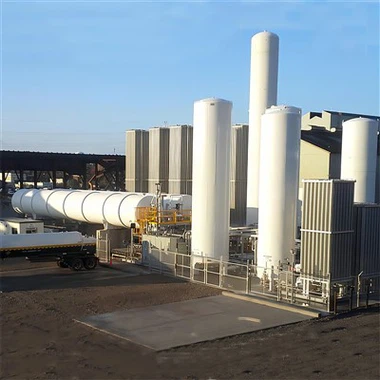
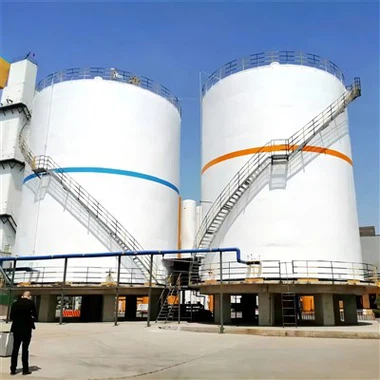
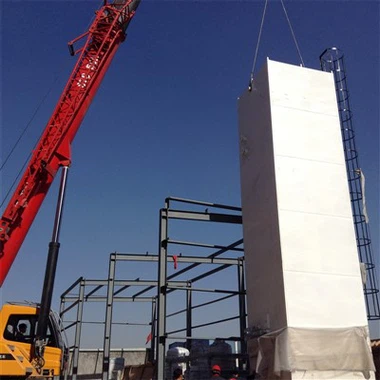
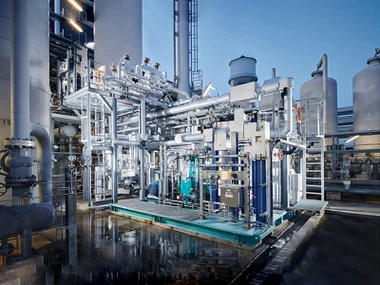
An Air Separation Unit is an industrial facility. It functions by cooling and liquefying air first. Then, leveraging cryogenic distillation based on the different boiling points of gases in the air, it separates the atmosphere into main components, mainly including oxygen, nitrogen and argon. The produced pure gases are widely used in industrial and medical fields. The process is energy - intensive and relies on components such as compressors, distillation columns and molecular sieves. Also, an ASU can separate the atmosphere into its primary components like nitrogen, oxygen, and sometimes argon and other rare gases, typically composed of elements including air compressors, air purification systems, heat exchangers, cryogenic cooling systems and distillation columns.
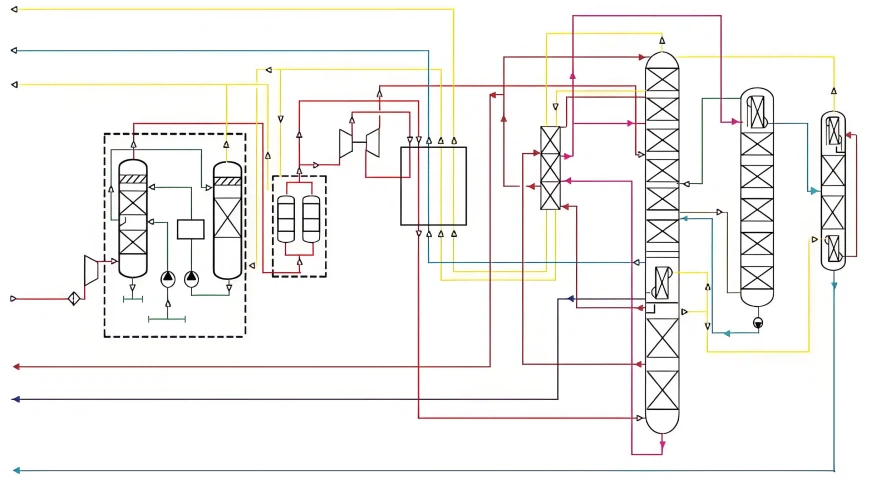
Air separation methods
NEWTEK provides you with cutting-edge gas solutions
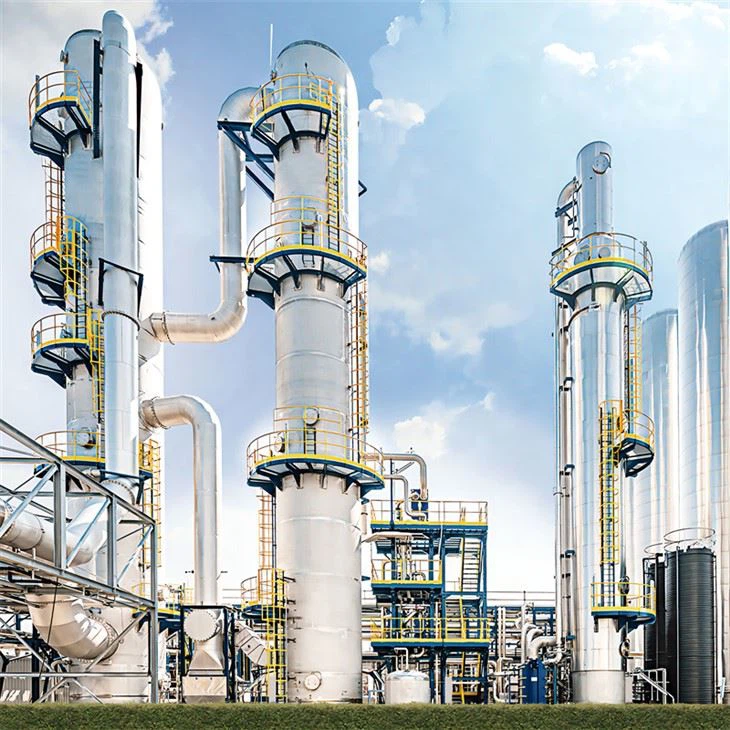
Cryogenic distillation first cools air to liquefy it, then selectively separates its components based on their boiling point differences through distillation. This produces high-purity gas, but it consumes a lot of energy. The system requires tightly integrated heat exchangers and separation columns to maintain efficiency, with refrigeration energy coming from the inlet air compressor.
To achieve low temperatures, air separation plants employ two refrigeration cycles: utilizing isothermal throttling via a throttling device, or isentropic expansion via an expander. Cryogenic equipment must be housed in a "cold box" (insulated enclosure) to minimize cooling losses.
Other Air Separation Methods
●Membrane separation technology: Low energy consumption and flexible parameters. Room-temperature polymer membranes produce 25%-50% oxygen-enriched air; ceramic membranes (ITM and OTM) require temperatures of 800-900°C and can produce high-purity oxygen exceeding 90%. They can be used to produce oxygen-depleted or nitrogen-enriched gas for passenger aircraft fuel tanks to reduce risk, and can also provide oxygen-enriched air for pilots of high-altitude, unpressurized aircraft.
●Pressure Swing Adsorption (PSA): Operating at room temperature and requiring no liquefaction, PSA uses zeolite (a "molecular sponge") for high-pressure adsorption and reduced-pressure desorption to separate oxygen and nitrogen. This compact compressor can be used to manufacture portable medical oxygen concentrators. Vacuum Pressure Swing Adsorption (VPSA) is similar, with only the target gas being desorbed at subatmospheric pressure
Working Principle of an Air Separation Unit (ASU)
Although air separation units can utilize a variety of technologies, such as membrane separation and pressure swing adsorption, cryogenic fractionation (distillation) remains the mainstream core technology for achieving efficient, high-purity separation. Its typical operation process is divided into four key stages:
Compression Stage
Atmospheric air is first drawn into the ASU and then enters a multi-stage compressor system for pressurization. The core purpose of this stage is to increase the air pressure, thereby reducing energy consumption and improving efficiency in the subsequent cooling and separation processes. The air pressure is typically controlled within a range of 5-10 barg, laying the foundation for subsequent processes.
Purification Stage
The pressurized air first passes through a purification system to remove impurities, primarily moisture, carbon dioxide, and trace amounts of oil, dust, and other pollutants. This step is crucial: it ensures the high purity of the final output gas, meeting the requirements of industrial and medical applications; it also prevents impurities from freezing or accumulating in the subsequent low-temperature environment, preventing blockage of heat exchangers, pipelines, and other equipment, thereby ensuring stable operation of the unit.
Cooling Stage
The purified compressed air enters a cooling system consisting of a heat exchanger and a refrigeration cycle (such as the Linde or Kraut cycles), where it is gradually cooled to a low temperature. Since cryogenic fractionation is based on the differences in boiling points between gaseous components, the cooling process lowers the air to its liquefaction temperature, converting the gaseous air into liquid air, preparing it for subsequent distillation separation.
Separation Stage
Liquid air is fed into a single- or multi-stage distillation tower, where its components are separated through fractional distillation. The differences in boiling points between the gases are crucial for separation: nitrogen, with its lowest boiling point, vaporizes and rises from the liquid air first, being collected at the top of the tower. Oxygen, with its higher boiling point, remains at the bottom of the tower and is discharged as a liquid or gas. If argon needs to be separated, since its boiling point lies between nitrogen and oxygen, it can be extracted from the middle of the tower through a specialized distillation section.
Air Separation Unit (ASU) Operation Process and Core Components
The compressed air from the air compressor is first cooled by an air pre-cooling system before being removed by molecular sieves to remove impurities such as moisture, carbon dioxide, and hydrocarbons. The purified air is then split into two paths: one is sent directly to the upper column of the distillation tower, while the other is expanded and cooled by an expander before being sent to the lower column. Within the distillation tower, the rising vapor and the falling liquid undergo heat exchange and separation, ultimately producing high-purity nitrogen at the top of the upper column and high-purity oxygen at the bottom.
● Compression System:
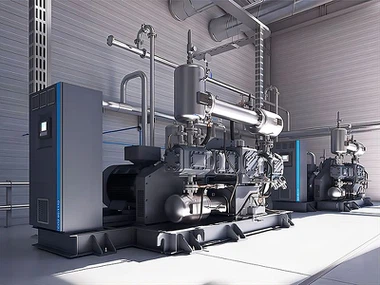
Comprising an air inlet filter (to filter dust), an air compressor (to pressurize air), an air compressor interstage cooler (to reduce temperature and maintain efficiency), and an air compressor vent silencer (to reduce noise).
● Pre-cooling System:
Comprising a water-cooling tower, an air-cooling tower (to exchange heat and reduce temperature), a water pump (to provide cooling water), and a chiller (to provide deep cooling).
● Purification System:
The core is a molecular sieve adsorber (to remove impurities) coupled with a nitrogen vent silencer (to reduce exhaust noise).
● Heat Exchange System:
Includes the main heat exchanger (for heat exchange between air and low-temperature gas to reduce temperature) and the subcooler (for cooling liquid products to reduce vaporization losses).
● Distillation System:
Includes the distillation tower (for gas-liquid contact separation) and the condenser-evaporator (for maintaining the distillation cycle).
● Product Delivery System:
Comprising a pressure regulating station (for pressure regulation) and a metering station (for flow measurement).
● Liquid Storage Backup System:
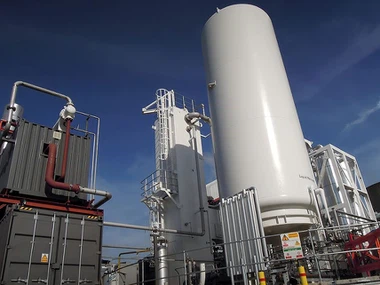
Includes liquid storage tanks (for storing liquid oxygen and liquid nitrogen), gas storage tanks (for buffering gaseous products), and a liquid evaporator (for emergency liquid-to-gas conversion).
Air Separation Unit Applications
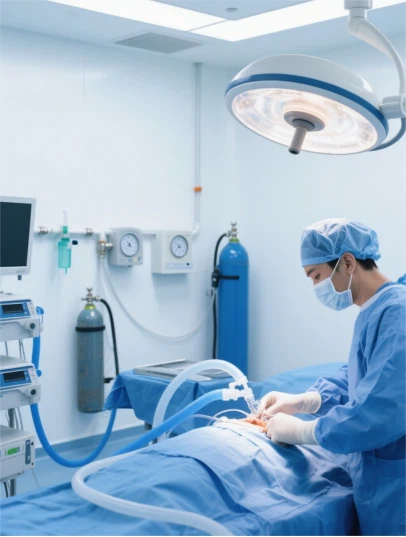
Medical Healthcare
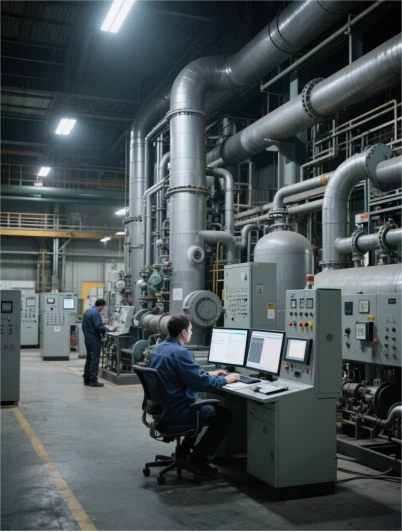
Industrial Manufacturing
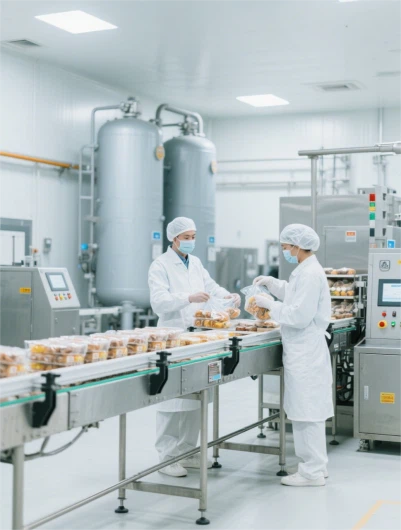
Food and Beverages
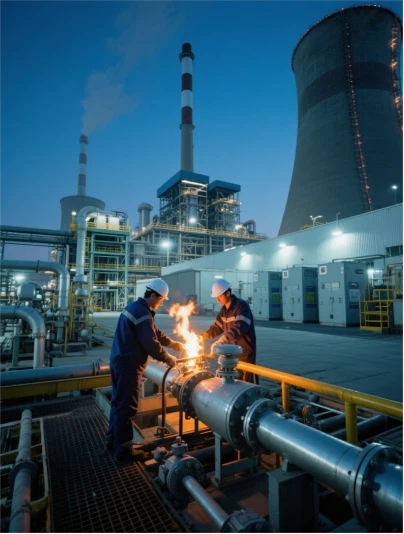
Energy production
What you should know about air separation units
Air separation unit in the industrial gases process
Air is primarily composed of nitrogen (approximately 78.1%), oxygen (approximately 20.9%), argon (approximately 0.9%), and small amounts of other gases. Currently, the most widely used air separation method in industry is cryogenic separation, also known as cryogenic distillation. Essentially, this involves gas liquefaction, typically using mechanical methods such as throttling expansion or adiabatic expansion. Air is first compressed and cooled, and then distilled using the differences in boiling points between gases to separate them.
Key nodes and functions of process flow
●Feed Air Flow
A fundamental input parameter (measured in Nm³/h) that directly determines ASU production scale/capacity (e.g., 68,500 Nm³/h for a medium-sized ASU under normal operation).
Abnormalities: Sudden increases overload compressors (higher wear/energy consumption) and disrupt purification/cooling/distillation (unbalanced gas-liquid/thermodynamics, lower efficiency/yield); overly low flow reduces equipment utilization and raises unit costs.
●Compressed Air Flow
Flow rate changes post-compression; outlet flow must match system process, ensure sufficient pressure for cryogenic/distillation operations, and maintain stability.
Control: Adjust inlet guide vane opening or compressor speed for precise flow/pressure control.
Risks: Overpressure causes equipment hazards; insufficient pressure limits liquefaction/separation; unstable flow impairs molecular sieve adsorption (inadequate impurity removal).
●Purified Air Flow Rate
Critical for cryogenic separation after removing moisture/CO₂/hydrocarbons via air dryers; requires stability and design compliance.
Impacts: Abnormal flow unbalances fractionating tower gas-liquid ratio (e.g., excessive flow speeds up gas ascent, reducing contact time/efficiency and product purity); over-standard impurities cause cryogenic equipment icing/clogging.
●Gas-Liquid Flow Rates in Distillation Towers
Gas-phase flow rate: Key for efficiency (e.g., initial distillation in double-tower lower tower produces rising nitrogen/descending oxygen-rich liquid). Appropriate flow ensures sufficient gas-liquid contact (heat/mass exchange); excess causes tower flooding (liquid accumulation, disrupted distillation) and low separation efficiency.
Liquid-phase flow rate: Counterflows with gas; flow (e.g., throttled oxygen-rich liquid from lower tower to upper tower) must match gas flow. Excess floods towers; insufficiency reduces impurity washing (poor purity); unstable flow impairs condenser-evaporator heat exchange (affects energy balance/separation).
●Product Gas And Waste Gas Flow Rates
Product Oxygen Flow: Controlled by user needs (e.g., high flow for steelmaking, high purity for medical use); adjusted via distillation parameters (reflux ratio, temperature, pressure). Fluctuations impact production (e.g., unstable steelmaking efficiency/quality).
Product Nitrogen Flow: Precisely controlled (via distillation gas-liquid distribution, reflux liquid nitrogen) for chemicals/electronics (e.g., stable high-purity nitrogen as chip shielding gas); deviations cause oxidation.
Waste Gas Flow: Contains unseparated gases; after expander cooling, part regenerates cool molecular sieves, remainder vents. Excess indicates low separation efficiency (wasted gas, high energy) and poor sieve regeneration (reduced adsorption/stability).
Flow control and regulation methods
●Valve Regulation
Throttle Valve: A throttle valve is a commonly used flow control device that controls flow by varying the valve opening to change the flow area of the fluid. In air separation units, throttle valves are often used to control the flow of feed air, compressed air, and the gas and liquid components within each column. For example, before air enters a distillation column, a throttle valve can be used to adjust the flow rate to meet the distillation column's feed requirements. While throttle valves offer advantages such as simple structure and ease of operation, they also generate a certain pressure drop during the adjustment process, resulting in energy loss.
Regulating Valve: A regulating valve is typically used in conjunction with an automated control system to automatically adjust the valve opening according to a set flow rate. Regulating valves are often installed at key flow control points in air separation units, such as the output pipelines for product oxygen and nitrogen. Based on real-time flow data, a controller automatically adjusts the valve opening to maintain the flow rate within the set range. Compared to throttle valves, regulating valves offer higher regulation accuracy and faster response, making them more adaptable to varying operating conditions during unit operation.
●Compressor Adjustment
Inlet guide vane adjustment: For centrifugal air compressors, the intake air volume can be varied by adjusting the angle of the inlet guide vanes, thereby controlling the compressed air flow rate. To increase the compressed air flow rate, the inlet guide vane opening is increased to allow more air to enter the compressor; conversely, the inlet guide vane opening is decreased to reduce the intake air volume. Inlet guide vane adjustment offers the advantages of a wide adjustment range and relatively minimal energy consumption during adjustment. This ensures that the compressed air flow rate meets process requirements while maintaining efficient compressor operation.
Speed Adjustment: Flow rate can also be adjusted by varying the compressor speed. Using variable frequency speed regulation technology, the compressor speed can be flexibly adjusted based on actual flow requirements. When the device requires a lower compressed air flow rate, the compressor speed is reduced; when a higher flow rate is required, the speed is increased. Speed adjustment offers a fast response time and can quickly adapt to changes in process flow rate, but places high demands on the motor and control system.
●Reflux Regulation
Reflux regulation is a common flow control method in air separation units. For example, in a distillation column, the gas-liquid ratio within the column is controlled by adjusting the reflux flow rate, thereby influencing the distillation efficiency and product flow rate. To improve product purity, the reflux flow rate can be increased to enable the distillation section within the column to more effectively separate impurities from the gas. To increase product yield, the reflux flow rate can be reduced. Reflux regulation needs to be used in conjunction with other flow control methods to ensure stable operation of the distillation column under various operating conditions.
Flow Monitoring and Safety Assurance
●Flow Monitoring System
To accurately monitor flow at ASU key points, an advanced flow monitoring system is usually adopted, mainly composed of flow sensors, signal transmission circuits, and display & control instruments.
●Flow Sensors:
Orifice plate flowmeters: Measure flow via pressure differential from fluid passing through an orifice; simple, low-cost, but limited accuracy.
Vortex flowmeters: Detect vortex frequency from fluid passing through a vortex generator; high accuracy, wide measuring range.
Mass flowmeters: Directly measure fluid mass flow, unaffected by temperature/pressure/density changes; ultra-high accuracy, ideal for product gas flow measurement.
●Signal Transmission & Display Control:
Flow sensors convert flow signals into electrical/digital signals, transmitted to display & control instruments. These instruments show real-time flow at each point, trigger alarms if flow exceeds set ranges, and connect to the automation system for automatic flow adjustment.
●Safety Measures
Abnormal flow fluctuations in ASUs may cause safety risks, requiring effective safety measures:
Flow Alarms & Interlocks:
The monitoring system has upper/lower alarm limits; audible/visual alarms activate when flow is out of range. Interlock devices prevent severe accidents: e.g., auto-shutdown of air compressors if feed air flow is too low (to avoid equipment damage), or auto-adjustment of valve openings/shutdown of specific equipment if product O₂/N₂ flow fluctuates abnormally.
Equipment Maintenance & Care:
Regularly maintain flow monitoring equipment, control devices, and the entire ASU: inspect flow sensors for blockage/damage (clean/replace promptly), check/debug valves (ensure flexibility/reliability), and inspect key equipment (e.g., compressors) for stable performance. This reduces flow abnormalities from equipment failures and improves operational safety.
Recommended Flow Parameters for Air Separation Units of Different Scales
●Small-Scale ASUs
Suitable for scenarios with low gas demand, such as laboratories and small factories.
Core Parameters: Process air flow rate 50-500 Nm³/h; product oxygen flow rate 10-200 Nm³/h (purity >99.5%), product nitrogen flow rate 20-300 Nm³/h (purity >99.9%).
Characteristics: Precisely control the flow rate of each component to ensure stable supply of high-purity gas for small-scale production or experiments.
●Medium-Scale ASUs
Widely serve general industrial enterprises to meet regular gas demand.
Core Parameters: Process air flow rate 3,000-20,000 Nm³/h; product oxygen flow rate 1,000-10,000 Nm³/h (purity ≈99.6%), product nitrogen flow rate 1,500-15,000 Nm³/h (purity up to 99.99%).
Characteristics: Higher requirements for flow control at key nodes (e.g., feed air, compressed air, gas-liquid flow in distillation towers); rely on advanced automated systems and precision equipment to ensure efficient, stable operation and product quality.
●Large-Scale ASUs
Used in large-scale industrial production scenarios, such as large steel mills and chemical plants.
Core Parameters: Process air flow rate over 50,000 Nm³/h (some exceed 100,000 Nm³/h, e.g., an ASU in a large steel conglomerate reaches 80,000 Nm³/h); product oxygen flow rate 30,000-50,000 Nm³/h (meets strict purity requirements for steelmaking), product nitrogen flow rate 40,000-60,000 Nm³/h.
Characteristics: High difficulty in flow control; require more advanced and reliable monitoring and regulation technologies to ensure stable and efficient operation under high load, providing continuous high-quality gas for large-scale production.
As one of the most professional air separation unit manufacturers and suppliers in China, we warmly welcome you to wholesale high purity air separation unit from our factory. All custom made products are with high quality and competitive price.