

 日本語
日本語 한국어
한국어 Français
 Deutsch
 Español
 Italiano
 Português
 Việt Nam
 Türkçe
 عربي
عربي  русский
  简体中文
简体中文 Čeština
 ไทย
ไทย Eesti
Eesti Gaeilgenah Éireann
 Bai Miaowen
 íslenska
 Cymraeg
 Български
 اردو
اردو Polski
 hrvatski
 українська
 bosanski
 فارسی
فارسی Lietuvių
 Latviešu
 עברית
עברית România limbi
 Ελληνικά
 dansk
dansk magyar
 Norsk
Norsk suomi
suomi Nederlands
 Svenska
 slovenčina
 slovenščina
 हिंदी
हिंदी Indonesia
 Melayu
 Malti
Malti Kreyòl Ayisyen
 Català
 বাংলা
বাংলা Srbija jezik (latinica)
 O'zbek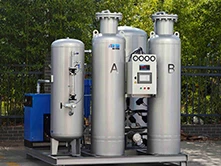
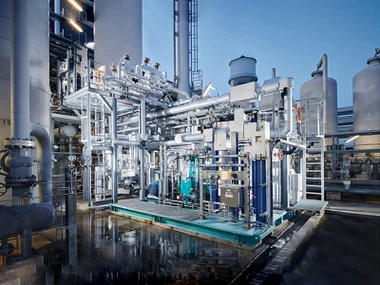
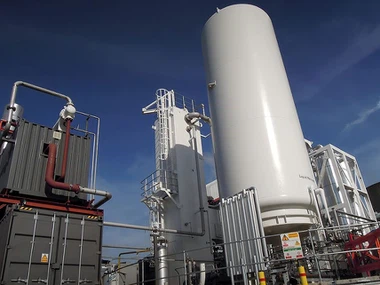


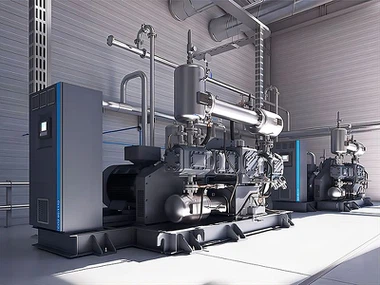
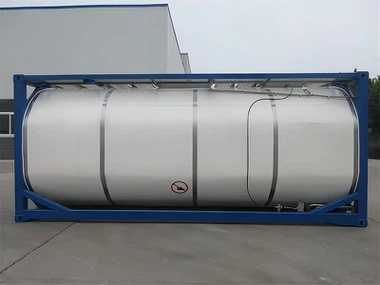


Chemical Plant Air Separation Unit
Description
Technical Parameters
Strong corrosion-resistant design: Core components are constructed of 316L stainless steel, and valves feature Hastelloy alloy valve cores . The external fluorocarbon coating provides 1,000+ hours of salt spray resistance, flanges feature double-pass PTFE seals, and the electrical control cabinet is IP54-rated for use in harsh chemical environments.
Dual pretreatment ensures power supply: The system includes dual molecular sieve adsorption towers and filters, enabling online switching and regeneration without downtime. Core equipment retains a 10%-15% load margin to accommodate peak gas demand fluctuations.
Intelligent temperature control ensures stable operation: The system is equipped with a chemical-grade DCS system, which monitors over 200 parameters in real time and automatically generates alarms and shutdowns in the event of an abnormality. The mean time between failures (MTBF) is ≥10,000 hours, 25% higher than general-purpose equipment.
Scenario-based customized solutions: Coal chemical industry provides an "oxygen + nitrogen dual-product system" (oxygen ≥ 99.6%); petrochemical industry provides a "low-energy nitrogen system"; fine chemical industry provides an "argon + removal module".

Comparison Table of Three Main Air Separation Unit (ASU) Technologies for Chemical Plants:
| Technology Type | Core Principle | Key Advantages | Limitations | Typical Chemical Industry Applications |
|---|---|---|---|---|
| Cryogenic Distillation | Utilizes the boiling point differences of air components to achieve separation in low-temperature columns through the process of "compression → pre-cooling → purification → deep cooling → distillation". | Large output , high purity (O₂/N₂ ≥ 99.999%), stable operation. | High investment cost, long start-stop time , high energy consumption. | Large-scale coal chemical industry , petrochemical industry. |
| Pressure Swing Adsorption (PSA) | Adsorbents (e.g., molecular sieves) selectively adsorb O₂/N₂ under different pressures; separation is achieved through cyclic "pressurized adsorption → depressurized desorption" to remove impurities or target components (e.g., N₂). | Low investment cost, fast start-stop (tens of minutes to several hours), flexible operation (adapts to fluctuating load). | Limited output (single unit ≤ 10,000 Nm³/h), moderate purity (O₂: 90%-95%), regular adsorbent replacement (3-5 years). | Inert protection for small-to-medium chemical reactors, auxiliary combustion for small incinerators, temporary gas supply during maintenance. |
| Membrane Separation | Relies on the difference in permeation rates of O₂ and N₂ through polymer membranes to achieve separation driven by the pressure difference across the membrane. | Compact size , simple maintenance (no moving parts), extremely fast start-stop . | Low purity (O₂ ≤ 40%, N₂ ≤ 99.5%), high energy consumption, small output (single unit ≤ 1,000 Nm³/h). | Micro-positive pressure protection for chemical storage tanks, low-concentration O₂ supply for small laboratories. |
Key Technical Indicators and Industry Standards
The performance and safety of chemical ASUs are controlled through strict technical indicators and standards. Core indicators include:
Core Performance Indicators
Product Purity: O₂ purity (volume fraction) ≥ 99.6% (GB/T 3863), N₂ purity ≥ 99.999% (GB/T 8979), Ar purity ≥ 99.999% (GB/T 10624);
Specific Energy Consumption: The "oxygen consumption"of a deep-freeze ASU is typically 0.45-0.6 kWh/Nm³ , a core indicator for measuring equipment energy efficiency;
Load Adjustment Range: Chemical ASUs must have flexible load adjustment capabilities, typically operating stably within a range of 60%-110% of the design load;
Reliability: Annual operating time ≥ 8,000 hours (chemical plants typically operate continuously, and ASUs are typically operated continuously). A failure could shut down the entire chemical plant, resulting in significant losses.
Core Safety Standards
Domestic: "Air Separation Equipment Using Deep Freezing Methods" , "Safety Technical Specification for Oxygen and Related Gases";
International: Compressed Gas Association (CGA) standards in the United States and EN standards in the European Union.
fAQ
1. Which air separation unit is suitable for a chemical plant? How should I choose based on production needs?
Prioritize cryogenic distillation and PSA/VPSA types. For coal chemical and petrochemical applications, choose cryogenic types (supporting 70%-105% variable load). For fine chemicals with low purity requirements, PSA/VPSA are more economical.
2. What core performance characteristics should I consider when purchasing to ensure suitability for the harsh environment of a chemical plant?
Four key points: ① Corrosion resistance (316L stainless steel and Hastelloy alloy components, fluorocarbon coating with salt spray resistance ≥ 1000 hours); ② Continuous operation capability (online regeneration of the dual molecular sieve column without downtime, with a 10%-15% load margin for the compressor); ③ Safety and stability (DCS monitoring of 200+ parameters, automatic alarms for abnormalities, and MTBF ≥ 10,000 hours); ④ Energy consumption (oxygen consumption ≤ 0.55 kW·h/m³ for medium-sized cryogenic units).
3. Can the supplier customize for specific chemical applications? What information do I need to provide?
Customizable options include the coal chemical industry's "oxygen + nitrogen dual-product system" (oxygen ≥ 99.6%), the petrochemical industry's "low-energy nitrogen system," and the fine chemical industry's "argon + removal module" (argon ≥ 99.9999%). Required information includes: gas type/purity/hourly output, site environment, load fluctuation range, and special requirements .
4. What after-sales and warranty services should I confirm to mitigate operational risks?
① Qualifications (ISO 9001/14001 certification, third-party testing of core components); ② Warranty (1-2 years for the entire system, with extended warranties available for core components such as compressors); ③ Service (24-hour technical support, on-site installation training, and a nearby spare parts warehouse); ④ Performance commitment (a contract guaranteeing purity/output/energy consumption, with compensation for non-compliance).
5. For large-scale chemical projects, should I choose modularization (integrated cold box) or on-site assembly?
Modularization is more cost-effective: ① Installation costs are reduced by 30%-50% (factory pre-assembly, reducing on-site workload); ② Quality is more stable (assembly in a controlled environment, reducing welding deviations); ③ Commissioning is faster (startup in ≤ 24 hours, compared to 1-2 months for on-site assembly). Please confirm that the module meets the transportation/lifting requirements.
Hot Tags: chemical plant air separation unit, China chemical plant air separation unit , suppliers, factory
Send Inquiry
Get in Touch
Write Your Message


