

 日本語
日本語 한국어
한국어 Français
 Deutsch
 Español
 Italiano
 Português
 Việt Nam
 Türkçe
 عربي
عربي  русский
  简体中文
简体中文 Čeština
 ไทย
ไทย Eesti
Eesti Gaeilgenah Éireann
 Bai Miaowen
 íslenska
 Cymraeg
 Български
 اردو
اردو Polski
 hrvatski
 українська
 bosanski
 فارسی
فارسی Lietuvių
 Latviešu
 עברית
עברית România limbi
 Ελληνικά
 dansk
dansk magyar
 Norsk
Norsk suomi
suomi Nederlands
 Svenska
 slovenčina
 slovenščina
 हिंदी
हिंदी Indonesia
 Melayu
 Malti
Malti Kreyòl Ayisyen
 Català
 বাংলা
বাংলা Srbija jezik (latinica)
 O'zbek


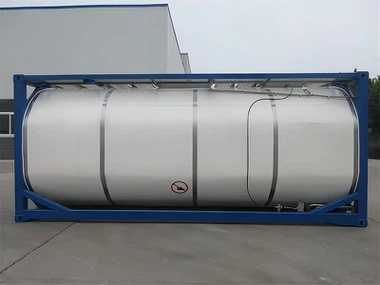


Semiconductor High-purity Gas Air Separation Unit
Description
Technical Parameters
Ultra-clean pretreatment: "Three-stage filtration + dual adsorption + catalytic deoxygenation" – ULPA filters and high-temperature molecular sieves remove water (dew point ≤ -90°C) and CO₂ (≤ 0.01ppm), and palladium catalysts remove oxygen to ≤ 0.1ppm, laying the foundation for distillation.
Cryogenic distillation purification: "Multi-tower cascade + high-efficiency packing" – The main tower uses 316L corrugated packing for initial separation to 5N purity. A nitrogen/argon refining tower is added to achieve final nitrogen purity of 7N and argon purity of 7.5N, removing trace impurities (methane ≤ 0.05ppb).
Ultra-clean post-treatment: Exclusive purification to prevent secondary contamination – PTFE filters filter particles ≥ 0.01μm, ion exchange columns reduce metal ions, and activated carbon canisters control VOCs to ≤ 0.05ppb.
Stable delivery control: High-precision closed-loop system – semiconductor-grade MFC, 316L EP-grade piping (Ra ≤ 0.2μm), fully automated welding (qualified rate 100%), compliant with SEMI F30.

working principle
Multi-stage composite pretreatment principle
A three-stage linkage of "filtration + adsorption + catalysis": ULPA filters and high-temperature molecular sieves remove water (dew point ≤ -90°C) and CO₂ (≤ 0.01 ppm), while palladium catalysts remove oxygen to ≤ 0.1 ppm, laying the foundation for high purity.
Deep-cold distillation and fractional separation principle
Exploiting the boiling point differences between oxygen, nitrogen, and argon, multiple columns are used in series for purification: the main column, with 316L packing, achieves initial separation to 5N; the nitrogen/argon refining column (-196°C) removes trace impurities, ultimately achieving nitrogen concentrations of 7N and argon concentrations of 7.5N (methane ≤ 0.05 ppb).
Ultra-clean post-treatment pollution prevention principle
Proprietary purification prevents secondary contamination: PTFE filters, ion exchange columns reduce metal ions (≤ 0.01 ppb), and activated carbon canisters control VOCs to ≤ 0.05 ppb, ensuring gas cleanliness.
High-Precision Closed-Loop Conveying Control Principle
"High-Precision Control + Clean Piping": Semiconductor-grade MFC and 316L EP-grade piping (Ra ≤ 0.2μm) are fully automatically welded to ensure stable conveying and undiminished purity.
fAQ
1. Can the gas purity produced by this equipment be adapted to the requirements of different semiconductor processes?
We can customize purity solutions based on specific process requirements. By adjusting the refining tower process and post-processing modules, we can achieve stable output that meets the requirements of 14nm processes. High-purity gases for advanced processes, including those below, can be optimized for future process upgrades without requiring a complete equipment replacement.
2. How can we prevent secondary gas contamination during equipment operation? Semiconductor production demands extremely high cleanliness levels.
This is ensured in two ways: First, a dedicated ultra-clean post-treatment system removes tiny particles and metal ions through processes like ultrafiltration and ion exchange. Second, the delivery process utilizes specialized piping materials and optimized welding techniques to minimize impurity adsorption on the piping walls, thus preventing secondary gas contamination throughout the entire process.
3. During equipment operation, gas flow and pressure fluctuations can affect semiconductor processing. How can we ensure stable parameters?
A high-precision closed-loop control system, coupled with a professional flow controller for real-time parameter adjustment and optimized piping design, effectively controls flow and pressure fluctuations, ensuring stable gas supply parameters that meet the precision requirements of semiconductor processes.
4. Is equipment maintenance complex? Will maintenance affect the continuous operation of the semiconductor production line?
The simplified maintenance process allows for early warning of core component maintenance through online monitoring. The system also supports "offline prefabrication + online connection." With a comprehensive maintenance model, critical maintenance only requires brief downtime, and a temporary gas supply plan will be developed to minimize disruption to the production line.
5. If the semiconductor fab expands capacity in the future, can the existing equipment be expanded? Is this expansion difficult?
The equipment has built-in expansion ports. Capacity expansion requires only the addition of the corresponding refining modules and conveying components, without dismantling the core distillation system. Detailed process calculations and prefabrication are performed before expansion, resulting in a short on-site construction period and minimal complexity, enabling rapid adaptation to capacity growth needs.
Hot Tags: semiconductor high-purity gas air separation unit, China semiconductor high-purity gas air separation unit , suppliers, factory
Previous
Air Separation Units (ASU)Send Inquiry
Get in Touch
Write Your Message


