

 日本語
日本語 한국어
한국어 Français
 Deutsch
 Español
 Italiano
 Português
 Việt Nam
 Türkçe
 عربي
عربي  русский
  简体中文
简体中文 Čeština
 ไทย
ไทย Eesti
Eesti Gaeilgenah Éireann
 Bai Miaowen
 íslenska
 Cymraeg
 Български
 اردو
اردو Polski
 hrvatski
 українська
 bosanski
 فارسی
فارسی Lietuvių
 Latviešu
 עברית
עברית România limbi
 Ελληνικά
 dansk
dansk magyar
 Norsk
Norsk suomi
suomi Nederlands
 Svenska
 slovenčina
 slovenščina
 हिंदी
हिंदी Indonesia
 Melayu
 Malti
Malti Kreyòl Ayisyen
 Català
 বাংলা
বাংলা Srbija jezik (latinica)
 O'zbek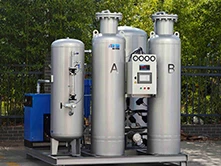
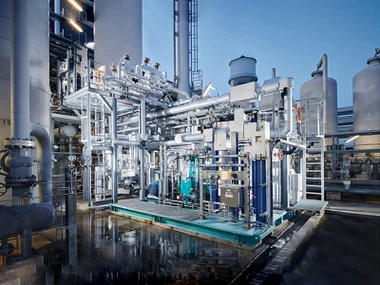
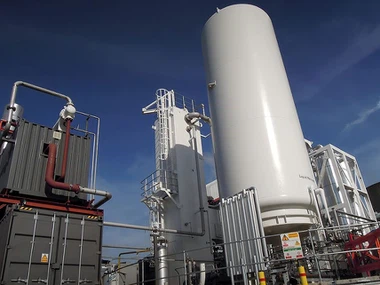


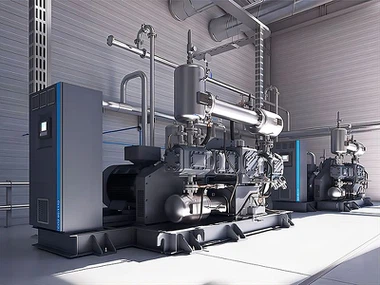
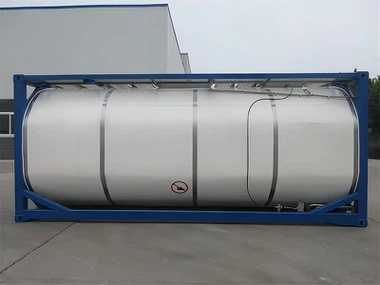


Cryogenic Distillation Air Separation Unit
Description
Technical Parameters
Efficient air separation is achieved through a three-step process: pretreatment - cryogenic refrigeration - multi-tower distillation.
●Air pretreatment: "Filtration + Adsorption" – removes dust ≥ 0.1μm. Molecular sieves remove moisture (dew point ≤ -70°C), CO₂ (≤ 1ppm), and hydrocarbons (≤ 0.1ppm) to prevent low-temperature system failure.
●Cryogenic refrigeration: Clean air is compressed to 0.5-0.7MPa, passed through a plate-fin heat exchanger, cooled to -170°C-180°C, and partially liquefied, providing a low-temperature environment for distillation.
●Multi-tower distillation: Liquid air enters the low-pressure lower tower for initial separation based on the boiling point difference between oxygen and nitrogen. Oxygen-rich liquid air is then depressurized and fed to the high-pressure upper tower for refinement. When argon extraction is required, a 0.93% crude argon fraction is extracted and distilled in the crude/refined argon tower to produce high-purity argon.

Core performance highlights
High separation efficiency, controllable purity
Purity range: Oxygen 99.6% to 99.99% , Nitrogen/Argon 99.999% to 99.9999% ;
Control precision: PLC intelligent adjustment, purity fluctuation ≤±0.001%, adaptable to the stringent requirements of industries.
Low energy consumption design
Three energy-saving technologies: high-efficiency plate-fin heat exchanger, variable-frequency centrifugal compressor, and corrugated packing distillation column;
Energy efficiency Advantage: Unit gas energy consumption is reduced by 12% to 18% compared to traditional equipment.
High Stability
Weather-resistant materials: 304/316L stainless steel for distillation columns and heat exchangers, with valves designed for low temperatures up to -200°C.
Safeguards: Online temperature, pressure, and purity monitoring with automatic alarms for abnormalities. Mean Time Between Failures (MTBF) ≥ 8,000 hours, reducing downtime costs.
Customizable Capacity
Capacity range: 50-10,000 Nm³/h (oxygen-based), supporting single, dual, or triple product system designs.
Flexible Layout: Vertical or horizontal modular design allows for rapid commissioning of small and medium-sized production capacities, while providing expansion options for larger production capacities.
Application Areas
●Metallurgical Industry:
High-purity oxygen is used in converter steelmaking and blast furnace oxygen-enriched blast, improving smelting efficiency and steel quality. Nitrogen is used for blast furnace gas purification and steel rolling process protection to prevent steel oxidation.
●Chemical Industry:
Oxygen is used as an oxidant in coal chemical industry, ethylene oxidation, and other processes. Nitrogen is used as an inert shielding gas for catalyst regeneration and tank sealing. Argon is used as a carrier in specialty gas synthesis.
●Electronics Industry:
High-purity nitrogen is used for wafer cleaning and packaging protection in chip manufacturing. Argon is used in plasma etching and sputtering coating processes to prevent impurities from affecting chip performance.
●Energy Industry:
Oxygen is used in coalbed methane extraction and heavy oil catalytic cracking. Nitrogen is used in oil and gas field drilling and pipeline purging to ensure operational safety.
●Food and Pharmaceutical Industry:
Nitrogen is used for food packaging preservation and storage of pharmaceutical intermediates to prevent oxidation and deterioration. Oxygen is used in bio-fermentation and medical oxygen supply
fAQ
1. What is the separation efficiency of a cryogenic distillation air separation unit? Can it simultaneously produce oxygen, nitrogen, and argon? Is the purity adjustable?
With high separation efficiency, single, dual, or triple-product systems can be designed on demand. A triple-product system can simultaneously produce oxygen, nitrogen, and argon. Purity can be customized: oxygen 99.6% to 99.99%, nitrogen/argon 99.999% to 99.9999%. With PLC intelligent temperature control, purity fluctuations of ≤±0.001% are achieved, meeting the needs of various industries.
2. Does the equipment consume a lot of energy? Compared to traditional air separation units, what specific energy-saving features are there?
The equipment has low energy consumption, thanks to three key energy-saving features: first, a high-efficiency plate-fin heat exchanger that reduces cooling loss; second, a variable-frequency centrifugal compressor that reduces energy consumption by 20% to 30% during partial-load operation; and third, a corrugated packing distillation column that improves separation efficiency while reducing the reflux ratio. The overall unit gas energy consumption is 12%-18% lower than traditional equipment.
3. Are the core components of the equipment susceptible to damage in low-temperature environments? What is the average time between failures (MTBF)?
Core components are highly resistant to low temperatures and corrosion: The distillation column and heat exchanger are made of 304/316L stainless steel, and the valves are designed for -200°C low temperatures, making them suitable for cryogenic environments. Equipped with an online monitoring system that automatically alarms when an abnormality occurs, the mean time between failures (MTBF) is ≥8,000 hours, reducing downtime and maintenance costs.
4. Does the equipment's production capacity meet the needs of small and medium-sized enterprises? If space is limited, is the layout flexible?
With a wide range of production capacities, ranging from 50 to 10,000 Nm³/h (in oxygen), small and medium-sized production capacity equipment can be quickly put into production. It supports modular layouts, allowing for vertical or horizontal designs to optimize space utilization and adapt to installation requirements even in limited locations.
Hot Tags: cryogenic distillation air separation unit, China cryogenic distillation air separation unit , suppliers, factory
Send Inquiry
Get in Touch
Write Your Message


