

 日本語
日本語 한국어
한국어 Français
 Deutsch
 Español
 Italiano
 Português
 Việt Nam
 Türkçe
 عربي
عربي  русский
  简体中文
简体中文 Čeština
 ไทย
ไทย Eesti
Eesti Gaeilgenah Éireann
 Bai Miaowen
 íslenska
 Cymraeg
 Български
 اردو
اردو Polski
 hrvatski
 українська
 bosanski
 فارسی
فارسی Lietuvių
 Latviešu
 עברית
עברית România limbi
 Ελληνικά
 dansk
dansk magyar
 Norsk
Norsk suomi
suomi Nederlands
 Svenska
 slovenčina
 slovenščina
 हिंदी
हिंदी Indonesia
 Melayu
 Malti
Malti Kreyòl Ayisyen
 Català
 বাংলা
বাংলা Srbija jezik (latinica)
 O'zbek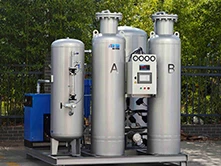
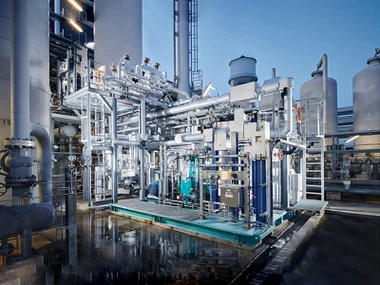
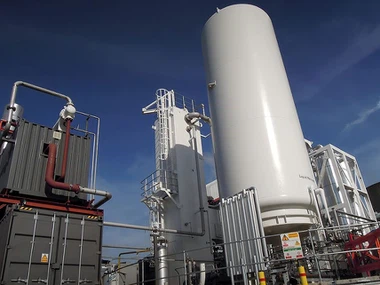


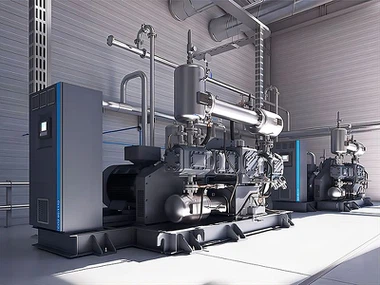
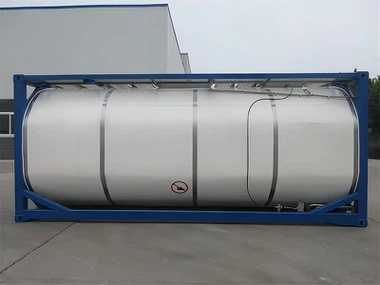


Liquid Air Separation Plant
Description
Technical Parameters
●Compression and Cooling: First, atmospheric air is pressurized by a compressor (to increase air density and prepare for subsequent liquefaction). Then, a cooling water circulation system or low-temperature air stream is introduced to quickly remove the heat generated during the compression process, lowering the air temperature to a range close to the liquefaction critical point.
●Expansion and Liquefaction: The initially cooled air is fed into an orifice throttling device or a dedicated expansion engine. Through sudden pressure reduction and expansion, the "Joule-Thomson effect" is achieved, which further drops the air temperature sharply and finally brings the air to a liquefied state .
●Distillation and Separation: The liquid air is transported to a cold box that has both thermal insulation and rectification functions. Layered separation is achieved by utilizing the differences in boiling points of various components - nitrogen, with the lowest boiling point (-196°C), vaporizes first and rises to the top of the column; argon (-186°C) accumulates in the middle; and oxygen, with the highest boiling point (-183°C), remains at the bottom of the column in a liquid state.
●Product Collection: According to downstream requirements, gaseous/liquid nitrogen from the top of the column, liquid argon from the middle, and liquid oxygen from the bottom are collected separately. These products are either temporarily stored in dedicated storage tanks or directly connected to delivery pipelines to supply scenarios such as industrial welding, medical oxygen supply, and food preservation.

Key Components
●Air Compressor Train: Provides initial compression to atmospheric air, meeting pressure requirements for subsequent cooling and liquefaction.
●Heat Exchangers: Cools compressed air via low-temperature gas streams (recycled) or cooling water, preparing it for expansion and liquefaction.
●Cold Box: Insulated enclosure housing distillation columns and cryogenic equipment, maintaining stable ultra-low temperature for separation.
●Distillation Column: Core component for fractional distillation; separates liquefied air into nitrogen, oxygen, argon by boiling point differences.
Applications
ASUs produce high-purity (≥99.9%) oxygen, nitrogen, argon, essential for multiple industries:
●Semiconductor Fabrication: Gases used for environment purging, protection, and etching, ensuring component precision.
●Steel Production: Oxygen reacts with impurities in molten iron, improving steel quality.
●Medical Applications: Oxygen supports respiration for patients with diseases, trauma, or in surgery.
●Industrial Applications: Nitrogen for inerting (chemical tanks, food packaging) and oxygen for welding, wastewater treatment.
Why choose NEWTEK?
Contact NEWTEK Experts: +86 19906611480

NEWTEK delivers end-to-end & gas engineering solutions that reduce risk, speed delivery, and ensure reliable long-term operation.
✔ Full-scope, one-stop service - Design, procurement, construction and handover managed under a single contract to eliminate coordination gaps.
✔ Deep gas-engineering expertise - Proven technical capability and R&D experience for textile, metallurgy, chemical and other industries.
✔ resource integration - Strong supplier and partner network to source equipment and specialist services efficiently.
✔ On-time delivery & dependable operation - Optimized project management and commissioning practices for timely handover and stable operation.
✔ Dedicated professional team - Experienced engineers and project managers handle interfaces, quality control and risk mitigation end-to-end.
✔ Reduced client burden - Fewer interfaces, simpler communication, and a worry-free project delivery experience.
FAQ
Q: What core functions does a Liquid Air Separation Plant mainly undertake?
A: Its core function is to separate atmospheric air into high-purity liquid or gaseous oxygen, nitrogen, and argon through processes like compression, cooling, liquefaction, and fractional distillation, meeting the demand for these gases in various industries.
Q: Compared with ordinary gas separation equipment, what advantages does this plant have in terms of product purity?
A: It adopts cryogenic fractional distillation technology, which can achieve extremely high product purity-generally, the purity of oxygen and nitrogen can reach ≥99.9%, and argon can reach high-purity levels required for industrial or even semiconductor scenarios, far exceeding the purity of gases produced by ordinary pressure swing adsorption (PSA) equipment.
Q: Can a Liquid Air Separation Plant be customized according to the gas demand of different industries?
A: Yes. It can be customized based on the type (oxygen, nitrogen, argon), output, and purity of gases required by industries such as semiconductors, steel, and medical care. For example, for semiconductor manufacturing, it can be optimized to produce ultra-high-purity argon and nitrogen; for steel plants, it can focus on increasing oxygen output.
Q: What maintenance work is required for the plant during long-term operation, and is it difficult to maintain?
A: Routine maintenance mainly includes regular inspection of air compressors (replacing filters), checking the insulation performance of cold boxes (preventing heat leakage), and maintaining heat exchangers (removing scale). Most maintenance tasks are standardized, and with professional after-sales guidance or training, enterprises can carry out daily maintenance, so the overall difficulty is controllable.
Hot Tags: liquid air separation plant, China liquid air separation plant , suppliers, factory, Small Air Separation Unit, Air Separation Unit
Previous
Air Separation Units (ASU)Send Inquiry
Get in Touch
Write Your Message


