

 日本語
日本語 한국어
한국어 Français
 Deutsch
 Español
 Italiano
 Português
 Việt Nam
 Türkçe
 عربي
عربي  русский
  简体中文
简体中文 Čeština
 ไทย
ไทย Eesti
Eesti Gaeilgenah Éireann
 Bai Miaowen
 íslenska
 Cymraeg
 Български
 اردو
اردو Polski
 hrvatski
 українська
 bosanski
 فارسی
فارسی Lietuvių
 Latviešu
 עברית
עברית România limbi
 Ελληνικά
 dansk
dansk magyar
 Norsk
Norsk suomi
suomi Nederlands
 Svenska
 slovenčina
 slovenščina
 हिंदी
हिंदी Indonesia
 Melayu
 Malti
Malti Kreyòl Ayisyen
 Català
 বাংলা
বাংলা Srbija jezik (latinica)
 O'zbek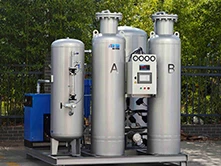
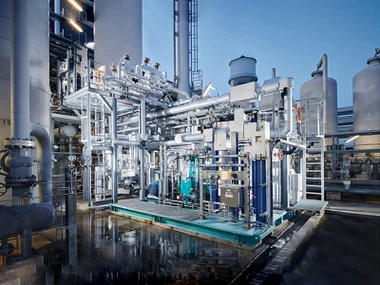
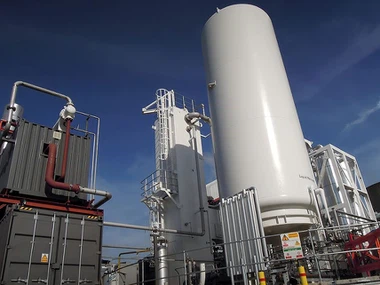


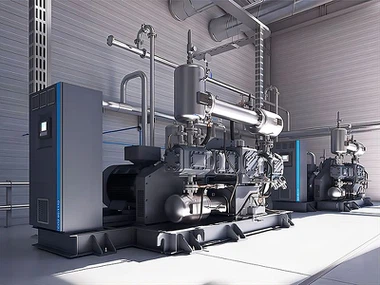
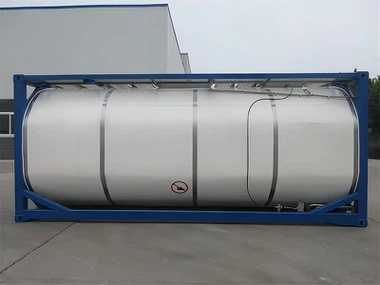


Industrial-grade Liquid Oxygen Plant
Description
Technical Parameters
What are the important core elements of Industrial-grade liquid oxygen plant?
●High-Capacity & Efficient Production
Equipped with large-scale distillation towers and high-power compressors, the daily capacity ranges from 50 tons to 500 tons (or 10,000-100,000 Nm³/h). Compared with electrolysis water method, the energy consumption per unit oxygen is reduced by over 60%, significantly lowering industrial operation costs.
●Industrial Environment Adaptability
The equipment adopts corrosion-resistant materials (such as 06Cr19Ni10 stainless steel) for key components, and is equipped with dust-proof and high-temperature resistant preprocessing systems, which can operate stably in harsh environments such as steel plants and chemical parks.
●Stable & Reliable Operation
Adopting full-distillation hydrogen-free argon extraction technology, with multi-level pressure and temperature monitoring. The vacuum insulation storage tank has a design life of more than 50 years, and the evaporation loss rate is less than 0.5% per day.
●Flexible Co-Production Capacity
While producing liquid oxygen, it can simultaneously co-produce high-purity liquid nitrogen (purity ≤10 ppm O₂) and liquid argon (purity ≤2 ppm O₂), realizing multi-resource utilization and increasing industrial benefits.

work principle
Air Preprocessing
Raw air is filtered to remove dust and impurities, compressed to 3-5 MPa, cooled to -55℃ by a water-cooled tower, and then passed through a molecular sieve adsorber to remove moisture, CO₂, and hydrocarbons.
Deep Refrigeration
Purified air enters the main cold exchanger, cooled to -120℃, and part of it is pressurized to 10 MPa by an expander for further cooling, eventually reaching -200℃ to form liquid air.
Distillation Separation
Liquid air enters the distillation tower. Nitrogen (boiling point -196℃) evaporates first, and the remaining liquid oxygen (boiling point -182℃) is collected at the bottom of the tower. After further purification, high-purity liquid oxygen is obtained.
Storage & Output
Liquid oxygen is stored in a vacuum insulation tank, and can be directly transported by tank trucks or vaporized into high-pressure gaseous oxygen for on-site industrial use.
Typical Application Scenarios
●Metallurgical Industry: Used for steelmaking oxygen blowing, iron ore smelting, and non-ferrous metal processing, improving smelting efficiency and product quality.
●Chemical Industry: As an oxidant for chemical synthesis reactions (such as ethylene oxidation) and for wastewater treatment aeration.
●Metal Processing: High-pressure oxygen source for cutting and welding of thick steel plates, ensuring smooth and efficient processing.
●Energy Industry: Supporting gasification projects of coal and biomass, providing oxygen for gasification reactions.
Core Performance Parameters
|
Model |
Daily Capacity |
Oxygen Purity |
Storage Tank Volume |
Control Method |
|
Industrial-50 |
50-100 Tons |
≥99.6% |
50-200 m³ |
PLC Automatic + Remote Monitoring |
|
Industrial-200 |
200-300 Tons |
≥99.6% |
300-500 m³ |
DCS Distributed Control |
|
Industrial-500 |
300-500 Tons |
≥99.8% |
500-1000 m³ |
Intelligent IoT Control |
FAQ
1.What is the difference between industrial and medical liquid oxygen?
Industrial oxygen has a purity of ≥99.6% without strict impurity detection, while medical oxygen requires ≥99.5% purity and must pass harmful substance testing (as a pharmaceutical management). Industrial oxygen cannot be used for medical purposes.
2.How to maintain the vacuum insulation of storage tanks?
Regularly detect the vacuum degree (should be better than national standards), and conduct leak detection every 2-3 years. Avoid collision and high-temperature exposure to the tank body.
3.What is the energy consumption of large-scale equipment?
Taking the 25,000 Nm³/h oxygen production equipment as an example, the unit energy consumption is about 0.45 kWh/Nm³, which is 15-20% lower than that of ordinary equipment.
4.Can the equipment be expanded according to production needs?
Yes, the modular design allows adding distillation tower modules and compressor units. The expansion period is usually 3-6 months without affecting the operation of existing equipment.
5.What safety measures are equipped for the plant?
It is equipped with hydrocarbon content online monitoring, overpressure relief valves, and fire-fighting systems. The whole plant adopts explosion-proof electrical equipment, and the safety distance meets the requirements of GB 50016-2014.
Hot Tags: industrial-grade liquid oxygen plant, China industrial-grade liquid oxygen plant , suppliers, factory, liquid oxygen nitrogen plant, liquid oxygen gas plant, Liquid Oxygen Production Plant, Liquid Oxygen Plant
Previous
High Purity Liquid Oxygen PlantSend Inquiry
Get in Touch
Write Your Message


