

 日本語
日本語 한국어
한국어 Français
 Deutsch
 Español
 Italiano
 Português
 Việt Nam
 Türkçe
 عربي
عربي  русский
  简体中文
简体中文 Čeština
 ไทย
ไทย Eesti
Eesti Gaeilgenah Éireann
 Bai Miaowen
 íslenska
 Cymraeg
 Български
 اردو
اردو Polski
 hrvatski
 українська
 bosanski
 فارسی
فارسی Lietuvių
 Latviešu
 עברית
עברית România limbi
 Ελληνικά
 dansk
dansk magyar
 Norsk
Norsk suomi
suomi Nederlands
 Svenska
 slovenčina
 slovenščina
 हिंदी
हिंदी Indonesia
 Melayu
 Malti
Malti Kreyòl Ayisyen
 Català
 বাংলা
বাংলা Srbija jezik (latinica)
 O'zbek


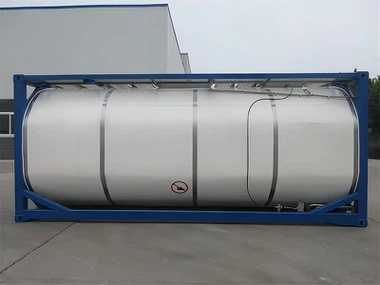


High Purity Liquid Oxygen Plant
Description
Technical Parameters
High Purity Liquid Oxygen Plant Key Benefits
Ultra-High Purity, Stable Quality
Equipped with multi-stage precision distillation towers and special impurity removal modules (such as trace hydrocarbon adsorption units), it can effectively filter impurities like nitrogen, argon, and hydrocarbons. The liquid oxygen purity can be customized according to needs, with the highest reaching 99.9995% (5.5N), and the impurity content is controlled below 1 ppm, ensuring stable product quality.
Efficient Energy Saving, Low Operating Cost
Adopting a new type of efficient heat exchanger and variable-frequency compression system, the heat exchange efficiency is increased by 20% compared with traditional equipment. The unit energy consumption for producing high-purity liquid oxygen is about 0.5-0.6 kWh/Nm³, which is 10-15% lower than that of similar products, significantly reducing long-term operating costs.
Intelligent Control, Easy Operation
Equipped with a high-precision online purity analyzer and a full-automatic DCS control system, it can real-time monitor parameters such as oxygen purity, temperature, and pressure. It supports remote operation and fault early warning, reducing manual intervention, and the operation interface is simple and easy to understand, facilitating daily management.
Strong Environmental Adaptability
Key components are made of high-quality corrosion-resistant and low-temperature-resistant materials (such as 316L stainless steel), and the equipment is equipped with a constant temperature and humidity control system for the electrical control cabinet. It can operate stably in environments with temperatures ranging from -10℃ to 40℃ and relative humidity below 85%, adapting to different regional climate conditions.

work principle
Air Preprocessing
Raw air is first filtered through a high-efficiency air filter to remove dust and large particles, then compressed to 4-6 MPa by a low-noise air compressor. After cooling to 15-25℃ by a cooler, it enters a molecular sieve adsorber to deeply remove moisture, carbon dioxide, and heavy hydrocarbons, ensuring the purity of the air entering the subsequent process
Deep Refrigeration
The pre-purified air enters the main cold exchanger, where it exchanges heat with the low-temperature gas after distillation, and is cooled to -170℃ to -180℃. Then, part of the air enters the expander for adiabatic expansion, further reducing the temperature to -205℃ to -210℃, forming a low-temperature environment required for liquefaction.
Distillation Separation
The cooled air enters the multi-stage precision distillation tower. Due to the different boiling points of components in the air, nitrogen (boiling point -196℃) is evaporated and separated from the top of the tower, while oxygen (boiling point -182℃) is collected at the bottom of the tower. Through repeated distillation and purification in the tower, the oxygen purity is gradually improved to meet the high-purity requirement.
Storage & Output
The liquid oxygen obtained from distillation enters a fine purification module to remove trace impurities such as argon and residual hydrocarbons. Finally, the high-purity liquid oxygen is stored in a vacuum-insulated low-temperature storage tank, and can be output according to user needs for subsequent use.
Typical Application Scenarios
●Electronics Industry: Used in the manufacturing process of semiconductors and integrated circuits, such as wafer oxidation, ion implantation, and chemical vapor deposition, to ensure the quality and performance of electronic components.
●Aerospace Field: As a oxidant for rocket engines and a breathing gas source for astronauts in space capsules, providing reliable support for aerospace missions.
●Scientific Research: Applied in laboratory research, such as low-temperature physics experiments, material science research, and biological cryopreservation, creating a suitable experimental environment.
●Metallurgical Field (High-End): Used in the smelting of special alloys (such as titanium alloys and superalloys) to improve the purity and mechanical properties of the alloys.
Why is our liquid oxygen plant trustworthy?
NEWTEK is a top-class liquid oxygen plant manufacturer!

Scale & Proven Reliability
NEWTEK is a world-class gas group with global operations and over 9,000 systems installed worldwide. It has delivered large-scale projects like the 51,000 Nm³/h air separation project in the Philippines, proving its ability to provide stable, high-performance liquid oxygen solutions across regions.
Leading Technology & Energy Efficiency
With advanced cryogenic and gas technologies, it optimizes energy use-evidenced by its 45,000 M³/h air separation unit energy-saving cases. Its liquid oxygen plants feature high heat exchange efficiency and low unit consumption, cutting operating costs.
Strategic Partnerships & Strong Capabilities
As a partner of Hangzhou Oxygen Plant (a top air separation enterprise), NEWTEK leverages joint R&D strengths. It also offers carbon capture (CCUS) integration, aligning with low-carbon production needs.
Full-Lifecycle Support & Trusted Reputation
It provides end-to-end services (quote, after-sales, parts supply) and has earned trust from clients-e.g., a 10-year oxygen industry professional praised its reliable equipment for medical/industrial use after 5 years of cooperation.
FAQ
1.What factors will affect the purity of high-purity liquid oxygen?
The main influencing factors include the efficiency of the molecular sieve adsorber (affecting the removal of moisture and carbon dioxide), the precision of the distillation tower (affecting the separation of nitrogen and oxygen), and the performance of the fine purification module (affecting the removal of trace impurities). Regular maintenance of these components can ensure stable purity.
2.How often does the equipment need to be maintained?
Routine maintenance (such as checking the pressure gauge, cleaning the filter) is required once a month; the molecular sieve needs to be replaced every 2-3 years; the vacuum degree of the storage tank is detected every 1-2 years, and comprehensive maintenance of the whole machine is carried out every 5 years.
3.Can the equipment adjust the output according to the actual demand?
Yes, the equipment is equipped with a variable-frequency control system. By adjusting the operating parameters of the compressor and expander, the output of liquid oxygen can be flexibly adjusted within the range of 30%-100% of the rated capacity to meet the changing needs of users.
4.What safety risks exist in the use of high-purity liquid oxygen, and how to prevent them?
The main safety risks are low-temperature frostbite (caused by contact with liquid oxygen) and combustion explosion (caused by the combination of liquid oxygen and combustible materials). To prevent them, operators should wear professional protective equipment, keep the equipment area away from combustible materials, and install fire-fighting and explosion-proof devices.
5.Is there a difference in transportation methods between high-purity liquid oxygen and ordinary industrial liquid oxygen?
The transportation of high-purity liquid oxygen requires the use of special vacuum-insulated transport tanks to avoid impurity pollution during transportation; the transport route should avoid high-temperature and high-humidity environments, and the tank body should be checked for tightness before transportation. Ordinary industrial liquid oxygen has relatively loose transportation requirements.
Hot Tags: high purity liquid oxygen plant, China high purity liquid oxygen plant , suppliers, factory, Liquid Oxygen Plant, liquid oxygen gas plant, liquid oxygen nitrogen plant, Liquid Oxygen Production Plant
Send Inquiry
Get in Touch
Write Your Message


