

 日本語
日本語 한국어
한국어 Français
 Deutsch
 Español
 Italiano
 Português
 Việt Nam
 Türkçe
 عربي
عربي  русский
  简体中文
简体中文 Čeština
 ไทย
ไทย Eesti
Eesti Gaeilgenah Éireann
 Bai Miaowen
 íslenska
 Cymraeg
 Български
 اردو
اردو Polski
 hrvatski
 українська
 bosanski
 فارسی
فارسی Lietuvių
 Latviešu
 עברית
עברית România limbi
 Ελληνικά
 dansk
dansk magyar
 Norsk
Norsk suomi
suomi Nederlands
 Svenska
 slovenčina
 slovenščina
 हिंदी
हिंदी Indonesia
 Melayu
 Malti
Malti Kreyòl Ayisyen
 Català
 বাংলা
বাংলা Srbija jezik (latinica)
 O'zbek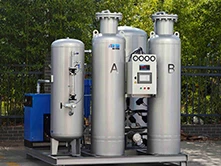


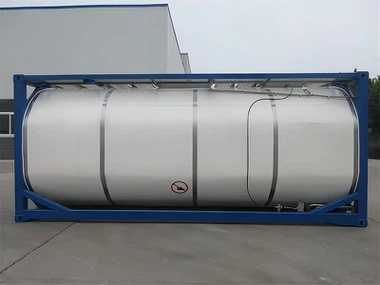

The Crucial Role Of Air Separation Units In Modern Industries
May 30, 2025
Leave a message
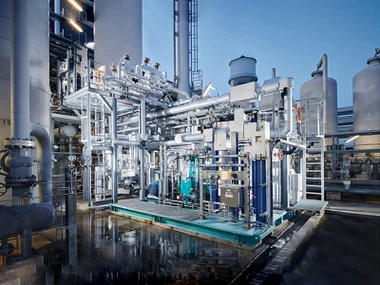
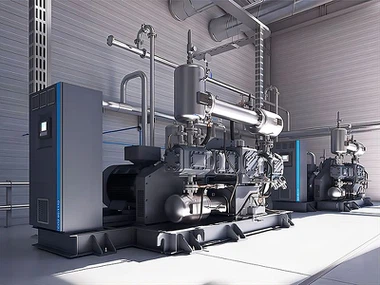
Air separation units (ASUs) are essential industrial systems that fractionate atmospheric air into its primary components-nitrogen, oxygen, argon, and trace inert gases-using technologies such as cryogenic distillation, pressure swing adsorption (PSA), or membrane separation. This process enables the production of high-purity gases critical to numerous sectors, driving efficiency, safety, and quality across modern manufacturing.

Core Applications of ASUs Across Industries

Metallurgical Industry
In steel production, ASUs supply oxygen for blast furnaces to accelerate impurity oxidation, reducing smelting time by 30–50%. Nitrogen is used for inerting during casting to prevent steel oxidation, while argon facilitates ladle refining for uniform steel composition.
Non-ferrous metal processing, such as aluminum smelting, relies on oxygen to enhance alumina refining efficiency, and nitrogen for annealing to maintain metal surface quality.
Chemical and Petrochemical Sectors
Oxygen from ASUs supports efficient combustion in cracking furnaces, while nitrogen acts as a blanketing gas to mitigate explosion risks in chemical storage and transportation. High-purity nitrogen is a key raw material in ammonia synthesis, directly impacting production yields.
In LNG processing, nitrogen is used for pipeline inerting to eliminate fire hazards, and oxygen aids in coal gasification to produce syngas for synthetic fuel production.
Electronics and Semiconductor Manufacturing
Ultra-high-purity argon (≥99.9999%) is critical for sputtering and thin-film deposition in semiconductor fabrication, ensuring contamination-free processes. Nitrogen purges CVD chambers and diffusion furnaces to maintain inert atmospheres and optimize chip yield.
Food and Beverage Industry
Nitrogen is widely used in modified atmosphere packaging to extend shelf life by displacing oxygen and inhibiting microbial growth. Liquid nitrogen enables rapid freezing for food preservation, aligning with rising demands for frozen and convenience foods.
Healthcare and Life Sciences
Medical-grade oxygen (≥99.5%) from cryogenic ASUs is vital for hospital respiratory systems, emergency care, and hyperbaric treatments. Nitrogen supports cryogenic storage of biological samples and vaccines at ultra-low temperatures.
ASU Technologies and Operational Principles

Cryogenic Distillation
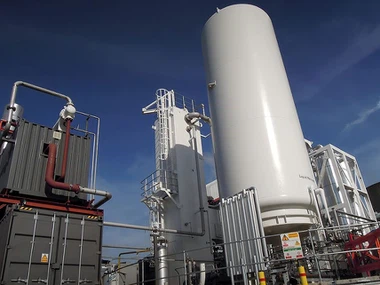
The dominant method for large-scale, high-purity gas production (oxygen ≥99.5%, nitrogen ≥99.999%), cryogenic ASUs operate by cooling air to liquefaction (-196°C for nitrogen, -183°C for oxygen) and separating components via fractional distillation in multi-column systems. This technology is energy-intensive but cost-effective for high-volume outputs, suitable for steel mills, chemical plants, and LNG facilities.
Rare gases like neon,,and xenon are exclusively recovered through cryogenic distillation, while helium requires advanced recovery processes.
Non-Cryogenic Methods
PSA/VPSA: Uses adsorbent materials (e.g., zeolites) to separate gases based on molecular affinity, ideal for on-demand, medium-purity applications (nitrogen 95–99.9%). Common in food packaging, small-scale manufacturing, and medical oxygen concentrators.
Membrane Separation: Employs selective permeation membranes to separate gases by molecular size, suitable for low-purity nitrogen (90–95%) in maritime and remote operations.
Instrumentation and Temperature Control
Thermocouples and RTDs: Critical for monitoring cryogenic processes (-150°C to -200°C), T-type thermocouples (copper-constantan) are preferred for their stability in ultra-low temperatures, resistance to moisture, and anti-oxidation properties. They are used in:
Distillation Columns: To measure temperature profiles and optimize separation efficiency.
Heat Exchangers: To monitor coolant and gas temperatures, preventing freezing or overheating.
Product Gas Lines: For real-time temperature validation during storage and transportation.
Calibration and Maintenance: Regular calibration and robust material selection (e.g., corrosion-resistant sheaths) ensure accuracy in harsh, high-pressure environments.
Sustainability and Technological Trends

Energy Efficiency: Modern cryogenic ASUs integrate heat recovery systems and advanced control algorithms to reduce power consumption (e.g., ≤0.35 kWh/ton O₂), while PSA units leverage smart sensors for demand-driven operation.
Modular Design: Scalable PSA and membrane systems allow industries to adapt gas production to fluctuating needs, minimizing waste and operational costs.
Green Hydrogen Integration: ASUs are increasingly paired with electrolysis systems to supply oxygen for low-carbon hydrogen production, aligning with global decarbonization goals.
Conclusion
Air separation units are the backbone of modern industry, enabling critical processes in steelmaking, chemical synthesis, electronics, and food safety. Their ability to deliver reliable, high-purity gases-coupled with advancements in energy efficiency and smart instrumentation-solidifies their role in driving sustainable, high-performance manufacturing. As industries evolve toward greener technologies, ASUs will remain indispensable for meeting the growing and diversifying demands of the global economy.