

 日本語
日本語 한국어
한국어 Français
 Deutsch
 Español
 Italiano
 Português
 Việt Nam
 Türkçe
 عربي
عربي  русский
  简体中文
简体中文 Čeština
 ไทย
ไทย Eesti
Eesti Gaeilgenah Éireann
 Bai Miaowen
 íslenska
 Cymraeg
 Български
 اردو
اردو Polski
 hrvatski
 українська
 bosanski
 فارسی
فارسی Lietuvių
 Latviešu
 עברית
עברית România limbi
 Ελληνικά
 dansk
dansk magyar
 Norsk
Norsk suomi
suomi Nederlands
 Svenska
 slovenčina
 slovenščina
 हिंदी
हिंदी Indonesia
 Melayu
 Malti
Malti Kreyòl Ayisyen
 Català
 বাংলা
বাংলা Srbija jezik (latinica)
 O'zbek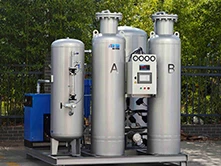


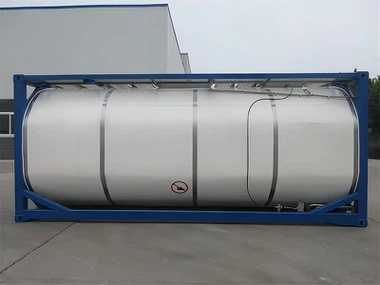


Air Separation Unit For Oxygen
Description
Technical Parameters
Why do we need an Air Separation Unit for Oxygen?
Industrial efficiency improvement and cost reduction: Chemical, metallurgical, energy and other industries rely on high-purity oxygen to accelerate reactions. Traditional cylinders or liquid oxygen have high transportation costs and limited supply. Air separation devices use air as raw materials, which can achieve low-cost, large-scale, continuous and stable gas supply, and improve production efficiency.
Medical safety guarantee: Hospital operating rooms, ICUs and home oxygen therapy have extremely high requirements for oxygen purity and stability. Bottled oxygen has transportation and storage risks and is difficult to cope with sudden demands. On-site oxygen production can ensure the continuity and safety of emergency and daily oxygen use.
Special environment adaptation: In extreme scenarios such as aerospace, plateau infrastructure, and deep-sea operations, the air is thin or the conventional oxygen supply is limited. The air separation device can stably produce oxygen under complex air pressure conditions with physical separation technology to ensure the safety of personnel and equipment operation.
Green economic choice: Compared with purchased oxygen, the raw materials of this device are taken from air, the operating cost is reduced by 30%-50%, and there is no cylinder waste. Automated operation reduces manual intervention, which is both economical and environmentally friendly.

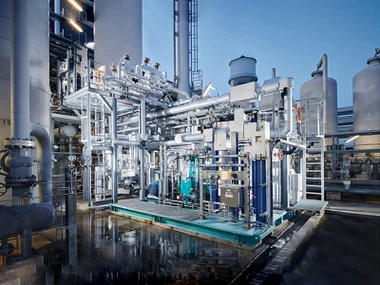
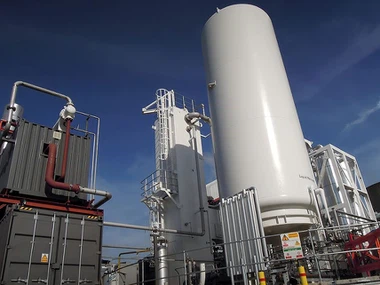
The Air Separation Unit for Oxygen mainly produces oxygen through cryogenic distillation technology. Its workflow is mainly divided into the following key steps:

Pretreatment: The outside air first enters the filtration system of the device to remove impurities such as dust and particulate matter; then it passes through the molecular sieve adsorber to remove moisture, carbon dioxide and other components that will condense and block the equipment at low temperatures to avoid affecting subsequent processes.
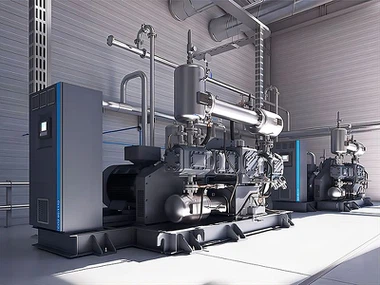
Compression and cooling: The pretreated air enters the compressor and is compressed to a higher pressure. The heat generated during the compression process is released through the cooler; the high-pressure air is further cooled to a temperature close to the liquefaction temperature to prepare for subsequent liquefaction separation.
Liquidation: The cooled high-pressure air enters the main heat exchanger and exchanges heat with the low-temperature reflux gas. The temperature is continuously reduced until it is liquefied to form liquid air.
Distillation separation: The liquid air enters the distillation tower and is separated by using the boiling point differences of components such as oxygen (boiling point - 183°C) and nitrogen (boiling point - 196°C). In the distillation tower, the rising gas phase and the descending liquid phase continuously transfer mass and heat, the low-boiling nitrogen is gradually discharged from the top of the tower, and the high-purity oxygen is enriched at the bottom of the tower.
Product output: The enriched oxygen is further processed and adjusted to reach the target purity and pressure requirements, and then output in gaseous or liquid form to meet the oxygen needs of different industries.
fAQ
1.What is the oxygen purity range that the air separation unit can achieve?
Our air separation units typically produce oxygen with a purity of 95% - 99.5%. Customized models can reach up to 99.99% purity to meet specific industrial or medical requirements.
2.How long does the installation and commissioning process take?
The installation usually takes 2 - 4 weeks depending on the unit's size and complexity. Commissioning and performance testing are completed within 1 - 2 weeks after installation to ensure stable operation.
3.Can the unit operate continuously in high - humidity or high - altitude environments?
Yes, our units are designed with environmental adaptability. For high - humidity areas, additional moisture - removal modules can be integrated. High - altitude models are optimized to maintain oxygen production efficiency under lower air pressures.
4.What safety features are included to prevent accidents?
Our units are equipped with overpressure protection valves, temperature sensors with automatic shutdown functions, and explosion - proof electrical components. Regular safety audits and emergency stop buttons further enhance operational safety.
Hot Tags: air separation unit for oxygen, China air separation unit for oxygen , suppliers, factory, Air Separation Unit, Small Air Separation Unit
Previous
Cryogenic Air Separation UnitSend Inquiry
Get in Touch
Write Your Message


