

 日本語
日本語 한국어
한국어 Français
 Deutsch
 Español
 Italiano
 Português
 Việt Nam
 Türkçe
 عربي
عربي  русский
  简体中文
简体中文 Čeština
 ไทย
ไทย Eesti
Eesti Gaeilgenah Éireann
 Bai Miaowen
 íslenska
 Cymraeg
 Български
 اردو
اردو Polski
 hrvatski
 українська
 bosanski
 فارسی
فارسی Lietuvių
 Latviešu
 עברית
עברית România limbi
 Ελληνικά
 dansk
dansk magyar
 Norsk
Norsk suomi
suomi Nederlands
 Svenska
 slovenčina
 slovenščina
 हिंदी
हिंदी Indonesia
 Melayu
 Malti
Malti Kreyòl Ayisyen
 Català
 বাংলা
বাংলা Srbija jezik (latinica)
 O'zbek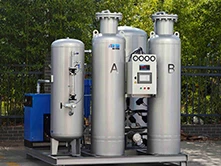


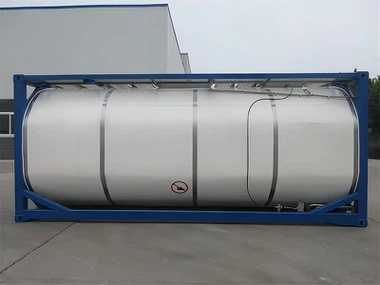


Psa Plant
Description
Technical Parameters
●Efficient Start/Stop:
Rapid oxygen production within 30 minutes, supports intermittent operation.
●Energy-Saving:
Lower energy consumption than cryogenic methods, smaller footprint, and lower costs.
●Intelligent and Easy Control:
Automatic operation + remote monitoring, minimal manual intervention.
●Stable and Reliable:
Low-pressure operation with multiple protections ensures oxygen production meets standards.


work principle of psa plant
●Raw material pretreatment: After compression, air passes through a filter to remove dust, moisture, and oil to prevent contamination of the molecular sieve.
●Pressure adsorption: Clean air enters the adsorption tower, where the molecular sieve, under pressure, preferentially adsorbs nitrogen, leaving oxygen as the product gas.
●Decompression regeneration: The adsorption tower pressure is reduced to ambient pressure, allowing the molecular sieve to release the adsorbed nitrogen and restore adsorption capacity.
●Dual-tower cycle: The two adsorption towers alternate between "pressurization adsorption and decompression regeneration" to achieve continuous and stable oxygen production.
How to choose an oxygen concentrator that suits your needs?
Identify oxygen usage scenarios.
●For medical use: Select a model that meets medical standards (such as YY/T 0298) and can consistently output 93% ± 3% purity, preferably with oxygen concentration monitoring.
●For industrial use: Determine the purity based on process requirements (90%-99.5%). For high-load applications, choose a continuous-operation model. For intermittent oxygen use, choose a PSA model with flexible start/stop functionality.
Lock in key parameters.
●Oxygen output: Select based on actual usage (0.5-5 L/min for medical use, 0.5-5000 Nm³/h for industrial use), allowing for 10%-20% redundancy.
●Energy consumption and footprint: For small and medium-sized applications, choose a PSA model (energy consumption 0.3-1.0 kWh/Nm³, small footprint). For larger production capacities, consider cryogenic chillers.
Matching usage conditions
●Environmental: For high altitudes, select a booster module. For humid/corrosive environments, select a model with rust-resistant treatment.
●Operation and maintenance: For unmanned operation, select a model with PLC automation control. Remote monitoring models reduce labor costs.
Additional requirements.
●Emergency: For continuous oxygen supply, select a model with a backup power supply.
●Cost: For short-term use, prioritize low initial investment; for long-term use, prioritize low O&M costs (such as long-life molecular sieves).
fAQ
Can the oxygen purity of the PSA Plant be adjusted on demand?
Customizable purity levels from 93% ± 3% to 99.5% can be achieved by adjusting the adsorption cycle.
Does the equipment require special site conditions for installation?
The modular design requires only a leveled, hardened surface and can be installed indoors or outdoors, eliminating the need for a dedicated workshop.
Is it difficult to replace the molecular sieve? Is the replacement cost high?
The molecular sieve module can be quickly removed and replaced, with a single replacement cost of approximately 10%-15% of the total equipment price.
Can the equipment withstand sudden power outages?
It supports backup power supply configurations, which automatically switch to a backup power supply after a power outage, ensuring uninterrupted oxygen supply in critical scenarios.
Will use at different altitudes affect oxygen production efficiency?
Customized booster modules can be used at high altitudes to compensate for differences in air density and ensure stable efficiency.
Hot Tags: psa plant, China psa plant , suppliers, factory, Psa Oxygen Plant
Previous
High Purity Oxygen GeneratorNext
Psa in Oxygen PlantSend Inquiry
Get in Touch
Write Your Message


