

 日本語
日本語 한국어
한국어 Français
 Deutsch
 Español
 Italiano
 Português
 Việt Nam
 Türkçe
 عربي
عربي  русский
  简体中文
简体中文 Čeština
 ไทย
ไทย Eesti
Eesti Gaeilgenah Éireann
 Bai Miaowen
 íslenska
 Cymraeg
 Български
 اردو
اردو Polski
 hrvatski
 українська
 bosanski
 فارسی
فارسی Lietuvių
 Latviešu
 עברית
עברית România limbi
 Ελληνικά
 dansk
dansk magyar
 Norsk
Norsk suomi
suomi Nederlands
 Svenska
 slovenčina
 slovenščina
 हिंदी
हिंदी Indonesia
 Melayu
 Malti
Malti Kreyòl Ayisyen
 Català
 বাংলা
বাংলা Srbija jezik (latinica)
 O'zbek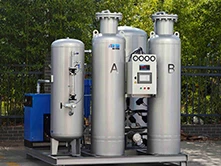


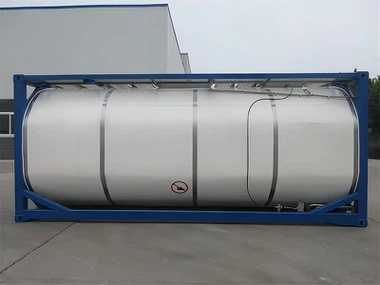


Oxygen Production For The Desulfurization Of Biogas
Description
Technical Parameters
Oxygen for desulfurization in biogas plants
In biogas plants, biogas is produced from biomass raw materials by fermentation, which can be used for important purposes such as power generation or heating. In the process of producing biogas, the microbial degradation of biomass such as plants, slurry and slaughter residues is carried out in an oxygen-free environment. However, it is worth noting that various types of biomass often contain a high content of sulfur. In the subsequent reaction, sulfur is present in the biogas in the form of hydrogen sulfide (H2S). Hydrogen sulfide interacts with the original water in the biomass to form an acidic and corrosive mixture - alkaline sulfides. This alkaline sulfide is extremely destructive to the metal parts of the fermentation tanks and pipes, as well as wood and concrete components, and seriously threatens the normal operation and service life of the biogas plant equipment.
Oxygen plays an indispensable role in the desulfurization process of biogas plants. The precise addition of oxygen to the fermentation tank can create favorable conditions for the growth of bacteria. The bacteria cultivated in this way can treat hydrogen sulfide by microbial decomposition, thereby effectively preventing alkaline sulfides from damaging the equipment and ensuring the stable operation of the biogas plant.
The oxygen generator we developed can provide high-quality and reliable solutions for fixed and mobile oxygen production in different application scenarios, including low-capacity requirements, to meet the oxygen needs of biogas plant desulfurization and other related production links.

Production Process

Raw material preparation
Air collection: Collect air from a clean place and use air filters to remove large suspended particles.
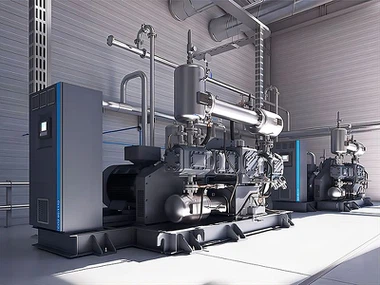
Air compression and pretreatment: The air compressor compresses the air to a suitable pressure, cools the air and removes moisture at the same time to prevent subsequent freezing or affecting equipment operation.
Oxygen separation
Pressure swing adsorption (PSA) technology (small and medium scale): The pretreated compressed air enters the adsorption tower, the adsorbent adsorbs impurities under high pressure, oxygen passes through, and the adsorbent is depressurized and regenerated after saturation. Multiple adsorption towers work alternately, and the control system ensures the stability of oxygen purity and output.
Oxygen purification and storage
Oxygen purification: Use fine filters and adsorption devices to remove trace impurities in oxygen to meet the purity requirements of biogas desulfurization.
Oxygen storage and delivery: Purified oxygen is stored in high-quality storage tanks and delivered to the vicinity of the fermentation tank through pipelines and valve systems as needed, equipped with flow regulation and monitoring equipment to control the injection volume.
Quality monitoring and adjustment
Oxygen quality monitoring: Analyzers and sensors are installed at each key link to monitor oxygen purity, pressure, and flow parameters.
Feedback and adjustment: Monitoring data is fed back to the control system. When the parameters deviate, the operating parameters are automatically adjusted or the alarm prompts manual intervention to ensure that the oxygen quality meets the standard.
FAQ
Why does oxygen production for biogas desulfurization need special attention to the air collection link?
Air is the raw material for oxygen production. For oxygen production for biogas desulfurization, the air quality at the collection point is crucial. If the air contains too much dust, impurities and harmful chemicals, it will affect the purity and quality of the subsequent oxygen. For example, too much dust may block the tiny pores in the production equipment, and impurities and harmful chemicals may react with oxygen or remain in oxygen during the oxygen production process, which will eventually affect the effect of biogas desulfurization. Therefore, it is necessary to ensure that the collected air is clean and reduce these unfavorable factors. For example, preliminary filtration of large suspended particles (such as sand and dust) through air filters is a necessary measure.
What is the role of adsorbent in pressure swing adsorption (PSA) technology for oxygen separation?
In pressure swing adsorption (PSA) technology, adsorbent plays a key role. When the pretreated compressed air enters the adsorption tower equipped with adsorbent (such as zeolite molecular sieve, etc.), the adsorbent selectively adsorbs impurity gases such as nitrogen and carbon dioxide under high pressure. This is because the special structure and chemical properties of the adsorbent make it have a strong adsorption capacity for these impurity gases, while oxygen can smoothly pass through the adsorption tower to become product gas. When the adsorbent adsorbs impurity gases close to saturation, the adsorbent can be desorbed by reducing the pressure to achieve regeneration of the adsorbent, ensure that multiple adsorption towers work alternately, and continuously and stably produce oxygen that meets the requirements for biogas desulfurization.
When cryogenic distillation technology is used for large-scale oxygen production, how to maintain a low-temperature environment?
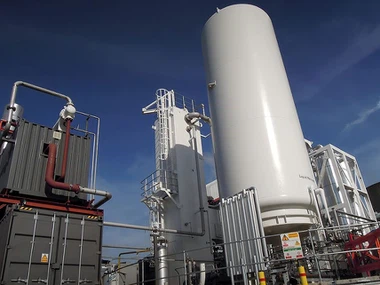
In the process of large-scale oxygen production by cryogenic distillation technology, maintaining a low-temperature environment requires the cooperation of multiple links. First, after compression and pretreatment, the air will be cooled to close to -196℃ (the boiling point of liquid nitrogen). In this process, it is key to equip it with an efficient refrigeration system, which can continuously provide low-temperature cooling capacity. At the same time, heat exchange equipment is also very important. The air is cooled by heat exchange in the main heat exchanger, and in the entire distillation process, through reasonable heat exchange design, the heat input and loss are reduced to ensure that the liquid air can be evaporated and condensed multiple times in the distillation tower under low-temperature conditions, so as to achieve the separation of oxygen and other gases by using the different boiling points of the components in the air.
In the oxygen purification process, how do fine filters and adsorption devices remove impurities?
In the oxygen purification process, fine filters are mainly used to remove physical impurities. It has a tiny pore structure inside, the size of which can be precisely controlled, and can intercept and remove tiny particulate matter remaining in the oxygen, such as possible very fine dust. The adsorption device uses the principle of chemical adsorption to remove impurities. For example, for impurities such as trace amounts of water, carbon dioxide, and hydrocarbons, the adsorbent surface has specific active sites. These impurity molecules interact with the active sites and are adsorbed on the adsorbent surface, thereby being removed from the oxygen, ensuring that the oxygen reaches the high purity required by the biogas desulfurization process.
Hot Tags: oxygen production for the desulfurization of biogas, China oxygen production for the desulfurization of biogas , suppliers, factory, Psa Oxygen Plant
Send Inquiry
Get in Touch
Write Your Message


