

 日本語
日本語 한국어
한국어 Français
 Deutsch
 Español
 Italiano
 Português
 Việt Nam
 Türkçe
 عربي
عربي  русский
  简体中文
简体中文 Čeština
 ไทย
ไทย Eesti
Eesti Gaeilgenah Éireann
 Bai Miaowen
 íslenska
 Cymraeg
 Български
 اردو
اردو Polski
 hrvatski
 українська
 bosanski
 فارسی
فارسی Lietuvių
 Latviešu
 עברית
עברית România limbi
 Ελληνικά
 dansk
dansk magyar
 Norsk
Norsk suomi
suomi Nederlands
 Svenska
 slovenčina
 slovenščina
 हिंदी
हिंदी Indonesia
 Melayu
 Malti
Malti Kreyòl Ayisyen
 Català
 বাংলা
বাংলা Srbija jezik (latinica)
 O'zbek


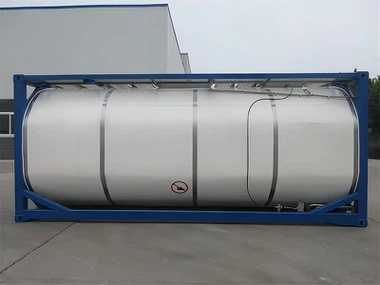

How Cryogenic Oxygen Plant Work
Nov 22, 2025
Leave a message
What Is a Cryogenic Oxygen Plant?

A cryogenic oxygen plant is an industrial facility that separates oxygen (and often nitrogen and argon) from ambient air by using extremely low temperatures to liquefy the air and then applying fractional distillation. This process, known as cryogenic air separation, leverages the different boiling points of the air's main components to produce high-purity oxygen for industrial, medical, and other applications.
How Does a Cryogenic Oxygen Plant Work?
Air Compression
Atmospheric air is drawn in and compressed via multi-stage compressors to a moderate pressure. shengerhk.com+2hitechgas.com+2
Purification
The compressed air is sent through molecular sieve beds (or similar purification units) to remove moisture, carbon dioxide, and hydrocarbons, ensuring the air is clean before cryogenic cooling.
Pre‑cooling and Heat Exchange
The cleaned air passes through a heat exchanger where it is cooled by exchanging heat with the outgoing cryogenic (cold) gases. This lowers the temperature of the air close to its liquefaction point.
Expansion / Refrigeration
Part of the cold air is expanded in an expander (or via a Joule–Thomson valve), which reduces its pressure and further cools it. This expansion provides the refrigeration necessary to reach cryogenic temperatures.
Liquefaction
After sufficient cooling, a portion of the air condenses into liquid. This liquid is rich in nitrogen and oxygen, but not yet separated into pure components.
Fractional Distillation (Rectification)
The liquid air enters distillation columns (typically a double-column system):
In the high-pressure column, part of the liquid is separated into richer nitrogen vapor (top) and oxygen-enriched liquid (bottom)
In the low-pressure column, the oxygen-enriched liquid is further purified. Nitrogen - which boils at a lower temperature - is boiled off, while oxygen concentrates in the liquid phase due to its higher boiling point.
Product Recovery
Oxygen: The purified oxygen is withdrawn, either as a cold liquid (LOX) or vaporized to gas, depending on demand. hitechgas.com
Nitrogen: Nitrogen can be recovered from the top of the distillation column; in some plants, it is delivered as gas or liquefied. YG Machinery
Additional gases (such as argon) may be separated via side‑columns if required.
Heat Recovery & Efficiency
The outgoing product and waste streams (oxygen, nitrogen) are used in heat exchangers to cool the incoming air in counter-flow, improving energy efficiency.
Insulated Cold Box
The cryogenic distillation equipment (heat exchangers and columns) is housed in a well-insulated enclosure (cold box) to minimize thermal losses.
Key Advantages of Cryogenic Oxygen Plants
●High purity: Capable of producing very pure oxygen (> 95% or higher), suitable for demanding industrial or medical applications.
●Large-scale production: Well-suited for high-demand environments due to continuous operation and large capacity. shengerhk.com
●Multi-product capability: One plant can often yield oxygen, nitrogen, and even argon in both liquid and gas forms. cryomade.com
●Energy recovery: Efficient heat integration and expansion cycles make the process more energy-efficient than otherwise expected.
Applications of Cryogenic Oxygen Plants
●Industrial Manufacturing: Supplying oxygen for steelmaking, welding, glass production, and petrochemical processes.
●Medical & Healthcare: Providing high-purity oxygen for hospitals, clinics, and emergency services.
●Scientific Research: Supporting laboratories that require liquid oxygen or inert gases for cryogenic experiments.
●Energy & Environment: In gasification plants, combustion systems, or as part of carbon-capture infrastructure.
Conclusion
Cryogenic oxygen plants leverage low-temperature physics and fractional distillation to separate air into high-purity gases. The combination of purification, heat exchange, expansion, and distillation allows these plants to deliver oxygen and other gases at scale, with high purity and efficiency. Their robust design and flexibility make them a critical part of modern industrial gas infrastructure.
Buyer FAQs (6 Common Questions)
What is the typical purity of oxygen produced by a cryogenic oxygen plant?
Cryogenic plants commonly produce oxygen with purities greater than 95%, and some designs reach > 99% oxygen, depending on the fractionation system.
How energy‑intensive is cryogenic separation?
The process requires significant electrical power, particularly for air compression and the refrigeration cycle. However, efficient heat recovery and expansion turbines help reduce net energy consumption. biosng.com+1
Can a single plant produce both oxygen and nitrogen?
Yes. A cryogenic air separation plant typically produces oxygen and nitrogen simultaneously. It may also produce argon if configured with an extra distillation column.
Why is a cold box necessary?
The cold box houses the distillation columns and heat exchangers in an insulated enclosure to maintain very low temperatures and limit heat ingress, which is critical for efficiency.
What kind of maintenance does a cryogenic oxygen plant require?
Maintenance includes regular inspection of compressors, molecular sieve beds, expansion machinery, insulation integrity, and purification systems to ensure reliable operation and safety.
Is a cryogenic oxygen plant economical for small-scale applications?
Cryogenic plants become most economical at larger scales (high oxygen demand), as smaller technologies (like PSA) may be more cost-efficient for low-to-medium flow requirements.