

 日本語
日本語 한국어
한국어 Français
 Deutsch
 Español
 Italiano
 Português
 Việt Nam
 Türkçe
 عربي
عربي  русский
  简体中文
简体中文 Čeština
 ไทย
ไทย Eesti
Eesti Gaeilgenah Éireann
 Bai Miaowen
 íslenska
 Cymraeg
 Български
 اردو
اردو Polski
 hrvatski
 українська
 bosanski
 فارسی
فارسی Lietuvių
 Latviešu
 עברית
עברית România limbi
 Ελληνικά
 dansk
dansk magyar
 Norsk
Norsk suomi
suomi Nederlands
 Svenska
 slovenčina
 slovenščina
 हिंदी
हिंदी Indonesia
 Melayu
 Malti
Malti Kreyòl Ayisyen
 Català
 বাংলা
বাংলা Srbija jezik (latinica)
 O'zbek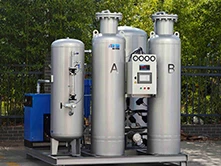



Oxygen Generators For Gold Mining, Role And Benefits
Nov 19, 2025
Leave a message
Onsite oxygen generators have evolved from a "value-added option" to a "core infrastructure" in the gold mining industry, reshaping operational logic through advanced gas separation technology. Unlike traditional liquid oxygen supply, these systems extract and purify oxygen directly from ambient air, delivering a steady stream of high-purity gas tailored to the unique demands of gold extraction. Their ability to address pain points like supply chain fragility, low recovery rates, and high operational costs has made them a staple in mines across remote mountainous regions, tropical rainforests, and desert areas. Below is a comprehensive analysis of their technical role, core benefits, and industry-specific value-enriched with key technical insights to support informed decision-making.

I. Technical Fundamentals: How Oxygen Generators Work for Gold Mining
Before delving into their role in gold mining, understanding the core technology of oxygen generators is essential. The two dominant types in mining applications are PSA (Pressure Swing Adsorption) and VPSA (Vacuum Pressure Swing Adsorption), both leveraging physical adsorption rather than chemical reactions to produce oxygen-ensuring safety and cost-efficiency.
1.1 Core Working Principles
Both technologies use specialized adsorbents (typically zeolite molecular sieves) with high selectivity for nitrogen: when ambient air is compressed and passed through the sieve bed, nitrogen molecules are adsorbed, while oxygen (along with trace argon and water vapor) passes through as product gas. The difference lies in the regeneration process: PSA uses pressure reduction to release adsorbed nitrogen, making it suitable for small to medium-scale needs; VPSA uses vacuum suction for regeneration, reducing energy consumption and enabling large-scale oxygen production (100+ Nm³/h).
For gold mining, the key advantage of this technology is on-demand adjustability-purity (90%-95%) and flow rate can be fine-tuned to match leaching tank volume, ore grade, and solvent concentration, avoiding the "one-size-fits-all" inefficiency of liquid oxygen.
1.2 Critical Technical Indicators for Mining Scenarios
●Oxygen Purity (90%-95%): This range is optimized for gold leaching-purity below 90% slows reaction rates, while exceeding 95% offers no additional yield benefits but increases energy costs.
●Pressure Stability (0.2-0.6 MPa): Consistent outlet pressure ensures uniform sparging; fluctuations can cause uneven slurry reaction and reduce recovery.
●Environmental Adaptability: Mining-specific models feature dust-proof (IP65-rated air filters), moisture-proof (desiccant pre-treatment), and temperature-resistant (-20°C to 50°C) designs to withstand harsh site conditions.
●Start-up Time (<30 minutes): Fast start-up minimizes downtime during power outages or maintenance, critical for continuous mining operations.
II. Core Role in Gold Mining: From Ore to Gold
Gold extraction is a precision-driven process where oxygen acts as both a catalyst and efficiency booster. PSA Oxygen generators integrate seamlessly into every key stage, addressing bottlenecks that traditional supply methods cannot.

2.1 Ore Processing: Enhancing Pre-Treatment Efficiency
After crushing and grinding, ore is converted into a slurry with 60%-70% solid content. In this stage, pre-oxidation (a critical step for sulphide-rich ores) relies on oxygen to break down sulphide minerals (e.g., pyrite) that encapsulate gold. Oxygen generators supply a steady flow of gas to pre-oxidation tanks, accelerating the reaction by 30%-40% compared to air aeration. This not only reduces the load on subsequent leaching steps but also lowers cyanide consumption by eliminating sulphide interference.
2.2 Leaching: The "Catalyst" for Gold Dissolution
Cyanide leaching (the most widely used gold extraction method) follows the chemical reaction: 4Au + 8CN⁻ + O₂ + 2H₂O → 4[Au(CN)₂]⁻ + 4OH⁻. Here, oxygen is a non-negotiable reactant-not just a catalyst. High-purity oxygen from generators ensures this reaction proceeds efficiently:
●Accelerated Kinetics: Oxygen partial pressure in leach tanks increases from 21% (air) to 90%-95%, speeding up gold dissolution by 15%-25%. A mine processing 500 tons of ore daily can reduce leaching time from 48 hours to 36 hours, boosting throughput.
●Low-Grade Ore Viability: For ores with gold content below 2 g/ton, air aeration often results in unprofitable recovery rates. Oxygen enrichment raises recovery from 65%-70% to 75%-80%, making low-grade deposits economically viable.
2.3 Sparging & Flotation: Ensuring Uniform Reaction
Sparging-distributing oxygen through fine bubbles into slurry-relies on consistent gas flow to avoid "dead zones" where ore particles remain unreacted. Oxygen generators, paired with customized sparger nozzles (adjustable bubble size: 100-500 μm), ensure uniform dispersion. In flotation cells (used for pre-concentrating gold-bearing minerals), oxygen enhances the hydrophobicity of gold particles, increasing their adhesion to air bubbles and improving concentrate grade by 8%-12%.
2.4 Remote Site Logistics: Solving the "Supply Chain Bottleneck"
70% of global gold mines are in remote areas (e.g., the Amazon Basin, Central African Republic) where liquid oxygen delivery is challenging: road access is limited, transportation costs account for 40%-60% of liquid oxygen expenses, and stockouts (due to monsoons or political instability) can halt production for days. Onsite generators eliminate these risks by turning ambient air into a reliable oxygen source, with a single unit capable of replacing 2-3 liquid oxygen tankers per month for medium-scale mines.
III. Unmatched Benefits: Beyond Yield Improvement
The value of oxygen generators extends far beyond boosting gold output-they optimize the entire operational ecosystem, delivering cost, safety, and sustainability benefits that align with modern mining standards.

3.1 Economic Benefits: Calculable Cost Savings
For mining operators, the return on investment (ROI) of oxygen generators typically ranges from 12 to 24 months, driven by multiple cost-saving channels:
●Eliminating Liquid Oxygen Costs: A medium-scale mine (500 tons/day) spends $35,000-$45,000 monthly on liquid oxygen (procurement + delivery + storage). Generators cut this expense to near-zero, saving $420,000-$540,000 annually.
●Reducing Reagent Consumption: Efficient oxygen-solvent synergy lowers cyanide usage by 20%-25%. For a mine using 1 ton of cyanide monthly ($15,000/ton), this saves $36,000-$45,000 per year.
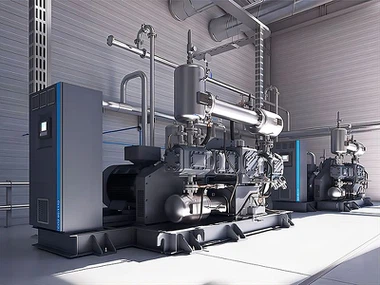
●Lower Energy & Labor Costs: VPSA systems consume 0.4-0.6 kWh/Nm³ of oxygen, 25%-30% less than small-scale liquid oxygen vaporizers. Automated controls also reduce the need for dedicated gas supply personnel, cutting labor costs by $30,000-$50,000 annually.
3.2 Safety & Compliance: Mitigating Operational Risks
Mining safety regulations (e.g., Australia's Work Health and Safety Act, South Africa's Mine Health and Safety Act) increasingly strict requirements for toxic substance management and gas handling. Oxygen generators address key safety risks:
●Reduced Cyanide Exposure: Lower cyanide usage decreases the risk of skin contact and inhalation for workers, reducing occupational health incidents by 30%-40%.
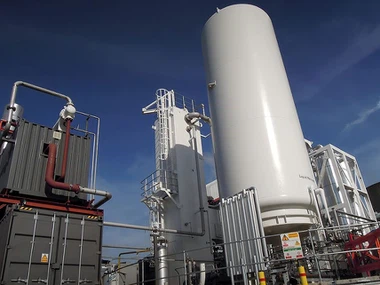
●Eliminating Storage Hazards: Liquid oxygen storage tanks operate at -183°C, posing risks of frostbite, explosion (if contaminated), and pressure buildup. Generators have no cryogenic components, minimizing safety incidents.
●Compliance with Emission Standards: Reduced reagent and fuel (for liquid oxygen transport) usage helps mines meet regional environmental regulations, avoiding fines of up to $100,000 for non-compliance.
3.3 Operational Flexibility: Adapting to Dynamic Needs
Gold mining operations are rarely static-ore grades fluctuate, processing volumes adjust, and market demands shift. Oxygen generators offer unmatched flexibility:
●Adjustable Output: PSA systems can scale flow rates from 5 Nm³/h to 100 Nm³/h, while VPSA systems handle 100 Nm³/h to 1,000+ Nm³/h, matching changes in ore processing capacity.
●Grade-Specific Purity: For high-grade ore (5+ g/ton), 95% purity maximizes extraction speed; for low-grade ore (1-2 g/ton), 90% purity balances efficiency and cost.
●Easy Integration: Modular designs allow generators to connect to existing leaching tanks, flotation cells, and central control systems with minimal downtime (installation typically takes 3-5 days).
3.4 Sustainability: Supporting ESG Goals
Modern mining investors and stakeholders increasingly prioritize ESG (Environmental, Social, Governance) performance. Oxygen generators contribute to sustainability in tangible ways:
●Carbon Emission Reduction: Liquid oxygen transportation emits 0.15 kg CO₂ per Nm³; a large-scale mine using 300 Nm³/h of oxygen reduces annual emissions by 394 tons (calculated as 300 Nm³/h × 24 h × 365 days × 0.15 kg CO₂/Nm³).
●Waste Reduction: Lower cyanide usage reduces toxic wastewater discharge, easing the burden on tailings treatment systems.
●Energy Efficiency: Advanced VPSA models with variable frequency drives (VFD) further reduce energy consumption by 10%-15%, aligning with global industrial decarbonization trends.
3.5 Comparative Advantage: Generators vs. Traditional Oxygen Supply
|
Evaluation Criterion |
Onsite Oxygen Generators |
Liquid Oxygen Delivery |
Compressed Oxygen Cylinders |
|---|---|---|---|
|
Supply Reliability |
99.5% (uninterrupted) |
70%-80% (prone to delays) |
60%-70% (frequent cylinder replacement) |
|
Safety Risk |
Low (no cryogenics/toxicity) |
High (cryogenic hazards, storage risks) |
Medium (leakage, cylinder explosion risks) |
|
Environmental Impact |
Low (minimal emissions) |
High (transportation emissions) |
Medium (cylinder production waste) |
|
Suitability for Remote Mines |
Excellent |
Poor |
Unsuitable (high transport costs) |
IV. Choosing the Right Solution: Technical Selection Guide
Selecting the optimal oxygen generator depends on mine scale, ore characteristics, and operational conditions. Below is a tailored guide for common scenarios:
●Small-Scale Mines (50-200 tons/day): PSA systems (5-20 Nm³/h, 92% purity) are ideal-compact (≤20㎡), low power consumption, and no need for specialized operators. Example: A Southeast Asian mine using a 10 Nm³/h PSA generator reduced monthly gas costs by $8,000.
●Medium-Scale Mines (200-1,000 tons/day): Modular PSA systems (20-100 Nm³/h, adjustable 90%-95% purity) suit mixed ore grades. Multiple units can be combined for redundancy-if one unit undergoes maintenance, others maintain supply.
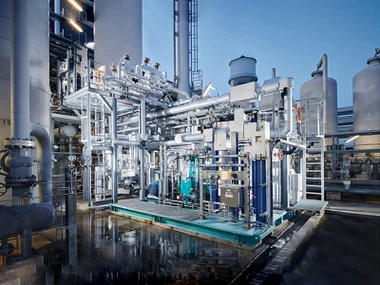
●Large-Scale Mines (1,000+ tons/day): VPSA systems (100-1,000+ Nm³/h, 93%-95% purity) are cost-effective for high-volume needs. Integrating carbon capture modules further enhances ESG performance, as seen in a South American mine that reduced emissions by 1,800 tons/year.
●Extreme Environments: Mines in cold regions (-20°C or below) should choose models with pre-heating systems; those in humid areas (rainforests) need enhanced moisture separation to protect zeolite sieves.
V. Trusted Partner for Mining Excellence
The technical complexity and operational criticality of oxygen generators demand a partner with deep mining expertise and global service capabilities. NEWTEK GROUP stands out as a leader in this field, with over 9,000 systems installed worldwide and a specialized focus on mining applications.

NEWTEK's PSA oxygen generators and VPSA oxygen generators are engineered to meet the harshest mining conditions-from the dust of Australian outback mines to the humidity of Indonesian rainforest sites. Each system is customized based on ore analysis reports, site logistics, and production goals, supported by pre-installation site assessments, 24/7 technical support, and a global spare parts network (delivered within 48 hours to key mining regions).
Backed by successful projects in Ghana (30,000 Nm³/h air separation), Peru (4×40,000 Nm³/h systems), and the Philippines (51,000 Nm³/h complex), NEWTEK doesn't just supply equipment-we deliver end-to-end oxygen solutions that boost yield, cut costs, and enhance sustainability.
Contact NEWTEK today to request a free technical consultation and customized proposal. Let our expertise turn your mining challenges into operational advantages-one cubic meter of oxygen at a time.