

 日本語
日本語 한국어
한국어 Français
 Deutsch
 Español
 Italiano
 Português
 Việt Nam
 Türkçe
 عربي
عربي  русский
  简体中文
简体中文 Čeština
 ไทย
ไทย Eesti
Eesti Gaeilgenah Éireann
 Bai Miaowen
 íslenska
 Cymraeg
 Български
 اردو
اردو Polski
 hrvatski
 українська
 bosanski
 فارسی
فارسی Lietuvių
 Latviešu
 עברית
עברית România limbi
 Ελληνικά
 dansk
dansk magyar
 Norsk
Norsk suomi
suomi Nederlands
 Svenska
 slovenčina
 slovenščina
 हिंदी
हिंदी Indonesia
 Melayu
 Malti
Malti Kreyòl Ayisyen
 Català
 বাংলা
বাংলা Srbija jezik (latinica)
 O'zbek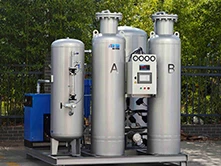



Oxygen Plants: What’s The Difference Between A PSA And VPSA Oxygen Plant?
Apr 07, 2026
Leave a message

Oxygen is critical for industrial production, medical treatment, environmental protection, and aquaculture-key for global buyers (industrial manufacturers, medical institutions, wastewater plants, fish farms). Air contains ~21% oxygen; PSA (Pressure Swing Adsorption) and VPSA (Vacuum Pressure Swing Adsorption) are the most widely used non-cryogenic air separation technologies. Tailored for buyers, procurement managers, and engineers (India, USA, UAE, Australia, Europe), this guide explains their principles, differences, and procurement tips. As a professional industrial PSA VPSA oxygen plant manufacturer, we offer customized OEM/ODM solutions and global on-site installation.
What is a PSA Oxygen Plant? – Procurement Guide
PSA Oxygen Plant is a cost-effective small-to-medium scale solution for buyers with low-medium oxygen demand. It produces 90%-95% pure oxygen via high-pressure adsorption and low-pressure desorption using molecular sieves, ensuring continuous production by regenerating saturated adsorbents.
Key Advantages: Simple structure, small footprint, low upfront investment, easy maintenance, fast installation-ideal for scattered users.
Global Applications :
• Medical: Small clinics/hospitals (India, Southeast Asia, Africa)
• Aquaculture: Fish/shrimp farms (China, India, Vietnam, Norway)
• Wastewater Treatment: Small-medium plants (USA, Europe, India)
• Light Industry & Small Manufacturing: Paper, glass, welding (UAE, Australia, global SMEs)
What is a VPSA Oxygen Plant? – Industrial Large-Scale Solution
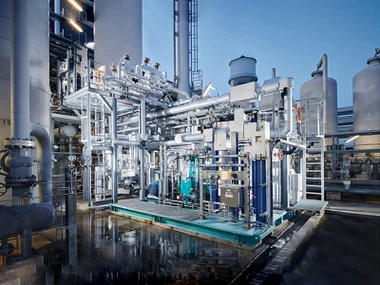
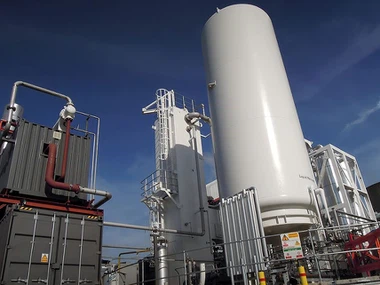
VPSA Oxygen Plant is an upgraded, high-efficiency PSA-based technology for large-scale industrial applications. It uses a vacuum blower for negative-pressure desorption, reducing energy consumption and air processing volume-saving long-term costs. It delivers 90%-95% pure oxygen, high daily output, and 24/7 continuous operation.
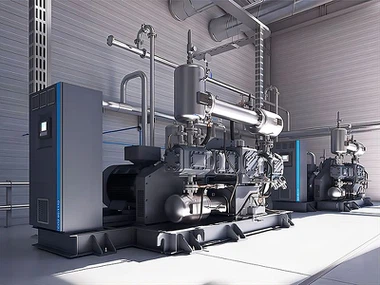
Typical Structure (Technical Focus):
• Vacuum blower (energy-saving core)
• Rotary-lobe feed air blower (stable supply)
• Oxygen surge tank (stable output pressure)
• One/two adsorbent vessels (high-efficiency adsorption)
Key Differences Between PSA and VPSA Oxygen Plants
• Energy Efficiency: PSA uses high inlet pressure (higher power consumption); VPSA uses vacuum desorption (more energy-efficient).
• Production Scale: PSA for small-medium output; VPSA for ≥20 tons/day (cost advantage for large demand).
• Investment: PSA has lower upfront cost; VPSA has complex configuration and higher initial investment.
• Applications: PSA for scattered small-medium users; VPSA for continuous large-scale centralized supply.
Procurement Guide: Choose PSA or VPSA?
• Choose PSA: Small-medium output, limited space, low upfront investment, simple operation.
• Choose VPSA: Large-scale continuous supply, low long-term power costs, sufficient supporting conditions.
FAQ
Q: What purity of oxygen can PSA and VPSA oxygen plants produce?
A: Both PSA and VPSA oxygen plants can stably produce oxygen with a purity of 90%-95%, which is suitable for most industrial, medical, and aquaculture applications.
Q: What is the difference in energy consumption between PSA and VPSA oxygen plants?
A: PSA oxygen plants operate at relatively high inlet pressure, resulting in higher power consumption per cubic meter of oxygen. VPSA uses vacuum desorption technology, which is significantly more energy-efficient, especially for large-scale oxygen production.
Q: What is the suitable production scale for PSA and VPSA oxygen plants?
A: PSA is ideal for small-to-medium output scenarios, while VPSA is optimized for large-scale production (20 tons per day and above) with obvious cost advantages in high-demand scenarios.
Q: How long is the installation and commissioning cycle for these oxygen plants?
A: PSA oxygen plants have a simple structure, with installation and commissioning usually completed in 1-2 weeks. VPSA plants, due to their more complex configuration, take 3-4 weeks on average, depending on the project scale.
Q: Do you provide after-sales service and technical support for global buyers?
A: Yes, we provide global on-site technical guidance, maintenance training, and long-term after-sales support. We also offer OEM/ODM customization to meet the specific needs of buyers in different regions (India, USA, UAE, etc.).
Q: What are the main factors to consider when choosing between PSA and VPSA oxygen plants?
A: Key factors include your actual oxygen demand (output), installation space, upfront investment budget, and long-term operation costs. For small demand and limited budget, choose PSA; for large-scale continuous supply, choose VPSA.