

 日本語
日本語 한국어
한국어 Français
 Deutsch
 Español
 Italiano
 Português
 Việt Nam
 Türkçe
 عربي
عربي  русский
  简体中文
简体中文 Čeština
 ไทย
ไทย Eesti
Eesti Gaeilgenah Éireann
 Bai Miaowen
 íslenska
 Cymraeg
 Български
 اردو
اردو Polski
 hrvatski
 українська
 bosanski
 فارسی
فارسی Lietuvių
 Latviešu
 עברית
עברית România limbi
 Ελληνικά
 dansk
dansk magyar
 Norsk
Norsk suomi
suomi Nederlands
 Svenska
 slovenčina
 slovenščina
 हिंदी
हिंदी Indonesia
 Melayu
 Malti
Malti Kreyòl Ayisyen
 Català
 বাংলা
বাংলা Srbija jezik (latinica)
 O'zbek


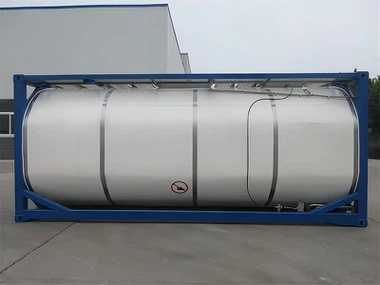

Process Optimization Of Cryogenic Air Separation Unit
Jul 14, 2025
Leave a message
With the rapid development of the chemical industry, the demand for industrial gases such as oxygen is growing. As a key equipment, the operating efficiency and economy of the 50,000 m³/h cryogenic air separation unit have attracted much attention. At present, rising energy prices and intensified market competition have prompted companies to seek process optimization to reduce costs and increase efficiency. This paper takes the unit of a chemical plant as the research object, builds a model with the help of Aspen Plus software, focuses on the process parameters of the distillation tower, determines the optimal solution through sensitivity analysis, and verifies it under different loads, aiming to provide a reference for improving the performance of the unit and increasing economic benefits.
Construction of Process Flow Model for Air Separation Plant
Process Flow
The 50,000 m³/h cryogenic air separation plant adopted by a chemical production factory, in actual production, air enters the rectification system after passing through the filtration system, compression system, precooling system and expansion system in sequence to achieve gas separation. This paper mainly analyzes the oxygen production process, and its production process flow is as follows:
Air enters the air compressor after removing impurities through a high-efficiency filter. The compressed air enters the plate-fin precooling system and exchanges heat with cooling water to reduce the temperature. Then part of the air enters the next-stage compression system, and the other part enters the rectification tower after further purification treatment.
The air flow entering the next-stage compression system is about 4,500 kmol/h. This part of the gas enters the expander after heat exchange, the temperature drops to about -115℃, the pressure is reduced to about 0.15 MPa through the expander, and then enters the rectification tower after heat exchange with the temperature dropping to about -165℃.
The rectification tower is divided into an upper tower and a lower tower. The upper tower is a low-pressure tower with a pressure of about 130 kPa, and the lower tower is a high-pressure tower with a pressure of about 580 kPa. The gas after heat exchange and the gas from the expander are sent to the upper part and the middle part of the upper tower of the rectification tower respectively. The gas is rectified for many times in the rectification tower. Nitrogen is obtained at the top of the tower, oxygen is obtained at the bottom of the tower, and some liquid products are stored in the corresponding storage tanks.
Construction of Process Flow Model
It can be known from the above air separation process that the actual production process includes compression, cooling, expansion, rectification and other processes. When using Aspen Plus software for process simulation, the applied modules and functions are as follows:
●The air compressor adopts the COMPR module;
●The expander adopts the EXP module;
●The heat exchanger adopts the HEATX module;
●The rectification tower adopts the RadFrac module;
●The pump adopts the PUMP module;
●The separator adopts the SEP module.
In the process of model simulation, according to the functions of different unit modules, they are connected through material flow, and the flow is executed according to the oxygen production process. During the simulation, the equipment parameters are set according to the design values. The pressure at the top of the upper tower of the rectification tower is set to 0.132 MPa, the pressure at the bottom of the tower is set to 0.138 MPa, the temperature at the top of the tower is set to -193.5℃, the temperature at the bottom of the tower is set to -180.2℃, and the number of trays is 55. After simulation analysis, the results are shown in Table .
It can be seen from the simulation results of the model in Table that various indexes of the model are basically consistent with the design indexes of the cryogenic air separation plant. The difference between the purity of liquid oxygen in the upper tower and the design value is 0.8%, the fluctuation of the simulation value is within the allowable range, and the simulated oxygen output is close to the design value, with errors within the allowable range. Thus, it can be seen that the model established this time can be used for process optimization verification analysis [2].
Table 1 Simulation results of air separation plant process flow model
| Item | Design Index | Simulation Index |
|---|---|---|
| Flow rate of waste liquid nitrogen into the upper tower/(kmol/h) | 4000 | 4007 |
| Flow rate of liquid air into the upper tower/(kmol/h) | 5000 | 5000 |
| Flow rate of liquid nitrogen into the upper tower/(kmol/h) | 4000 | 4000 |
| Purity of liquid air in the lower tower, \(x(\ce{O2})\) 1% | 37 | 36.1 |
| Purity of waste nitrogen in the upper tower, \(x(\ce{N2})\) 1% | 90 | 89.87 |
| Flow rate of nitrogen out of the cold box/(kmol/h) | 2350 | 2350 |
| Bottom pressure of the upper tower/MPa | 0.14 | 0.14 |
| Top pressure of the lower tower/MPa | 0.56 | 0.558 |
| Nitrogen product output/(kmol/h) | 2400 | 2400 |
| Medium - pressure liquid nitrogen output/(kmol/h) | 2940 | 2924.38 |
| Low - pressure liquid nitrogen output/(kmol/h) | 1360 | 1336.58 |
Process Optimization Analysis
In the gas separation process of the cryogenic air separation plant, the upper tower of the rectification tower plays a key role. Through the research and theoretical analysis of the equipment, the goal of energy saving and consumption reduction can be achieved by changing the process parameters of the upper tower of the rectification tower. This time, the sensitivity module of Aspen Plus is used to analyze the different process parameters of the upper tower of the rectification tower in detail, and the optimal process operation scheme is obtained.
Relationship between Feed Position and Separation Efficiency
In the simulation process, keeping other parameters unchanged and changing the feed position, the change result of the separation efficiency of the upper tower is shown in Figure .
It can be seen from Figure that with other parameters unchanged, changing the feed position of the upper tower of the rectification tower, the separation efficiency of the upper tower will first increase and then decrease. When the feed position is set at the 28th tray, the separation efficiency reaches the highest. Thus, it can be seen that the 28th tray is the optimal feed position.

Relationship between Feed Flow and Oxygen Output and Purity

It can be seen from Figure 2 that with the increase of the feed flow of the upper tower, the oxygen output gradually increases, but the purity shows a downward trend, which is consistent with the theoretical analysis. It can be seen from the figure that when the feed flow of the upper tower is below 780 kmol/h, the purity of oxygen is above 99.6%, which meets the gas demand of the chemical industry. At this time, the output is 2850 kmol/h, which is significantly higher than the initial feed flow of 750 kmol/h and the oxygen output of 2780 kmol/h. Therefore, the feed flow should be controlled at 780 kmol/h, which can increase the output while ensuring the oxygen purity.
Influence of Pressure on Energy Consumption
Keeping other parameters unchanged and changing the pressure of the upper tower, the change of the energy consumption of the device is shown in Figure .
It can be seen from Figure that with the increase of the pressure of the upper tower, the energy consumption of the device gradually increases. Considering the separation effect and energy consumption comprehensively, it is appropriate to set the pressure of the upper tower to 0.135 MPa, which can not only ensure a good separation effect, but also avoid excessive energy consumption.
Practical Application of Process Optimization Scheme
The gas produced by the factory is mainly supplied to chemical enterprises, and the produced oxygen is used in oxidation reactions in chemical reactions. In recent years, due to the rising energy prices and intensified market competition, the profit space of the factory has gradually narrowed. In this case, the factory decided to reduce energy consumption and improve economic benefits by improving the production process. After research and analysis, the factory carried out process improvement in May 2023. The improvement scheme is as follows: the pressure of the upper tower of the rectification tower is set to 0.135 MPa, the feed temperature of the upper tower is set to -168℃, the feed amount of the upper tower is adjusted to 780 kmol/h, and the feed position is set at the 28th tray. Due to the process improvement, the energy consumption of the rectification tower has been reduced, so the air handling capacity of the cryogenic air separation plant can be appropriately increased, thus increasing the oxygen output. In the process of process improvement, the feed flow of the air compression system is changed at the same time, and the application effect of the cryogenic air separation plant is analyzed under different loads. The verification period for each load is 15 days, and the production situation is shown in Table 2.
It can be seen from Table 2 that after process optimization, the maximum variable working condition load can reach 115% of the original load, and in this case, both oxygen and liquid oxygen outputs are increased. Moreover, under 115% load, the energy consumption of the upper tower of the rectification tower changes from the original -7.85 MW to -7.23 MW, with an energy saving of 7.9%. Through the analysis of the electric energy of the equipment, it is known that the electric energy reduction of the equipment under 115% load is 125 kW·h. The industrial electricity cost in the area where the factory is located is 0.72 yuan/(kW·h). Calculated by the equipment operating for 330 days, the annual electricity cost can be saved by 712,800 yuan. Calculated from the aspect of product output, after process optimization, the oxygen output has increased by 380 kmol/h, the liquid oxygen output has increased by 420 kmol/h, and the liquid argon output has increased by 25 kmol/h. It is calculated that the annual profit can be increased by 3.2 million yuan. Thus, it can be seen that the process improvement can create 3.9128 million yuan of benefits for the enterprise annually.
Table 2 Production situation of cryogenic air separation plant under different loads after process optimization
|
Item |
80% load |
90% load |
100% load |
110% load |
115% load |
|
Feed amount (kmol/h) |
9850 |
11000 |
12150 |
13300 |
14000 |
|
Oxygen output (kmol/h) |
2180 |
2450 |
2750 |
3020 |
3130 |
|
Liquid oxygen output (kmol/h) |
2550 |
2850 |
3200 |
3480 |
3620 |
|
Liquid argon output (kmol/h) |
95 |
105 |
120 |
135 |
145 |