

 日本語
日本語 한국어
한국어 Français
 Deutsch
 Español
 Italiano
 Português
 Việt Nam
 Türkçe
 عربي
عربي  русский
  简体中文
简体中文 Čeština
 ไทย
ไทย Eesti
Eesti Gaeilgenah Éireann
 Bai Miaowen
 íslenska
 Cymraeg
 Български
 اردو
اردو Polski
 hrvatski
 українська
 bosanski
 فارسی
فارسی Lietuvių
 Latviešu
 עברית
עברית România limbi
 Ελληνικά
 dansk
dansk magyar
 Norsk
Norsk suomi
suomi Nederlands
 Svenska
 slovenčina
 slovenščina
 हिंदी
हिंदी Indonesia
 Melayu
 Malti
Malti Kreyòl Ayisyen
 Català
 বাংলা
বাংলা Srbija jezik (latinica)
 O'zbek


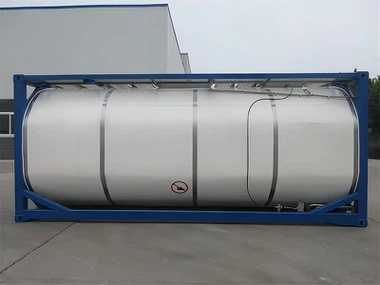


Cryogenic Asu Equipment
Description
Technical Parameters
Cryogenic ASUs separate atmospheric air into its primary components through a precise sequence of processes:
●Air Compression: Ambient air is drawn in and compressed to the required pressure by multi-stage compressors, typically reaching 5-7 bar.
●Purification: The compressed air passes through molecular sieve adsorbers to remove impurities like water vapor, carbon dioxide, and hydrocarbons that could freeze and block equipment.
●Cooling and Liquefaction: The purified air flows through heat exchangers where it is cooled to cryogenic temperatures using the cold from outgoing product streams and a turbo-expander that provides additional refrigeration.
●Distillation: The cooled air enters a double-column distillation system:
Lower pressure column: Separates nitrogen from oxygen-enriched liquid
Higher pressure column: Further purifies the components based on their boiling points
●Product Extraction:
Nitrogen: With the lowest boiling point (-195.8°C), it rises to the top of the column
Oxygen: With the highest boiling point (-183°C), it collects at the bottom
Argon: With intermediate boiling point (-185.8°C), it's extracted as a side stream
Delivery: The separated gases are either delivered as gases through pipelines or stored as liquids in cryogenic tanks for later use.

Key Components of a Cryogenic ASU
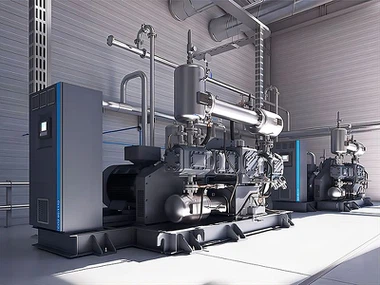
Compressor:
Compresses atmospheric air to initiate the process.
Heat Exchangers:
Transfer heat to cool the air to cryogenic temperatures and to exchange heat between different streams of the process.
Distillation Columns:
The core of the separation process, where the air components are separated based on boiling points
Turbo-expander:
A crucial component that generates the cold needed to liquefy the air, often as part of the compression stage.
Coldbox:
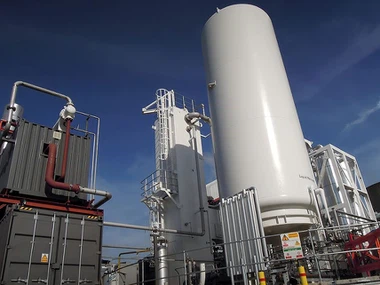
A well-insulated enclosure that houses the cryogenic equipment to maintain the extremely low temperatures required for separation.
Why Partner with NEWTEK?
Contact NEWTEK Experts: +86 19906611480

✅ One-Stop & Solutions
From design, procurement, and construction to start-up and operation, NEWTEK delivers full-scope solutions that eliminate the need to coordinate with multiple suppliers.
✅ Strong Expertise in Engineering & Resource Integration
With deep know-how in gas engineering and resource integration, NEWTEK ensures efficient system design, optimized investment, and seamless process integration.
✅ Proven Cross-Industry Experience
Serving industries such as textiles, metallurgy, and chemicals, NEWTEK brings extensive experience across diverse industrial applications and operating standards.
✅ Reduced Communication & Coordination Risks
By acting as a single and turnkey partner, NEWTEK minimizes interface issues, avoids project delays, and streamlines communication across complex projects.
✅ On-Time Delivery & Reliable Operation
NEWTEK guarantees timely project execution and ensures smooth transition from commissioning to stable long-term operation.
FAQ
1. Purity and Capacity
Q: What purity levels can the equipment achieve, and what is the production capacity range?
A: Standard configuration produces oxygen ≥99.6%, nitrogen ≥99.999%, and argon ≥99.999%. With special purification modules, nitrogen and argon purity can exceed 99.9999%. Daily production capacity ranges from 100 to 5,000+ tons, customizable to specific needs.
2. Energy Consumption and Operating Costs
Q: What is the energy consumption, and what energy-saving measures are available?
A: Typical specific energy consumption is 0.45-0.6 kWh/Nm³ oxygen. Energy-saving features include high-efficiency heat exchangers, variable-frequency compressors, heat recovery systems, and adaptive load control for further savings at partial loads.
3. Reliability and Maintenance
Q: How reliable is the equipment, and what maintenance is required?
A: Designed for 15-20 years of service with 99%+ annual operating rate. Regular maintenance includes: molecular sieve replacement (3-5 years), heat exchanger leak detection (annually), filter cleaning (quarterly), and analyzer calibration (semi-annually).
4. Safety and Environmental Protection
Q: What safety hazards exist, and how are they controlled?
A: Main risks include cryogenic burns, oxygen enrichment/depletion, overpressure, and hydrocarbon accumulation. These are managed through comprehensive gas monitoring, emergency shutdown interlocks, pressure relief systems, double-seal designs, and rigorous operator training.
Hot Tags: cryogenic asu equipment, China cryogenic asu equipment , suppliers, factory, Cryogenic Air Separation Plant, Cryogenic ASU, Cryogenic Air Separation Nitrogen
Send Inquiry
Get in Touch
Write Your Message


