

 日本語
日本語 한국어
한국어 Français
 Deutsch
 Español
 Italiano
 Português
 Việt Nam
 Türkçe
 عربي
عربي  русский
  简体中文
简体中文 Čeština
 ไทย
ไทย Eesti
Eesti Gaeilgenah Éireann
 Bai Miaowen
 íslenska
 Cymraeg
 Български
 اردو
اردو Polski
 hrvatski
 українська
 bosanski
 فارسی
فارسی Lietuvių
 Latviešu
 עברית
עברית România limbi
 Ελληνικά
 dansk
dansk magyar
 Norsk
Norsk suomi
suomi Nederlands
 Svenska
 slovenčina
 slovenščina
 हिंदी
हिंदी Indonesia
 Melayu
 Malti
Malti Kreyòl Ayisyen
 Català
 বাংলা
বাংলা Srbija jezik (latinica)
 O'zbek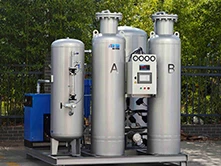
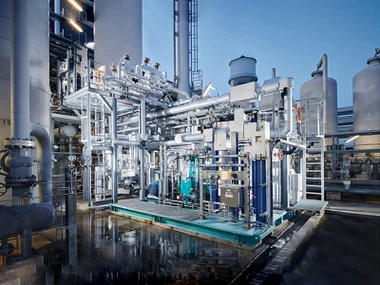
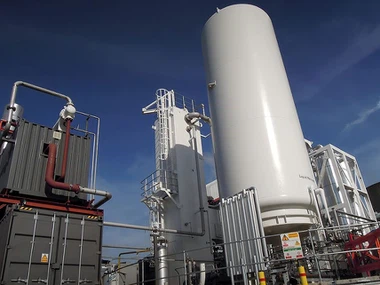


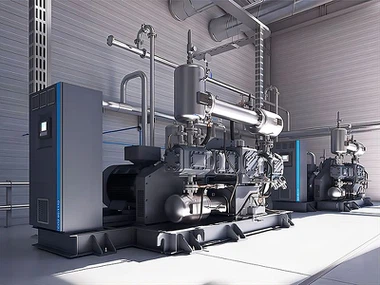
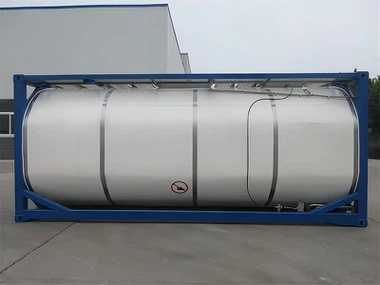


Asu Air Separation Unit NEWTEK
Description
Technical Parameters
●High-purity output:
Delivers gases with purity levels exceeding 99.9% (adjustable to 99.999% for specialized needs), meeting strict industrial standards for precision applications.
●Scalable production:
Configurable to output ranges from a few cubic meters per hour to thousands of cubic meters per hour, adapting to both small-scale and large industrial requirements.
●Energy-efficient operation:
Equipped with advanced heat exchange and compression technologies, reducing energy consumption per unit of gas produced compared to traditional separation methods.
●Stable and continuous supply:
Designed for 24/7 uninterrupted operation with built-in redundancy systems, ensuring consistent gas supply even in long-term industrial processes.

How it works
Cryogenic distillation
Air is compressed, purified (to remove moisture and impurities), and cooled to cryogenic temperatures (-180°C to -196°C). Gases separate in distillation columns as they vaporize at distinct boiling points (nitrogen at -195.8°C, oxygen at -183°C).
Adsorption separation
Uses molecular sieves to selectively adsorb nitrogen or oxygen from compressed air. When the sieve is saturated, it regenerates by releasing the adsorbed gas, enabling cyclic separation (PSA-Pressure Swing Adsorption).
Membrane separation
Compressed air passes through semi-permeable membranes. Gases diffuse through the membrane at different rates (oxygen permeates faster than nitrogen), creating a concentration gradient for separation.
Purification and compression
Raw air undergoes pre-treatment (filtration, drying) to remove contaminants. Post-separation, gases are compressed and stored in high-pressure tanks for distribution or direct use.
How to choose the air separation unit that suits you?

Selecting an Air Separation Unit (ASU) focuses on key factors:
●Core requirements
Purity: 99.99% or more (electronics, medical) select cryogenic distillation type; 95%-99% (industrial purge) select PSA/membrane separation type. Extraction of rare gases requires cryogenic ASU with deep distillation.
Production capacity: ≤300 Nm³/h (such as laboratories) use PSA/membrane separation; ≥500 Nm³/h (especially over 1000 Nm³/h) select cryogenic distillation type.
●Application scenarios
Operation: 24-hour gas supply (such as metallurgy) uses cryogenic ASU; short-term/intermittent use (such as emergency oxygen supply) uses PSA.
Site: Use cryogenic ASU for sufficient space; use PSA/membrane separation for limited space. If energy is tight, you can choose waste heat recovery cryogenic ASU or photovoltaic PSA.
●Cost and operation and maintenance
Cost: Use cryogenic ASU (low operating cost) for long-term (≥5 years); rent PSA for short-term projects.
Operation and maintenance: Low-temperature ASU requires professionals; PSA/membrane separation is suitable for small operation and maintenance teams.
FAQ
1.What factors determine the choice between cryogenic and non-cryogenic ASUs?
Cryogenic ASUs suit large-scale, high-purity needs (≥500 Nm³/h) with lower long-term costs. Non-cryogenic (PSA/membrane) units are ideal for small-scale, lower-purity requirements (≤300 Nm³/h) with faster startup and lower upfront investment.
2.How much energy does an ASU consume, and are there energy-saving options?
Cryogenic units consume 0.3–0.6 kWh/Nm³ of oxygen; PSA units use 0.4–0.8 kWh/Nm³. Energy-saving models include waste heat recovery systems and variable-speed compressors.
3.What is the typical lifespan of an ASU, and what maintenance is required?
Lifespan is 15–20 years with proper maintenance. Routine checks include filter replacement, heat exchanger cleaning, and compressor lubrication. Major overhauls are needed every 5–8 years.
4.Can ASUs produce other rare gases like neon or krypton?
Advanced cryogenic ASUs with additional distillation stages can extract neon, krypton, and xenon as by-products, suitable for industries requiring these rare gases (e.g., lighting, electronics).
5.What safety measures are integrated into ASUs to prevent hazards?
Units include pressure relief valves, gas leak detectors, and emergency shutdown systems. Cryogenic models have insulation for cold protection, and non-cryogenic units use explosion-proof components for compressed air systems.
Choosing to cooperate with NEWTEK is a deep trust in the world's leading gas technology and full industry chain services. As a world-class gas group with a global presence, NEWTEK focuses on "advanced gas and cryogenic technology to enable global growth" and provides stable and reliable gas solutions for various industries with global installation experience of more than 9,000 systems. It is a trustworthy strategic partner.
Our address
Room 8008-8016, Building 2, Taotiandi Commercial Plaza, Hangzhou, China.
Phone Number
+8615336587300
sales@newtek-group.com

Hot Tags: asu air separation unit newtek, China asu air separation unit newtek , suppliers, factory, Cryogenic Air Separation Plant, Cryogenic ASU, Cryogenic Air Separation Nitrogen
Send Inquiry
Get in Touch
Write Your Message


