

 日本語
日本語 한국어
한국어 Français
 Deutsch
 Español
 Italiano
 Português
 Việt Nam
 Türkçe
 عربي
عربي  русский
  简体中文
简体中文 Čeština
 ไทย
ไทย Eesti
Eesti Gaeilgenah Éireann
 Bai Miaowen
 íslenska
 Cymraeg
 Български
 اردو
اردو Polski
 hrvatski
 українська
 bosanski
 فارسی
فارسی Lietuvių
 Latviešu
 עברית
עברית România limbi
 Ελληνικά
 dansk
dansk magyar
 Norsk
Norsk suomi
suomi Nederlands
 Svenska
 slovenčina
 slovenščina
 हिंदी
हिंदी Indonesia
 Melayu
 Malti
Malti Kreyòl Ayisyen
 Català
 বাংলা
বাংলা Srbija jezik (latinica)
 O'zbek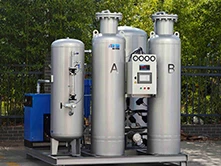
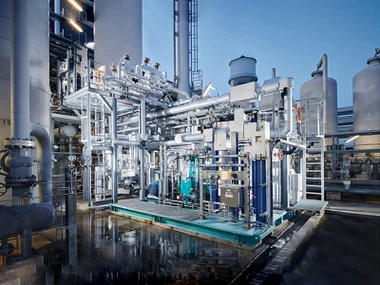
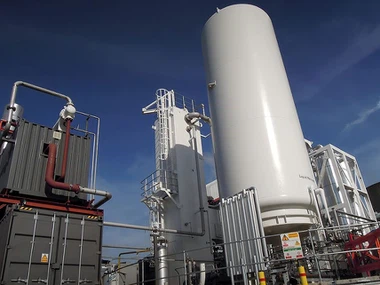


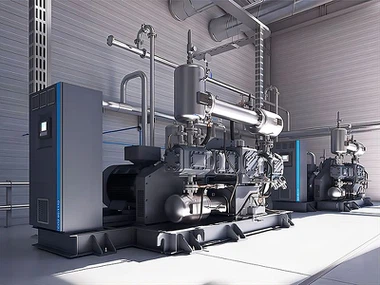
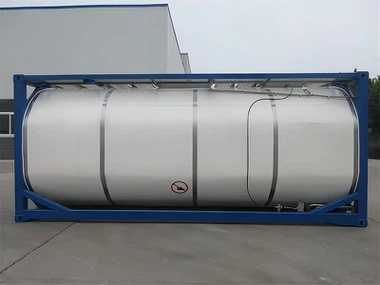


Small Air Separation Plant
Description
Technical Parameters
Operating Principle
●The core principle of cryogenic distillation: This is the core technology of small air separation equipment. First, the air is compressed to increase its pressure and temperature, and then cooled to a liquefied state through a heat exchanger. Using the difference in boiling points of oxygen (-183℃), nitrogen (-196℃), and argon (-186℃), they are separated by multiple partial evaporation and condensation in the distillation tower. Nitrogen is first vaporized to the top of the tower because it is volatile, and oxygen is enriched at the bottom of the tower.
●Distillation separation process: After the liquid air is sent to the distillation tower, it is fractionated by the difference in boiling points of different components. Under the repeated partial evaporation and partial condensation in the tower, the components can be accurately separated, and high concentrations of oxygen, nitrogen, argon and other gases can be obtained respectively.
●Necessity of air pretreatment: The air must be pretreated before entering the cryogenic distillation stage to remove impurities such as dust, moisture, and carbon dioxide. This can prevent impurities from forming ice or solids in the low-temperature part of the equipment, prevent equipment clogging or damage, and ensure the smoothness of subsequent separation processes.
●Key methods of pretreatment: Molecular sieves are mainly used for pretreatment. With its porous structure, the molecular sieve can effectively adsorb water vapor and carbon dioxide molecules in the air, filter out dust and other particulate matter, and ultimately output clean and dry air, providing qualified raw materials for subsequent cryogenic distillation.

Small Air Separation Plant Features
Compact design
It adopts modular structure, occupies a small area and can be installed in a small space. Compared with large air separation equipment, it is easier to transport and relocate.
Energy-saving and efficient
Equipped with energy-saving features, the compressor adopts variable speed drive, and the air intake can be adjusted as needed; waste heat is recovered, the energy consumption of the separation process is reduced, and the stable operating temperature of the equipment is maintained.
High-purity output
Although it is small in size, it can produce high-purity gas. The purity of oxygen can reach 99.6% and above, and the purity of nitrogen can be adjusted as needed. If equipped with argon separation function, the purity of the produced argon can also meet the needs of specific industries.
Automated operation
Equipped with an automated control system, real-time monitoring of parameters such as temperature, pressure, and gas flow, it can automatically adjust the operating status of the equipment to maintain optimal performance and product purity. The system also has an alarm function to ensure safe and reliable operation.
fAQ
1. What are the specific requirements for the installation of Small Air Separation Plant? For example, the ground load-bearing capacity and space size.
The ground load-bearing capacity must reach 500-800kg/㎡ (depending on the equipment model) to prevent loose components due to vibration; in terms of space, in addition to the equipment body (usually 2-5㎡), an operating channel of more than 1.5 meters must be reserved for maintenance and repair. If installed indoors, good ventilation must be ensured to prevent the accumulation of air impurities that affect the pretreatment efficiency.
2. Compared with purchasing bottled gas, how much cost can be saved by using this small air separation equipment for long-term gas supply?
Generally, the equipment cost can be recovered after half a year to one year of use. Taking the average daily oxygen consumption of 10m³ as an example, the annual cost of bottled gas is about 15,000-20,000 yuan, while the equipment operating cost (electricity + maintenance) is only 6,000-8,000 yuan, saving more than 40% annually; and there is no need to frequently transport and store gas cylinders, and the risk of supply interruption can be avoided.
3. Can the purity of oxygen produced by the equipment be stabilized at 99.6%? If the purity fluctuates, what may be the reason?
It can be stabilized at more than 99.6% during normal operation. If fluctuations occur, common reasons include: molecular sieve adsorption saturation (need to be regenerated or replaced), abnormal temperature of the distillation tower (may be scaling of the heat exchanger), unstable air intake (check the compressor working condition). The equipment has its own purity monitoring alarm, which can be checked in time.
4. For modularly designed equipment, can the gas production be increased according to demand in the future?
Some models support modular expansion. For example, the basic model produces 10m³/h of oxygen. By adding distillation tower modules and upgrading the compressor, the gas production can be increased to 15-20m³/h (it is necessary to confirm in advance whether the equipment has reserved expansion interfaces). However, the expansion range generally does not exceed 50% of the original production capacity to avoid overloading of core components.
Hot Tags: small air separation plant, China small air separation plant , suppliers, factory, Air Separation Unit, Small Air Separation Unit
Send Inquiry
Get in Touch
Write Your Message


