

 日本語
日本語 한국어
한국어 Français
 Deutsch
 Español
 Italiano
 Português
 Việt Nam
 Türkçe
 عربي
عربي  русский
  简体中文
简体中文 Čeština
 ไทย
ไทย Eesti
Eesti Gaeilgenah Éireann
 Bai Miaowen
 íslenska
 Cymraeg
 Български
 اردو
اردو Polski
 hrvatski
 українська
 bosanski
 فارسی
فارسی Lietuvių
 Latviešu
 עברית
עברית România limbi
 Ελληνικά
 dansk
dansk magyar
 Norsk
Norsk suomi
suomi Nederlands
 Svenska
 slovenčina
 slovenščina
 हिंदी
हिंदी Indonesia
 Melayu
 Malti
Malti Kreyòl Ayisyen
 Català
 বাংলা
বাংলা Srbija jezik (latinica)
 O'zbek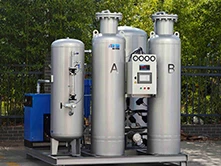


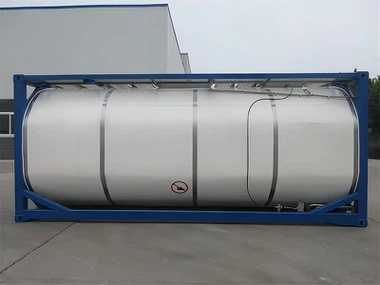


VPSA O2 Plant
Description
Technical Parameters
Production capacity:
1,000Nm³/h to 80,000Nm³/h, equivalent to about 34 TPD to 2,700 TPD of liquid oxygen.
Vacuum pressure swing adsorption (VPSA) is a highly efficient gas separation technology that uses the selective adsorption characteristics of specific adsorbents for different gas molecules to achieve the separation of gas components. Based on this advanced principle, the VPSA-O2 system uses special adsorbents to extract and concentrate oxygen from the air, ensuring that users obtain a high-purity oxygen supply. This technology has the advantages of low energy consumption, simple operation and low maintenance cost, and is suitable for large-scale oxygen production applications.

Selection and design of adsorption tower
The adsorption tower is a very important equipment in the vacuum pressure swing adsorption oxygen production device. The structural design of the adsorption tower will affect the use effect of the molecular sieve, and then affect the stability of the product output and purity.
Axial tower structure
In general, for vacuum pressure swing adsorption oxygen production devices with a capacity of less than 2000Nm3/h, an axial tower structure gas separation method is adopted in the industry, as shown in Figure 1. The raw air enters the adsorption tower from the bottom of the adsorption tower, and after separation by the adsorbent, the oxygen flows out from the top of the adsorption tower. The axial tower has a simple structure, convenient packing, low manufacturing cost, small mechanical wear of the adsorbent in the bed, and can be operated under high temperature and high pressure; the disadvantages are poor air flow distribution, large dead space, large bed resistance, and large floor space.
Radial tower structure
In general, for vacuum pressure swing adsorption oxygen production devices with a capacity of more than 2000Nm3/h, radial adsorption towers are adopted in the industry. The vertical radial flow adsorption tower consists of an outer shell, three intermediate cylinders with special openings, and a central tube.
The raw air enters from the bottom of the adsorption tower, enters the outermost annular space through the gas distributor, and then passes through the 13X adsorption layer. After the moisture in the air is adsorbed, it enters the molecular sieve adsorption layer. After the nitrogen in the air is adsorbed, the oxygen flows out from the top after passing through the central tube wire mesh.
During desorption, the nitrogen passes through the central tube, the molecular sieve layer and the 13X layer and is discharged from the bottom of the adsorption tower.
Compared with the axial adsorption tower, the vertical radial flow adsorption tower has the following advantages: uniform airflow distribution, small bed resistance, small dead space, large instantaneous contact area between molecular sieve and gas, higher molecular sieve utilization, small footprint, and lower energy consumption.
Selection of adsorbent
Adsorbent is the core of the pressure swing adsorption oxygen production device. The adsorbent with excellent performance is the key to determine whether the pressure swing adsorption oxygen production device meets the assessment indicators. Generally, the adsorbents filled in the axial adsorption tower are activated alumina and lithium molecular sieve, and those filled in the radial adsorption tower are 13X molecular sieve and lithium molecular sieve.
Activated alumina
Activated alumina is a porous, highly dispersed solid material with a large surface area, a specification of Φ3~5mm, spherical, wear-resistant, crush-resistant, and non-toxic. The physical and chemical properties are extremely stable, and it does not react chemically to almost all corrosive gases and liquids. Activated alumina is filled at the bottom of the adsorption tower and is mainly used to remove moisture from the gas source.
13X molecular sieve
13X molecular sieve is a sodium-type aluminosilicate with stable physical and chemical properties, a specification of Φ1.6~2mm, and a spherical shape. 13X molecular sieve is filled in the adsorption tower and is mainly used to remove moisture from the gas source.
Lithium molecular sieve
At present, the molecular sieve used for industrial oxygen production is lithium molecular sieve. This is because Li+ is the metal ion with the smallest radius, has a high charge density and a high polarizability, and has a stronger interaction with N2. Lithium molecular sieve not only has a developed specific surface area, but also has a very uniform pore distribution. It has a high adsorption capacity for nitrogen under low pressure conditions, fast adsorption speed, strong selectivity, high strength and low wear rate. Lithium molecular sieve is loaded in the adsorption tower to adsorb nitrogen in the gas source.
Hot Tags: vpsa o2 plant, China vpsa o2 plant , suppliers, factory, Vpsa Plant, Vpsa Oxygen Plant
Previous
VPSA Oxygen Gas PlantSend Inquiry
Get in Touch
Write Your Message


