

 日本語
日本語 한국어
한국어 Français
 Deutsch
 Español
 Italiano
 Português
 Việt Nam
 Türkçe
 عربي
عربي  русский
  简体中文
简体中文 Čeština
 ไทย
ไทย Eesti
Eesti Gaeilgenah Éireann
 Bai Miaowen
 íslenska
 Cymraeg
 Български
 اردو
اردو Polski
 hrvatski
 українська
 bosanski
 فارسی
فارسی Lietuvių
 Latviešu
 עברית
עברית România limbi
 Ελληνικά
 dansk
dansk magyar
 Norsk
Norsk suomi
suomi Nederlands
 Svenska
 slovenčina
 slovenščina
 हिंदी
हिंदी Indonesia
 Melayu
 Malti
Malti Kreyòl Ayisyen
 Català
 বাংলা
বাংলা Srbija jezik (latinica)
 O'zbek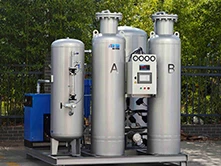


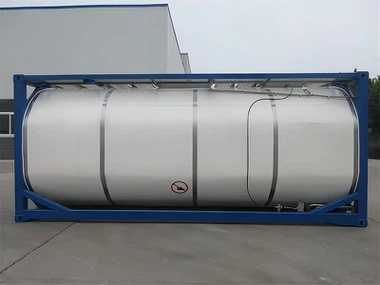


Oxygen Generator Plant
Description
Technical Parameters
oxygen generator plant
●On-demand oxygen production reduces costs: On-site production eliminates transportation and storage costs, avoiding the loss and transportation risks associated with traditional bottled/canned oxygen, resulting in significant long-term economic benefits.
●Strong Purity Adaptability: The PSA model meets medical and small- to medium-sized industrial oxygen needs (90%-95%), while the cryogenic distillation model meets high-purity requirements (99.9% and above, such as in the electronics and metallurgical industries).
●Stable and Reliable Operation: Key components (such as the PSA molecular sieve and cryogenic distillation column) have a long lifespan (the molecular sieve only needs to be replaced every 2-3 years). The intelligent control system monitors oxygen purity and pressure in real time and automatically adjusts operating parameters.

How it works
●Pressure Swing Adsorption (PSA) Method
After pre-treatment and impurity removal, air enters the adsorption tower. Under a pressure of 0.6-0.8 MPa, the molecular sieve absorbs nitrogen, and oxygen (90%-99.5% purity) is collected and output. After adsorption saturation, the pressure is reduced and regenerated, using multiple towers in alternating cycles to achieve continuous oxygen production.
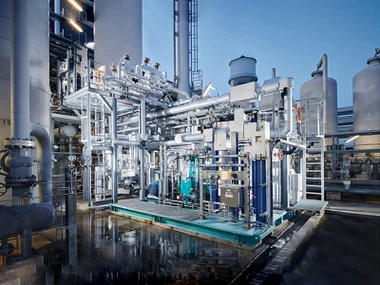
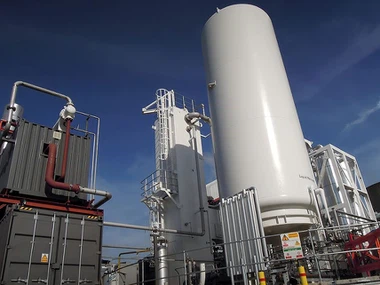
●Cryogenic Distillation Method
Air is pressurized (0.5-1.0 MPa) → pre-cooled and purified → cooled to -170°C in the main heat exchanger for liquefaction. The air then enters the distillation tower, where oxygen (-183°C) and nitrogen (-196°C) are separated by the boiling point difference. 99.6%-99.999% pure oxygen is obtained at the bottom of the tower and can be output as a gas or stored as a liquefied form.
●Membrane Separation Method
Pretreated compressed air (0.3-0.5 MPa) is fed into a hollow fiber membrane module. Oxygen permeates rapidly (3-5 times that of nitrogen) through the membrane, yielding 30%-90% pure oxygen. Nitrogen is retained and discharged with the exhaust. Pressure and flow control can be used to adjust the purity and yield.
●Chemical Oxygen Production Method
Oxygen-containing compounds (such as sodium chlorate and sodium peroxide) decompose under heating, a catalyst, or water conditions to produce oxygen (e.g., sodium chlorate requires 250-300°C with MnO₂). The purified oxygen is then output at a regulated flow rate. This method is suitable for emergency situations and requires replenishment of raw materials.
oxygen generator plant application
Medical
Providing medical oxygen (PSA type, 93% ± 3% purity) in hospital ICUs and operating rooms, and emergency oxygen supply at primary care sites, eliminating the need for external oxygen sources.
Industrial Manufacturing
Steelmaking (cryogenic distillation-based high-purity oxygen assists combustion, improving smelting efficiency), chemical oxidation reactions (such as ethylene oxidation to produce ethylene oxide, which requires a stable oxygen source).
Environmental Protection
Sewage treatment plants use oxygen for aeration to enhance microbial activity and accelerate wastewater purification; waste incineration plants use oxygen to assist combustion and reduce harmful gas emissions.
Public Health
Oxygen supply stations in plateau areas and home oxygen therapy devices (small PSA type) address respiratory needs in oxygen-deficient environments.
fAQ
What is an oxygen generator plant, and how is it different from household oxygen concentrators?
It is a large - scale system producing high - purity oxygen (90% - 99.999%) in large quantities (tens to thousands of m³/h) for industries (steel, chemical) and large hospitals. Household concentrators are small (1 - 5 L/min output, 90% - 96% purity) for personal oxygen therapy/health care, with smaller scale and simpler tech.
What are the main tech principles of oxygen generator plants, and which are widely used?
Three core principles for separating oxygen from air:
PSA:Uses adsorbents to separate N₂/O₂ via pressure changes; fast start - up, low energy, for medium - scale needs.
Low - temperature distillation:Liquefies air, separates via boiling point differences; high purity (up to 99.999%), large output, for large - scale industry.
Membrane separation:Uses permeable membranes; low purity (30% - 50%), small output, for low - demand scenarios.
Widely used: PSA and low - temperature distillation.
What key factors matter when choosing an oxygen generator plant?
Demand:Confirm hourly output and purity (industrial: 95% - 99.5%, medical: ≥99.5%).
Cost:Compare energy consumption (electricity for PSA, natural gas for distillation) to control long - term costs.
Site:Ensure enough space and supporting facilities (power, water).
Reliability:Choose stable equipment (e.g., dual - tower PSA) and manufacturers with good after - sales.
What safety measures are needed for oxygen generator plant operation?
Key safety steps:
Fire/explosion prevention:No open flames in the area; use oxygen - compatible materials (stainless steel) for pipes, and degrease/derust new pipes.
Monitoring:Install O₂ concentration detectors and pressure gauges; alarm and stop operation if values are abnormal.
Maintenance:Regularly clean/replace PSA adsorbents, check distillation system tightness, and train operators on emergency handling.
Storage/transport:Place tanks in ventilated, cool areas away from flammables; use special vehicles for transport.
What are the future trends of oxygen generator plants?
Higher energy efficiency:Develop energy - saving tech and use renewable energy to cut carbon emissions.
Modular design:Prefabricate components for quick on - site assembly; adjust output via modules.
Digitalization:Use IoT/AI for real - time data monitoring, fault prediction, and parameter optimization.
Emerging applications:Expand to hydrogen energy (co - produce H₂/O₂) and space exploration (small, efficient systems for astronauts).
Hot Tags: oxygen generator plant, China oxygen generator plant , suppliers, factory, Psa Oxygen Plant
Previous
Oxygen Generator PsaSend Inquiry
Get in Touch
Write Your Message


