

 日本語
日本語 한국어
한국어 Français
 Deutsch
 Español
 Italiano
 Português
 Việt Nam
 Türkçe
 عربي
عربي  русский
  简体中文
简体中文 Čeština
 ไทย
ไทย Eesti
Eesti Gaeilgenah Éireann
 Bai Miaowen
 íslenska
 Cymraeg
 Български
 اردو
اردو Polski
 hrvatski
 українська
 bosanski
 فارسی
فارسی Lietuvių
 Latviešu
 עברית
עברית România limbi
 Ελληνικά
 dansk
dansk magyar
 Norsk
Norsk suomi
suomi Nederlands
 Svenska
 slovenčina
 slovenščina
 हिंदी
हिंदी Indonesia
 Melayu
 Malti
Malti Kreyòl Ayisyen
 Català
 বাংলা
বাংলা Srbija jezik (latinica)
 O'zbek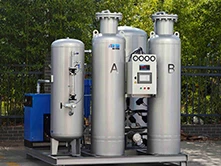
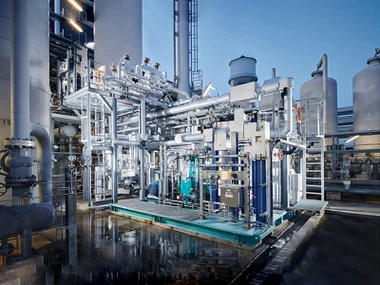


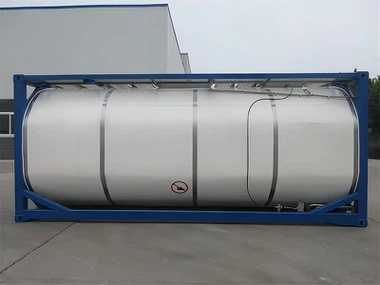


Small Scale Liquid Oxygen Plant
Description
Technical Parameters
Small Scale Liquid Oxygen Plant Core Features
On-site oxygen generation, fully controllable:
No need to purchase liquid oxygen externally, avoiding transportation risks and supply disruptions, and reducing long-term oxygen costs;
Compact size, easy installation:
Compact structure, small footprint, quick installation and commissioning, suitable for confined spaces;
Automatic operation, simple maintenance:
PLC fully automatic control, long lifespan of key components, daily maintenance only requires periodic inspection and filter replacement;
Safe and reliable, compliant with standards:
Equipped with pressure safety valves, explosion-proof devices, oxygen purity monitors, and other safety components, complying with GB 8982-2014 (medical oxygen) and GB/T 3863-2008 (industrial oxygen) standards;
Customization capability:
Customized solutions can be developed based on user's oxygen flow rate, purity, and pressure requirements.

Small Scale Liquid Oxygen Plant Core Components
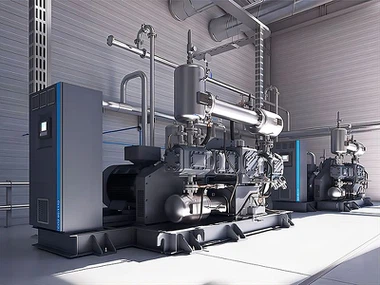
Air compressor
Compresses atmospheric air to a specified pressure, removing some oil and water impurities.
Pre-cooling purification system
Cools compressed air to 5~10℃, adsorbing and removing impurities such as moisture, carbon dioxide, and hydrocarbons
Plate-fin heat exchanger
Enables heat exchange between compressed air and the reflux cold air stream (nitrogen, polluted nitrogen), cooling the air to near its liquefaction temperature (approximately -170℃);
Distillation column
Employs a sieve plate or packed structure, utilizing the difference in boiling points between oxygen and nitrogen to achieve oxygen-nitrogen separation through multiple evaporation-condensation processes, producing liquid oxygen at the bottom;
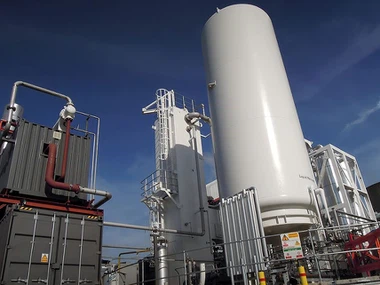
Liquid oxygen storage tank
vacuum-insulated structure that stores liquefied liquid oxygen, reducing cold loss.
Control system
PLC automatic control enables real-time monitoring and automatic adjustment of parameters such as pressure, temperature, and purity, supporting manual/automatic switching.
Working Principle:
●Air Compression and Pretreatment: Air is compressed to 0.6~1.0 MPa by a compressor and enters the pre-cooling purification system to remove impurities such as moisture, CO₂, and hydrocarbons, avoiding the risk of blockage or explosion in subsequent equipment.
●Deep Cooling: The purified clean air enters a plate-fin heat exchanger, where it exchanges heat with the cold nitrogen and waste nitrogen flowing back from the distillation column, reducing the temperature to approximately -170℃, close to the liquefaction point.
●Distillation Separation: The cooled air enters the lower part of the distillation column, where it rises and comes into countercurrent contact with the liquid nitrogen flowing down from the top. Due to its high boiling point, the oxygen component gradually condenses to the bottom of the column, forming liquid oxygen; the nitrogen component, with its low boiling point, gradually vaporizes and rises to the top of the column, being discharged as nitrogen gas.
●Liquid Oxygen Storage: The liquid oxygen at the bottom of the column is depressurized by a throttling valve and sent to a liquid oxygen storage tank for storage. It is then vaporized as needed and supplied to users, or directly output as liquid oxygen.
Application Areas:
●Medical: Providing high-purity oxygen to small and medium-sized hospitals, community health service centers, home oxygen therapy, mobile medical vehicles, etc.
●Industrial: Metal cutting/welding (flame cutting, plasma cutting), small-scale/pilot-scale chemical production, electronic semiconductor packaging, glass processing, etc.
●Scientific Research: Laboratory oxygen supply, small-scale aerospace experiments, low-temperature physics research, etc.
●Emergency Response: Mine rescue, fire emergency oxygen supply, temporary oxygen supply in disaster areas, etc.
Quality Assurance:
●Core components use well-known domestic and international brands and undergo rigorous quality testing.
●The entire equipment comes with a one-year warranty, and lifetime technical support and spare parts supply are provided.
●One-stop service including installation, commissioning, operation training, and maintenance guidance is provided.
Why choose NEWTEK's Small Scale Liquid Oxygen Plant
NEWTEK is a top-class liquid oxygen plant manufacturer!

✅️ Solution, Worry-Free Implementation:
We provide a full-process service from design and procurement to installation and commissioning, eliminating the need for multi-stage coordination by clients and quickly achieving a closed loop from project initiation to stable oxygen production.
✅️ Controllable Costs, Long-Term Cost-Effectiveness:
The model integrates resources to reduce overall investment. On-site oxygen production eliminates the need for external purchases/transportation costs, with energy consumption as low as 0.6kWh/L O₂, resulting in superior overall cost-effectiveness.
✅️ Compliant and Reliable, Safe and Secure:
projects strictly comply with national standards and industry specifications. Equipment is equipped with multiple safety protections, and core components are selected from top brands, ensuring continuous operation without the risk of supply interruptions.
✅️ Customization + After-Sales Support, Comprehensive Guarantee:
solutions can be customized to meet oxygen usage needs, with a 1-year warranty and lifetime technical support. One-stop service for installation, training, and maintenance ensures worry-free subsequent operation.
FAQ
1. Can the oxygen production capacity (L/h) and purity (e.g., medical grade/industrial grade) of this small liquid oxygen unit be customized to my actual oxygen needs?
A: Yes, it can be fully customized. The oxygen production capacity can be adjusted from 5 to 500 L/h, precisely matched to your daily average oxygen consumption and peak demand. Regarding purity, industrial grade can stably reach ≥99.5%, and medical grade can meet ≥99.9%, with the possibility of further increasing purity to 99.99% for special scenarios. Customized solutions will first undergo an oxygen demand assessment to ensure parameter compatibility.
2. How long does the entire turnkey project take from design to final commissioning? What site or supporting conditions need to be prepared before installation?
Standard project cycles are 3-6 months; customized solutions may be slightly adjusted based on complexity. Site preparation in advance includes: ① Level and hardened ground; ② Power supply: 380V/50Hz three-phase five-wire, capacity matched to equipment power; ③ Cooling: Air-cooled models do not require an additional water source; water-cooled models require DN25-50 inlet/drainage interfaces.
3. What is the specific energy consumption per unit (kWh/L O₂) during equipment operation? Compared to long-term external purchase of liquid oxygen, how long does it take to recoup the equipment investment cost?
The unit energy consumption is 0.6~1.2 kWh/L O₂; the cost recovery period is typically 1.5~3 years. Taking a daily oxygen consumption of 1000L as an example, the unit price of purchased liquid oxygen is approximately 2~3 yuan/L, with an annual cost of 730,000~1,095,000 yuan; the equipment operating cost is approximately 0.8~1.5 yuan/L, with an annual cost of 292,000~547,500 yuan, resulting in annual savings of 438,000~547,500 yuan. A customized cost calculation table can be provided for specific details.
5. What operations are required for daily equipment maintenance? What is the service life of the core components? Is it convenient to replace spare parts, and what is the replacement cycle?
Daily maintenance is simple: ① Check pressure, temperature, purity, and other parameters daily; ② Replace the air filter monthly; ③ Check the insulation layer sealing quarterly. Lifespan of core components: compressor 8-10 years, distillation column 15-20 years; convenient spare parts supply, commonly used spare parts are in stock, and the lead time for special spare parts is ≤15 days. On-site replacement or remote guidance is available.
Hot Tags: small scale liquid oxygen plant, China small scale liquid oxygen plant , suppliers, factory, liquid oxygen gas plant, liquid oxygen nitrogen plant, Liquid Oxygen Plant, Liquid Oxygen Production Plant
Send Inquiry
Get in Touch
Write Your Message


