

 日本語
日本語 한국어
한국어 Français
 Deutsch
 Español
 Italiano
 Português
 Việt Nam
 Türkçe
 عربي
عربي  русский
  简体中文
简体中文 Čeština
 ไทย
ไทย Eesti
Eesti Gaeilgenah Éireann
 Bai Miaowen
 íslenska
 Cymraeg
 Български
 اردو
اردو Polski
 hrvatski
 українська
 bosanski
 فارسی
فارسی Lietuvių
 Latviešu
 עברית
עברית România limbi
 Ελληνικά
 dansk
dansk magyar
 Norsk
Norsk suomi
suomi Nederlands
 Svenska
 slovenčina
 slovenščina
 हिंदी
हिंदी Indonesia
 Melayu
 Malti
Malti Kreyòl Ayisyen
 Català
 বাংলা
বাংলা Srbija jezik (latinica)
 O'zbek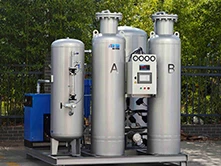



What Is The Process Of PSA Oxygen Production?
May 30, 2025
Leave a message
Pressure swing adsorption technology has revolutionized oxygen production by enabling efficient, on-demand production of high-purity oxygen. Unlike traditional methods that rely on cryogenic distillation or cylinder transportation, PSA systems use the principle of selective gas adsorption to separate oxygen from ambient air. This article will take a deep look at the complex process, core components, and application scenarios of PSA oxygen production, as well as the innovative solutions provided by NEWTEK Industrial , a global leader in gas preparation technology.

1. Basic Principles of PSA Oxygen Production
The core of PSA technology lies in the principle of selective adsorption. Zeolite molecular sieves, the main adsorbents used in PSA oxygen plants, have a high affinity for nitrogen, carbon dioxide and water vapor. When pressurized air passes through these molecular sieves, nitrogen molecules are preferentially adsorbed and oxygen passes through the bed and exits as product gas.
The process is based on a cyclic cycle, alternating between two key phases:
Adsorption phase: compressed air flows through the zeolite bed and nitrogen is trapped. Oxygen, which has a lower affinity for the adsorbent, leaves the bed at 90% to 95% purity.
Desorption (regeneration) phase: pressure is reduced, the adsorption process is reversed, and nitrogen is released from the zeolite and discharged, reactivating the adsorption bed for the next cycle.
By integrating multiple adsorption vessels, the PSA system ensures continuous oxygen production while maintaining efficiency and purity.
2. Key components of a PSA oxygen generator
A PSA oxygen generator consists of several key components, each of which is precisely designed to ensure reliability:
2.1 Air compression system
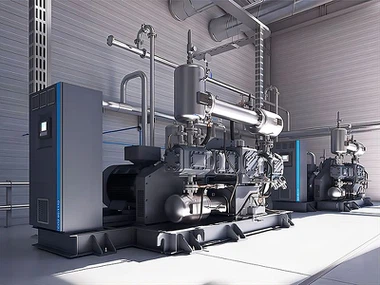
The ambient air is first compressed to a pressure of 6-10 bar using an oil-free screw or piston compressor. NEWTEK's compressors are equipped with advanced variable frequency drives (VFDs) that adjust the motor speed according to demand, reducing operating costs by 30% compared to fixed-speed systems.
2.2 Air pre-treatment unit
Before the compressed air enters the adsorption vessel, it is passed through a multi-stage filtration system to remove moisture, oil and particulate matter. NEWTEK's pre-treatment unit includes:
Refrigerated air dryer to reduce the dew point to below -40°C
Coalescing filter with an efficiency of 0.01 micron
Activated carbon bed to remove residual hydrocarbons
This ensures the service life of the adsorbent and maintains oxygen purity by preventing contamination.
2.3 Adsorption vessel
As the core component that holds the zeolite molecular sieve, these vessels are specially designed to optimize gas distribution. NEWTEK's vessels feature:
Radial flow design to minimize pressure drop and maximize air-to-adsorbent contact time
High-strength carbon steel construction with corrosion-resistant coating
Redundant safety valves and pressure sensors to ensure fail-safe operation
2.4 Control System
A sophisticated PLC control system manages the entire process, including:
Adsorption/desorption cycle timing control (single cycle is typically 60-120 seconds)
Pressure regulation via pneumatic valves
Real-time monitoring of oxygen purity, flow and system status
NEWTEK's proprietary IntelliPSA™ control software uses predictive algorithms to optimize performance and ensure consistent oxygen quality even when demand fluctuates.
2.5 Oxygen Storage and Delivery System
The produced oxygen is stored in a buffer tank before delivery. NEWTEK's system includes:
Pressure regulator to maintain a stable output pressure (typically 4-6 bar)
Flow meter and oxygen analyzer for continuous quality verification
Optional backup system for critical applications

3. Step-by-step process of PSA oxygen production
The PSA oxygen production cycle can be divided into several independent stages:
3.1 Air intake and compression
Ambient air is drawn into the system and compressed to increase the pressure in preparation for separation.
3.2 Pretreatment
The compressed air is filtered and dried to remove contaminants, protect the adsorbent and ensure purity.
3.3 Adsorption stage
Container A (adsorbing): Pressurized air enters the container, nitrogen is adsorbed by the zeolite, and oxygen-rich gas is discharged with a purity of 90-95%.
Container B (desorbing): At the same time, the pressure in container B decreases, and the adsorbed nitrogen is released and discharged.
3.4 Pressure equalization process
Before the cycle switch, the pressure between the two containers is equalized to reduce energy losses and ensure a smooth transition.
3.5 Desorption and regeneration
Container A switches to the desorption stage and container B begins adsorption.
A small portion of the purified oxygen is used to purge the desorption container to enhance nitrogen removal in preparation for the next cycle.
3.6 Oxygen Storage and Delivery
Product oxygen is stored in tanks and delivered to the point of use via pipelines or cylinders, usually after final filtration to meet specific application requirements.
4. Advantages of PSA Oxygen Production
PSA technology offers several significant advantages:
On-demand production: Eliminates reliance on oxygen cylinders or liquid oxygen transportation, reducing logistical challenges and costs.
Cost-effective: Lower operating expenses compared to cryogenic equipment, especially for small and medium-scale applications.
High reliability: Continuous operation with minimal downtime, guaranteed by NEWTEK's 24/7 technical support.
Scalability: Modular design allows for easy expansion based on demand.
Environmental sustainability: Reduces carbon emissions associated with transportation and traditional oxygen production methods.
5. Applications of PSA Oxygen
PSA-produced oxygen serves a variety of industries:
Medical: Hospitals, clinics and home care rely on PSA systems for respiratory support, anesthesia and emergency treatment. NEWTEK's medical-grade PSA equipment is ISO 13485 certified to ensure compliance with stringent medical standards.
Industrial: Metal cutting/welding, wastewater treatment and chemical production use high purity oxygen to improve process efficiency.
Aerospace: Providing oxygen generation for aircraft cabins and ground support equipment.
Mining: Underground operations use PSA systems to maintain breathable air quality.
Food & Beverage: Modified atmosphere packaging and fermentation processes benefit from a controlled oxygen environment.
6. NEWTEK Industrial : PSA oxygen technology innovator - decoding the intelligent paradigm of oxygen production
When air passes through NEWTEK PSA oxygen generator, the patented zeolite molecular sieve selectively captures nitrogen, and oxygen with a purity of 93%±3% is immediately produced. As a leader in the field of gas separation for 38 years, NEWTEK uses full-scenario PSA solutions to make oxygen production more efficient and intelligent.
PSA oxygen production core process: four-step precise separation
Air pretreatment: The screw compressor is pressurized to 6-10bar, and impurities are removed through three-stage filtration (refrigeration drying + 0.01μm filtration + activated carbon adsorption).
Selective adsorption: ZeoMax-7 molecular sieve intercepts nitrogen, and the radial flow design increases the contact area by 40%, and the oxygen purity reaches 93%+.
Equalized pressure regeneration: DeltaPress technology recovers desorption energy, reduces energy consumption by 28%, and double towers alternate to achieve continuous oxygen supply.
Intelligent control: IntelliGen system optimizes parameters in real time, and oxygen is output on demand after being stabilized by the buffer tank.
Full-scenario application: oxygen solutions from medical to industrial
Medical: Portable oxygen generator (<12kg) starts in 15 minutes, and the central oxygen supply system is modularly expanded to 5000LPM.
Industry: 99.99% high-purity oxygen is used for semiconductors, explosion-proof equipment is adapted to petrochemicals, and the sintering efficiency is increased by 25% in a certain automobile factory case.
Environmental protection: Ozone matching PSA increases the COD removal rate of sewage to 89%, reducing carbon emissions by 23,000 tons per year.
Three major technological breakthroughs
Materials: ZeoMax-7 molecular sieve adsorption capacity increases by 35%, and anti-water vapor coating ensures stable operation at 80% humidity.
Energy efficiency: VPSA-V series saves 18% energy, and the power consumption per ton of oxygen in the welding workshop is reduced to 3.7kWh.
Digital: 5G remote control + AI operation and maintenance, the fault interval is extended to 22,000 hours.
7. Conclusion
The PSA oxygen production process represents the pinnacle of engineering efficiency, providing a reliable, economical and sustainable source of oxygen for a wide range of industries. From its fundamental principles to the sophisticated systems that embody those principles, PSA technology continues to evolve, driven by innovation and a commitment to meeting global needs.
NEWTEK Industrial is at the forefront of this evolution, leveraging decades of expertise to develop cutting-edge PSA solutions that empower businesses, save lives and advance environmental stewardship. As industries around the world seek cleaner, smarter and more resilient technologies, NEWTEK remains committed to pushing the boundaries of what is possible in gas preparation.