

 日本語
日本語 한국어
한국어 Français
 Deutsch
 Español
 Italiano
 Português
 Việt Nam
 Türkçe
 عربي
عربي  русский
  简体中文
简体中文 Čeština
 ไทย
ไทย Eesti
Eesti Gaeilgenah Éireann
 Bai Miaowen
 íslenska
 Cymraeg
 Български
 اردو
اردو Polski
 hrvatski
 українська
 bosanski
 فارسی
فارسی Lietuvių
 Latviešu
 עברית
עברית România limbi
 Ελληνικά
 dansk
dansk magyar
 Norsk
Norsk suomi
suomi Nederlands
 Svenska
 slovenčina
 slovenščina
 हिंदी
हिंदी Indonesia
 Melayu
 Malti
Malti Kreyòl Ayisyen
 Català
 বাংলা
বাংলা Srbija jezik (latinica)
 O'zbek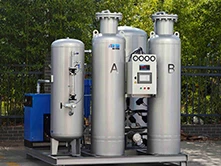


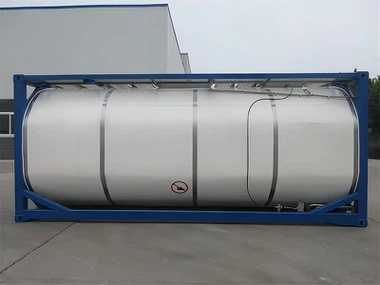

The Rational Selection Of PSA Oxygen Generation Method
Feb 27, 2025
Leave a message
In industrial production, the selection of oxygen generators is of great significance for production efficiency and cost control. The rational selection of the PSA oxygen generation method has attracted much attention from enterprises. During production, customers often face choices regarding nitrogen purity, flow rate, and the oxygen generation method. Referring to the professional suggestions of NEWTEK can provide decision - making basis for enterprises.
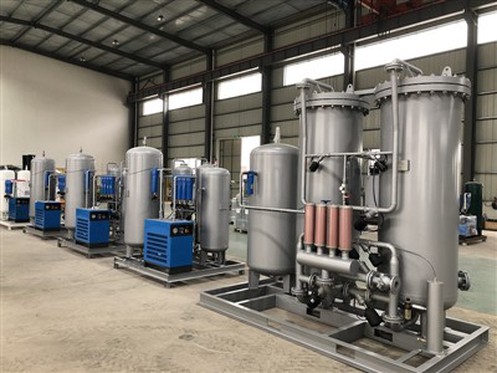
Table of contents
1.Working Principle of the PSA Oxygen Generation Method
1.1 Air Pretreatment
1.2 Adsorption And Desorption Process
1.3 Gas Flow Transmission Mechanism
2. Advantages Of The PSA Oxygen Generation Method
2.1 High - Purity Nitrogen Production
2.2 Energy - Saving Advantages
2.3 Energy Conservation And Environmental Protection In Specific Industries
3. Rational Selection Of The PSA Oxygen Generation Method In Different Scenarios
3.1 Selection Based On Oxygen Content Requirements
3.2 Selection Based On Gas Production And Energy - Saving Requirements
3.3 Selection Based On Industry Characteristics
4.Precautions For Purchasing A PSA Oxygen Generator
I. Working Principle of the PSA Oxygen Generation Method
1.1 Air Pretreatment
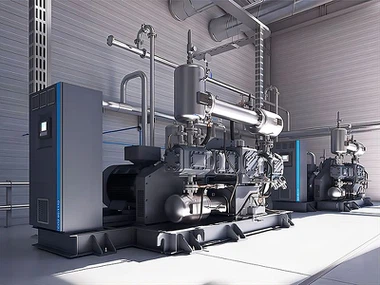
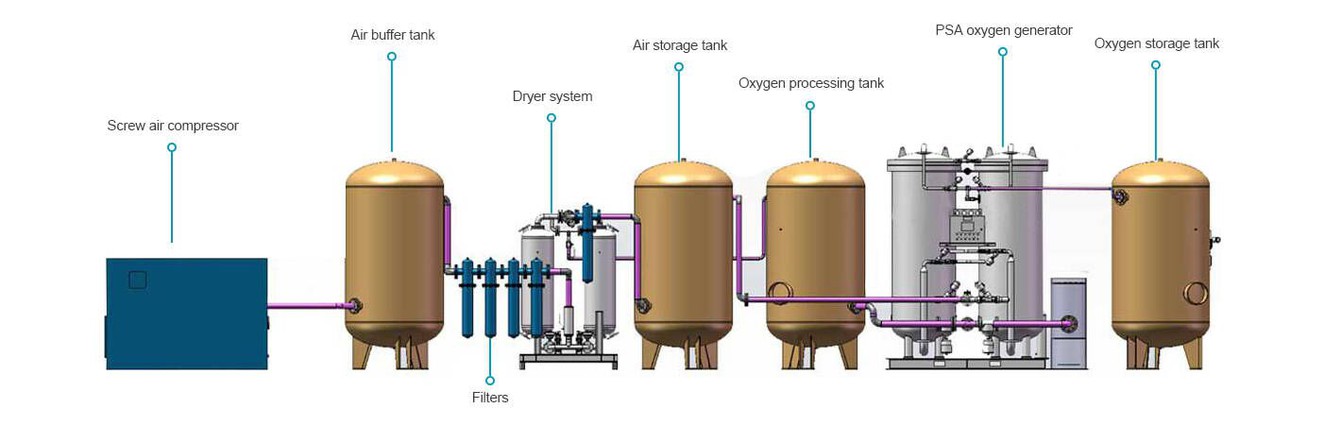
Air passes through an air filter to remove dust and mechanical impurities, then enters an air compressor and is compressed to the required pressure. After that, it undergoes strict oil removal, water removal, and dust removal purification treatment to output clean compressed air. The purpose of this series of operations is to ensure the service life of the molecular sieve in the adsorption tower.
1.2 Adsorption and Desorption Process
The PSA oxygen generator is equipped with two adsorption towers filled with carbon molecular sieves. When one tower is working under pressure, impurities such as oxygen and carbon dioxide in the air are adsorbed by the carbon molecular sieve to produce nitrogen; at the same time, the other tower is in a pressure - reducing desorption state, releasing the adsorbed impurities and enabling the carbon molecular sieve to restore its adsorption capacity. The two towers are connected in parallel and alternately carry out pressure - swing adsorption and pressure - reducing regeneration to obtain a continuous nitrogen gas flow.
1.3 Gas Flow Transmission Mechanism
A pressure difference is formed between the two towers to achieve gas flow transmission, and the pressure - equalizing valve plays an important role. As a control component in the fluid transportation system, the pressure - equalizing valve has functions such as cut - off, regulation, diversion, back - flow prevention, pressure stabilization, shunt, or overflow pressure relief, ensuring the stable operation of the entire oxygen generation process.
2. Advantages of the PSA Oxygen Generation Method
2.1 High - Purity Nitrogen Production
The PSA technology can produce nitrogen with a purity of over 99.999% at one time, with an oxygen content of less than 10ppm, which can meet the industrial production scenarios with extremely high requirements for nitrogen purity.
2.2 Energy - Saving Advantages
When the gas production exceeds 100 Nm³/h, a two - step method is generally adopted. In the first step, 99.9% common nitrogen is produced, and in the second step, the carbon - adding deoxygenation method is used to remove the remaining oxygen in the nitrogen, increasing the nitrogen purity to over 99.999%. This method is more energy - saving in large - scale production.
2.3 Energy Conservation and Environmental Protection in Specific Industries
For industries that are not sensitive to hydrogen, such as the iron and steel and metallurgy industries, the hydrogen - adding deoxygenation method for purifying nitrogen is more energy - efficient and environmentally friendly. Through the combination of hydrogen and oxygen to form water, and then water removal and drying treatment, high - purity nitrogen with an oxygen content of less than 2ppm can be obtained, and the energy consumption of the air compressor can be greatly reduced.
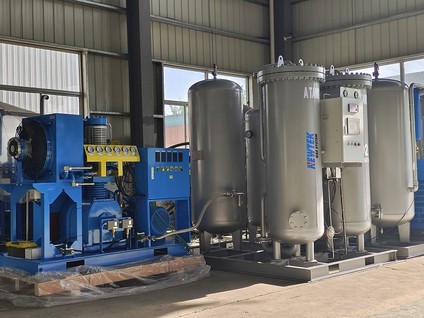
3. Rational Selection of the PSA Oxygen Generation Method in Different Scenarios
3.1 Selection Based on Oxygen Content Requirements
It is crucial to understand the oxygen content requirements of the protective gas environment during production operations. Different production scenarios have different demands for oxygen content. For example, in SMT reflow soldering, the oxygen content needs to be controlled within 1000ppm during operation. Considering the airtightness loss of the reflow soldering furnace and the different oxygen content requirements of subsequent products, the oxygen content of the oxygen generator source is usually set at 100ppm. Determine whether to choose this method by combining the production capacity of the PSA oxygen generator.
3.2 Selection Based on Gas Production and Energy - Saving Requirements
When the gas production requirements are different, the oxygen generation method needs to be adjusted reasonably. As mentioned above, when the gas production exceeds 100 Nm³/h, the two - step method is more energy - saving; when the gas production is relatively small, a one - step method for producing high - purity nitrogen can be selected according to the actual situation. Enterprises also need to consider whether to adopt energy - saving and environmentally friendly methods such as hydrogen - adding deoxygenation by combining their own energy costs and environmental protection requirements.
3.3 Selection Based on Industry Characteristics
Different industries have different requirements for nitrogen. The food industry pays more attention to the impurity content in nitrogen, while the electronics industry has extremely high requirements for nitrogen purity. For industries that are not sensitive to hydrogen, such as the iron and steel and metallurgy industries, the hydrogen - adding deoxygenation method can be adopted; for industries that are sensitive to hydrogen, other suitable nitrogen purification methods need to be selected.

4. Precautions for Purchasing a PSA Oxygen Generator
4.1 Supporting Equipment Situation
Enterprises should understand whether they have relevant supporting equipment, which is related to whether the oxygen generator can operate normally and its operation efficiency and stability.
4.2 Nitrogen Flow Rate and Purity Requirements
It is necessary to accurately determine the required nitrogen flow rate per hour and the nitrogen purity required by the industry. Different industries and production processes have large differences in the requirements for nitrogen flow rate and purity. Only by clarifying these parameters can a suitable oxygen generator be selected.
4.3 Previous Gas Usage Situation
If bottled nitrogen was used previously, it is necessary to understand the number of bottles used per day and the daily usage duration. In this way, the oxygen generator manufacturer can configure the most suitable oxygen generator for the enterprise based on these data.
In conclusion, the rational selection of the PSA oxygen generation method requires comprehensive consideration of various factors. From the oxygen content requirements in production, to the characteristics of the oxygen generation method and energy - saving requirements, and then to the enterprise's own equipment situation, nitrogen flow rate and purity requirements, as well as previous gas usage situations, every link cannot be ignored. Only by comprehensively and deeply analyzing these factors can enterprises make scientific decisions, select the PSA oxygen generation method that best suits their production needs, improve production efficiency, reduce production costs, and gain an advantage in the fierce market competition.