

 日本語
日本語 한국어
한국어 Français
 Deutsch
 Español
 Italiano
 Português
 Việt Nam
 Türkçe
 عربي
عربي  русский
  简体中文
简体中文 Čeština
 ไทย
ไทย Eesti
Eesti Gaeilgenah Éireann
 Bai Miaowen
 íslenska
 Cymraeg
 Български
 اردو
اردو Polski
 hrvatski
 українська
 bosanski
 فارسی
فارسی Lietuvių
 Latviešu
 עברית
עברית România limbi
 Ελληνικά
 dansk
dansk magyar
 Norsk
Norsk suomi
suomi Nederlands
 Svenska
 slovenčina
 slovenščina
 हिंदी
हिंदी Indonesia
 Melayu
 Malti
Malti Kreyòl Ayisyen
 Català
 বাংলা
বাংলা Srbija jezik (latinica)
 O'zbek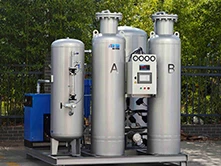



Oxygen Empowers Gold Extraction: Core Value And Application Of PSA Oxygen Generators In Gold Mine CIP/CIL Processes
Oct 17, 2025
Leave a message
In the entire process of gold mine exploitation and refining, the leaching stage is a core link that determines gold recovery rate and production efficiency. Carbon-in-Pulp (CIP) and Carbon-in-Leach (CIL) processes, as the current mainstream gold extraction technologies, have become the first choice for global gold mining enterprises due to their adaptability to ores of different grades and high-efficiency recovery capabilities. As an indispensable "reaction catalyst" in these two processes, oxygen's supply stability and purity directly affect production benefits. Pressure Swing Adsorption (PSA) oxygen generators, with the unique advantage of on-site oxygen production, are gradually replacing traditional oxygen supply methods and becoming a key equipment for optimizing CIP/CIL processes.

Gold Mine CIP and CIL Processes: The "Core Engine" of Gold Extraction
Both CIP and CIL processes are based on the principle of cyanide leaching, and realize gold recovery by adsorbing gold-cyanide complexes with activated carbon. However, their process designs and application scenarios have significant differences, jointly forming an extraction technology system covering most ore types.
Process Nature and Core Flow
The core of both processes revolves around four key stages: "leaching-adsorption-desorption-recovery", and both rely on oxygen to drive the efficient progress of cyanide reactions:
●Preliminary Preparation: After crushing and grinding classification, the ore is processed into pulp with a particle size of -200 mesh (60%-70%). Impurities such as wood chips are removed before the pulp enters the reaction system to prevent impurities from adsorbing gold or blocking equipment.
●Cyanide Leaching: The pulp is mixed with cyanide solution. Under the action of oxygen, gold dissolves to form soluble gold-cyanide complexes. In this stage, oxygen, as an oxidant, directly determines the reaction rate.
●Activated Carbon Adsorption: Gold-cyanide complexes are captured by activated carbon to form gold-loaded carbon, which is then separated from the pulp through a carbon lifting screen.
●Desorption and Recovery: The gold-loaded carbon is desorbed under high-temperature and high-pressure conditions, and gold mud is obtained through electrolysis, which is finally smelted into gold ingots. The gold-stripped carbon is recycled for reuse.
Key Differences Between CIP and CIL Processes
Although the core principles are similar, the two processes have clear distinctions in flow arrangement and application scenarios, which directly affect the design of oxygen supply requirements.
| Comparison Dimension | CIP (Carbon-in-Pulp Process) | CIL (Carbon-in-Leach Process) |
|---|---|---|
| Process Feature | Leaching and adsorption are carried out in stages; the pulp first completes cyanide leaching before entering the adsorption tower. | Leaching and adsorption are carried out simultaneously; activated carbon is directly added to the leaching tank to participate in the reaction. |
| Suitable Ores | More suitable for high-grade ores and flotation gold concentrates; has higher requirements for ore uniformity. | Suitable for low-grade ores and argillaceous oxidized ores; can cope with fluctuations in ore grade. |
| Equipment Configuration | Requires independent leaching tanks and adsorption towers, with a larger number of equipment. | Uses continuous reaction carbon leaching reactors, with higher equipment integration. |
| Operating Cost | Lower activated carbon consumption, but higher initial equipment investment. | Relatively higher carbon consumption, but lower initial investment for small-scale mines. |
| Recovery Efficiency | Outstanding efficiency when processing uniform ores, with stable recovery rate. | Under continuous operation mode, the recovery rate can reach over 90%, with stronger adaptability. |
Oxygen: The "Reaction Activator" for CIP/CIL Processes
The essence of the cyanide leaching reaction is the oxidative dissolution process of gold and cyanide with the participation of oxygen. Its chemical reaction formula clearly shows: 4Au + 8CN⁻ + O₂ + 2H₂O → 4[Au(CN)₂]⁻ + 4OH⁻. Oxygen plays an irreplaceable triple role in this process, directly determining the process efficiency.
Accelerate the Reaction Process and Shorten the Production Cycle
Gold particles in the ore can only react effectively with cyanide to form complexes under the action of oxygen. When the oxygen concentration in the solution is insufficient, the reaction rate will decrease significantly, leading to prolonged leaching time. Practice has shown that increasing oxygen content can shorten the leaching cycle by more than 30%, especially for complex ores containing sulfides.
Improve Gold Recovery Rate and Reduce Resource Waste
Sufficient oxygen can ensure the full dissolution of gold particles in the pulp and reduce the residue of unreacted gold. For low-grade ores, stable oxygen supply can increase the CIL process recovery rate from 85% to over 92%; for refractory ores containing sulfides, oxygen can also promote the oxidation of sulfides, release the gold particles wrapped in them, and further improve the leaching efficiency.
Optimize Chemical Consumption and Control Production Costs
Insufficient oxygen supply will cause cyanide to fail to fully participate in the reaction, requiring increased chemical dosage to achieve the same leaching effect. On the contrary, a reasonable oxygen concentration can increase the cyanide utilization rate by 20%-30%, significantly reducing the unit consumption cost of chemicals.
PSA Oxygen Generators: The "Ideal Oxygen Supply Solution" for CIP/CIL Processes
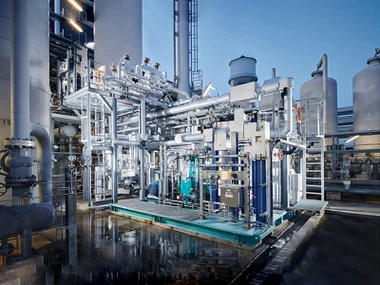
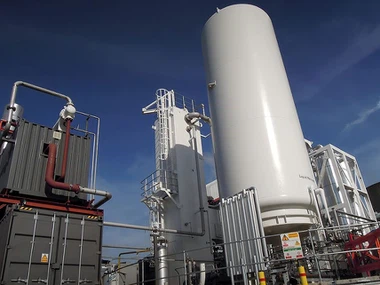
In the oxygen supply practice of CIP/CIL processes, the traditional liquid oxygen transportation and storage mode has pain points such as high cost, poor safety, and unstable supply. However, PSA oxygen generators, with the unique advantages of pressure swing adsorption technology, have become the optimal choice for gold mining enterprises. Their core values are reflected in the following dimensions:
On-Site Oxygen Production to Ensure Supply Stability
PSA oxygen generators separate oxygen directly from the air, eliminating the need for external liquid oxygen transportation. This can completely solve the problem of oxygen supply interruption in remote mining areas due to inconvenient transportation. The equipment adopts a fully automatic operation mode and can adjust the oxygen production volume according to the real-time needs of the CIP/CIL process, ensuring that the oxygen concentration in the pulp is stably maintained in the optimal range (usually 8-12mg/L) and avoiding the impact of oxygen supply fluctuations on leaching efficiency.
Precise Regulation to Match the Differentiated Needs of the Process
Aiming at the different characteristics of CIP and CIL processes, PSA oxygen generators can achieve customized oxygen supply:
For the CIP process with staged operation, multiple groups of flow meters can be used to precisely control the oxygen supply volume of the leaching tank, adapting to the reaction needs of different batches of ores.
For the continuous reaction characteristics of the CIL process, the equipment can maintain a stable high-purity oxygen output (purity up to 90%-95%), ensuring the continuous optimization of the oxidation environment in the mixed system of activated carbon and pulp.
Reduce Costs and Increase Efficiency to Achieve Full-Life Cycle Profitability
Compared with liquid oxygen, PSA oxygen generators have significant economic advantages: on-site oxygen production eliminates the transportation, storage, and loss costs of liquid oxygen, reducing the oxygen use cost by more than 30%. At the same time, the equipment energy consumption is only concentrated in the adsorption tower pressurization and fan operation links, and the unit oxygen energy consumption is much lower than that of traditional oxygen supply methods. More importantly, stable oxygen supply can increase the gold leaching rate by 15%-20%, which is directly converted into significant economic benefits.
Safety and Environmental Protection to Meet the Green Development Needs of Mines
PSA oxygen generators do not require the storage of high-pressure liquid oxygen tanks, eliminating potential safety hazards such as low-temperature frostbite and tank explosion from the source. Their automatic operation mode also reduces the risk of human operation errors. In terms of environmental protection, the equipment has no waste gas emissions during operation, and the produced high-purity oxygen can also be used for tailings and wastewater treatment. By oxidizing and decomposing toxic substances such as cyanide, it reduces the potential for environmental pollution and meets the green transformation requirements of modern mines.
Strong Adaptability to Cope with Complex Mine Environments
Gold mines are mostly located in complex environments such as high altitudes and large temperature differences. PSA oxygen generators can be customized and adjusted according to specific working conditions to ensure stable operation at altitudes above 5,000 meters and temperatures ranging from -20℃ to 45℃. The equipment also has a remote monitoring function, allowing operation and maintenance personnel to grasp key parameters such as oxygen production volume and purity in real time, troubleshoot faults in a timely manner, and reduce downtime.
Application Practices and Future Upgrade Directions
In practical applications, PSA oxygen generators have become standard equipment for gold mines of different scales to optimize CIP/CIL processes. For example, in the CIL production line of a large gold mine, after adopting PSA oxygen generators, the leaching time was shortened from the original 24 hours to 16 hours, and the gold recovery rate increased from 88% to 95%; in the CIP process of a small gold mine, the equipment reduced cyanide consumption by 25% and cut annual operating costs by nearly one million yuan.
In the future, as CIP/CIL processes upgrade towards intelligence and high efficiency, PSA oxygen generators will also achieve technological breakthroughs: first, in-depth integration with mine digital control systems to realize the linkage adjustment of oxygen concentration, pulp flow, and cyanide dosage; second, further improvement of oxygen purity and equipment energy efficiency through the upgrading of molecular sieve materials; third, development of modular units to meet the flexible expansion needs of small and medium-sized gold mines.
Conclusion
The efficient operation of CIP and CIL processes is inseparable from a stable and efficient oxygen supply system. With the convenience of on-site oxygen production, the precision of parameter regulation, and the economy of the full life cycle, PSA oxygen generators perfectly meet the core needs of gold extraction processes. For gold mining enterprises, choosing a suitable PSA oxygen generation equipment is not only a technical upgrade to optimize the production process, but also a strategic choice to reduce costs, increase efficiency, and achieve green development. Against the background of the gold mining industry's pursuit of high-quality development, PSA oxygen generators will definitely play a more core enabling role in CIP/CIL processes.