

 日本語
日本語 한국어
한국어 Français
 Deutsch
 Español
 Italiano
 Português
 Việt Nam
 Türkçe
 عربي
عربي  русский
  简体中文
简体中文 Čeština
 ไทย
ไทย Eesti
Eesti Gaeilgenah Éireann
 Bai Miaowen
 íslenska
 Cymraeg
 Български
 اردو
اردو Polski
 hrvatski
 українська
 bosanski
 فارسی
فارسی Lietuvių
 Latviešu
 עברית
עברית România limbi
 Ελληνικά
 dansk
dansk magyar
 Norsk
Norsk suomi
suomi Nederlands
 Svenska
 slovenčina
 slovenščina
 हिंदी
हिंदी Indonesia
 Melayu
 Malti
Malti Kreyòl Ayisyen
 Català
 বাংলা
বাংলা Srbija jezik (latinica)
 O'zbek


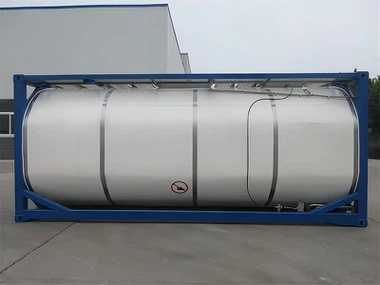

NEWTEK 's Large-scale Air Separation Plant Control Solution
Jun 28, 2025
Leave a message

NEWTEK
In the realm of industrial automation, NEWTEK has pioneered an advanced control solution for large-scale air separation plants, integrating cutting-edge technology to address the complex demands of modern industrial processes. The project embodies a comprehensive approach to control system design, leveraging a tripartite architecture of DCS, ESD, and ITCC subsystems. This framework ensures long-term operational stability and optimizes energy efficiency and safety across the air separation lifecycle, from air compression to product gas distribution. The system's design prioritizes adaptability to fluctuations in feed air quality or shifts in product demand, through dynamic process modeling and real-time parameter adjustment.
System Design Philosophy
The control solution's architecture reflects NEWTEK's focus on modularity and functional segregation. By dividing the system into DCS, ESD, and ITCC components, each subsystem can be optimized for specific tasks-with the DCS handling routine process control, the ESD managing safety-critical interlocks, and the ITCC specializing in rotating equipment dynamics. This segregation minimizes cross-system interference, allowing each component to operate within its design envelope while maintaining seamless integration through standardized communication protocols.
The design process incorporated detailed risk assessments to identify potential failure modes in compressor surge, temperature excursions, or oxygen purity deviations. These assessments followed industry-recognized methodologies to evaluate failure likelihood and impact, informing the redundancy strategies and failover mechanisms embedded in each subsystem. The ITCC's triple modular redundancy (TMR) architecture and the ESD's dual-controller configuration were direct outcomes of these analyses, ensuring that the control solution can withstand single-point failures without compromising plant safety or productivity. The modular design enables phased maintenance and upgrades, reducing downtime by allowing isolated subsystem servicing while others remain operational.
Key Subsystem Technologies
DCS System
As the central nervous system of the plant, the FOXBORO IAS DCS system features a redundant fiber-optic MESH control network, which enables real-time data transmission with minimal latency. The network's mesh topology provides multiple data pathways, ensuring continuous operation even if individual fibers are compromised. This design is critical for air separation processes, where delayed data transmission could lead to process instabilities.
The IAS system deploys multiple controllers to form distributed field control stations, each responsible for air pre-treatment, cryogenic distillation, or product storage. This distributed architecture reduces the risk of central processing bottlenecks and allows for targeted maintenance without shutting down the entire system. The controllers execute complex algorithms for process modeling and prediction, enabling proactive adjustment of reflux ratios in distillation columns or cooling water flow rates in pre-treatment systems.
The system's open architecture-compatible with IEEE802 protocols and operating on hybrid Windows NT/UNIX platforms-facilitates integration with third-party software for predictive maintenance tools or energy management systems. This flexibility allows plant operators to customize the control solution as operational requirements evolve, supporting long-term scalability.
ESD System
The GE PAC8000 SafetyNet ESD system is engineered to meet the rigorous safety standards of air separation plants, where oxygen enrichment poses inherent fire and explosion risks. Its dual-controller configuration with hot standby capability ensures that safety functions remain active during controller switching, a critical feature for preventing unplanned shutdowns in emergency scenarios.
The system's SOE (sequence of events) recording capability captures thousands of events with millisecond-level time resolution, enabling detailed post-incident analysis. This functionality is particularly valuable in air separation, where understanding the precise timing of sudden pressure drop in a distillation column followed by valve closures-can help identify root causes and refine safety protocols. The SOE data is stored in a SQL Server database, allowing integration with plant-wide information systems for trend analysis and compliance reporting.
To mitigate common-cause failures, the ESD system employs independent wiring for critical interlock points, with triple-voting signals distributed across separate input cards. This design ensures that a single faulty card or wiring harness cannot compromise safety functions, aligning with best practices in safety instrumented systems (SIS).
ITCC System
The TRICONEX TRICON ITCC system addresses the unique challenges of controlling high-speed rotating equipment in multi-stage centrifugal compressors and expansion turbines. Its TMR (triple modular redundancy) architecture processes inputs through three independent channels, with hardware and software voting mechanisms to ensure decision accuracy. This design is essential for preventing compressor surge, a potentially destructive phenomenon caused by unstable flow conditions.
The ITCC system incorporates specialized algorithms for anti-surge control, which adjust compressor bypass valves in real time to maintain flow within safe operating limits. These algorithms consider multiple variables, having inlet temperature, pressure ratios, and speed, to predict and prevent surge conditions. Additionally, the system manages complex start-up and shutdown sequences for compressors, which involve gradual load ramping and temperature equalization to minimize thermal stresses on critical components.
The inclusion of microprocessors in each I/O card enables local signal conditioning and diagnostics, reducing the computational load on the main processors. This design enhances real-time performance, allowing the ITCC to respond to rapid changes in sudden load fluctuations during product grade transitions.

Inter-System Communication
Data exchange between the DCS, ITCC, and ESD systems is facilitated through a hybrid communication framework that balances efficiency and safety. Routine process variables or equipment status indicators, are transmitted via RS485 connections using MODBUS protocol. This approach provides a cost-effective solution for large-volume data transfer without compromising critical functions.
For safety-critical interlock signals and emergency shutdown commands, the control solution relies on hardwired multi-core cables with dedicated shielding. This physical separation ensures that critical signals are not susceptible to network congestion or protocol errors, maintaining real-time response even during peak data traffic. The hardwired connections incorporate signal conditioning modules to filter electrical noise, a common challenge in industrial environments with high electromagnetic interference.
To manage data flow and prioritize critical messages, the control solution employs a hierarchical communication protocol. Emergency shutdown commands from the ESD system have the highest priority, followed by safety-related signals from the ITCC, with routine process data from the DCS having lower priority. This hierarchy ensures that safety functions are never delayed by non-critical communications.
Operational Performance and Process Optimization
Since commissioning, the air separation plant has achieved sustained full-load operation, with the control solution demonstrating exceptional reliability in managing the plant's multi-coupled, large-lag processes. The adaptive control algorithms have enabled precise regulation of oxygen purity in the distillation columns and nitrogen product dew point in storage systems, ensuring consistent product quality across varying feed air conditions.
The control solution's energy management features have contributed to significant operational cost savings. By optimizing compressor speeds and adjusting process parameters based on real-time energy prices, the system reduces power consumption during off-peak hours while maintaining production targets. Additionally, the integration of heat recovery systems-monitored and controlled by the DCS-maximizes energy efficiency by utilizing waste heat from compressors to preheat process streams.
Operators have reported improved situational awareness that the control solution's intuitive human-machine interfaces (HMIs), which provide unified visualization of process data, equipment status, and alarm conditions. The HMIs incorporate context-sensitive help functions and predictive alarm prioritization, reducing operator workload during plant startups or product grade changes.
Industry Implications and Technological Frontiers
NEWTEK 's control solution sets a new standard for integrated automation in energy-intensive industries. The project demonstrates the feasibility of combining diverse control technologies-each optimized for specific functions-into a cohesive system that supports both operational efficiency and safety. This approach is particularly relevant as industries worldwide seek to adopt smarter, more sustainable manufacturing practices.
In the context of global decarbonization efforts, the control solution supports the integration of air separation plants with carbon capture systems. By precisely controlling oxygen supply for oxy-fuel combustion or hydrogen production via electrolysis, the solution enables seamless collaboration between air separation and carbon management processes. This integration is critical for industries aiming to achieve net-zero emissions by leveraging captured carbon for value-added applications.
Looking ahead, NEWTEK is exploring the integration of artificial intelligence and machine learning into the control solution. These technologies hold promise for advanced process prediction, autonomous optimization, and proactive maintenance, further enhancing the reliability and efficiency of air separation plants. The company's ongoing research into next-generation communication protocols, which may enable faster data transfer and more robust remote monitoring capabilities.
Through its large-scale air separation plant control solution, NEWTEK has addressed the immediate challenges of industrial automation and paved the way for future innovations in smart manufacturing. The project stands as a testament to the power of integrated control systems in enabling safe, efficient, and sustainable industrial operations, setting a benchmark for the industry's ongoing digital transformation.
Post-Project Support and Knowledge Transfer
NEWTEK prioritizes long-term system viability through comprehensive post-project support frameworks. The company deploys dedicated technical teams to provide on-site commissioning, operator training, and routine maintenance, ensuring seamless knowledge transfer to client personnel. Training programs cover system fundamentals, emergency procedures, and routine troubleshooting, tailored to different stakeholder roles-from control room operators to maintenance engineers. Remote support capabilities, enable real-time issue resolution without physical site visits. The company maintains a global spare parts inventory, optimized for rapid deployment to minimize downtime. This support ecosystem aligns with NEWTEK's focus on operational continuity, ensuring that control systems maintain performance standards throughout their lifecycle.