

 日本語
日本語 한국어
한국어 Français
 Deutsch
 Español
 Italiano
 Português
 Việt Nam
 Türkçe
 عربي
عربي  русский
  简体中文
简体中文 Čeština
 ไทย
ไทย Eesti
Eesti Gaeilgenah Éireann
 Bai Miaowen
 íslenska
 Cymraeg
 Български
 اردو
اردو Polski
 hrvatski
 українська
 bosanski
 فارسی
فارسی Lietuvių
 Latviešu
 עברית
עברית România limbi
 Ελληνικά
 dansk
dansk magyar
 Norsk
Norsk suomi
suomi Nederlands
 Svenska
 slovenčina
 slovenščina
 हिंदी
हिंदी Indonesia
 Melayu
 Malti
Malti Kreyòl Ayisyen
 Català
 বাংলা
বাংলা Srbija jezik (latinica)
 O'zbek



Energy Saving And Efficiency Improvement Of Air Separation Units Have Become An Industry Trend
Aug 27, 2025
Leave a message
Industry Background
As core utilities in chemical parks, air separation units (ASUs) provide high-purity oxygen and nitrogen for refining and coal chemical projects. These units are becoming increasingly large-scale and intelligent. With the deepening of China's "dual control" and carbon emissions control policies, energy conservation not only reduces operating costs but also offers preferential policies. Energy conservation and efficiency improvement in ASUs have become key to competitive advantage in the industry. NEWTEK 's optimization practices for its 33,000 Nm³/h ASU (supporting ethylene oxide/ethylene glycol projects) provide a replicable technical solution for similar units.
Plant Overview
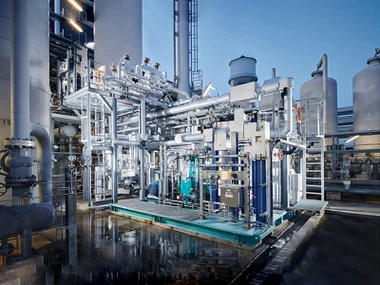
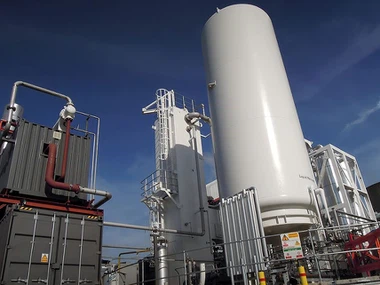
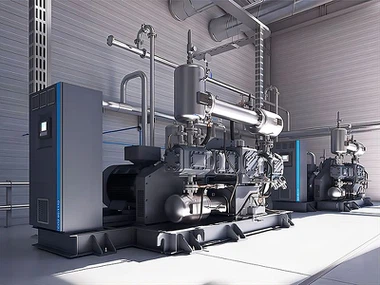
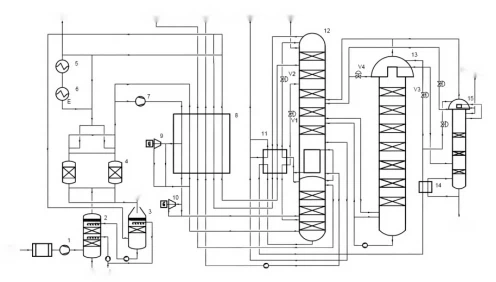
This unit utilizes a liquid oxygen internal compression process. Its core configuration includes a vertical radial flow molecular sieve, a multi-layer bath-type main condenser/evaporator (primary cooling), an electrically driven air compressor/booster, and a structured packing distillation column. It is also equipped with a full distillation argon production system and an oxygen, nitrogen, and argon liquid storage and filling system. The process flow is shown in the following diagram:
Simplified Flowchart of a 33,000 Nm³/h Air Separation Unit
●Core Parameters
Oxygen Production Capacity: 33,000 Nm³/h
Purpose: Supplying ethylene oxide/ethylene glycol plants, and also supplying oxygen and nitrogen pipeline gas to surrounding customers
●Key Configurations
Process: Liquid oxygen internal compression
Core Components: Vertical radial flow molecular sieve, multi-layer bath-type primary cooler, electric-driven air compressor/booster, structured packing distillation column
Energy-saving Design: Generator at the braking end of the gas/liquid expander to recover mechanical energy
●Streamlined Process
Feed air → Self-cleaning filter → Compression by air compressor → Cooling by pre-cooling system
Compressed air → Purification system for water/carbon dioxide removal → Main heat exchanger → Booster
Gas → Main heat exchanger → Expander → Lower column, distilled in upper/lower column
Nitrogen, liquid nitrogen, and liquid oxygen are obtained in the middle of the lower column, the top of the upper column, and the upper section of the primary cooler, respectively. Liquid oxygen at the bottom of the primary cooler → Pressurization → Reheating → High-pressure oxygen product
Optimization Measures
NEWTEK achieved economical operation of the unit through four major measures: load reduction, tower pressure adjustment, argon yield improvement, and liquid loss reduction. Specific results are shown in the table below:
|
Optimization Direction |
Core Measures |
Key Data Changes |
|
Reducing Minimum Operating Load |
Narrow the anti-surge margin of the air compressor to 3%, reduce the processed air volume by 500 Nm³/h each time, and set up temporary alarms |
Load decreased from 74% to 69%, air compressor power consumption reduced by 300kW, oxygen emission rate decreased by 10% |
|
Lowering Column Pressure |
Reduce column pressure by 0.5kPa every 12 hours, adjust main condenser liquid level from 105% to 100% |
Upper column pressure decreased from 33kPa to 26kPa, air compressor power consumption reduced by 350kW |
|
Improving Argon Extraction Rate |
Supplement air volume during purifier switching, optimize PI parameters of lower column liquid level valve |
Argon extraction rate increased by 3%, frequency of "nitrogen blockage" significantly reduced |
|
Reducing Liquid Loss |
Increase storage tank pressure (liquid nitrogen: 10kPa→12kPa, etc.), control cold loss and filling loss |
Liquid nitrogen flash loss decreased by 0.16%, oxygen/argon loss decreased simultaneously |
Industry Value: Replicable Technology Promotes Green Production
This optimization validates the effectiveness of the "load reduction, parameter adjustment, and loss control" approach-while ensuring stable product quality, through refined operation and control optimization, annual profit increases exceeding 2 million Yuan have been achieved. This solution is particularly suitable for large-scale air separation units, and has direct reference significance for the energy-saving transformation of similar equipment in the refining and coal chemical industries, providing a practical example for the green and low-carbon development of the industry.