

 日本語
日本語 한국어
한국어 Français
 Deutsch
 Español
 Italiano
 Português
 Việt Nam
 Türkçe
 عربي
عربي  русский
  简体中文
简体中文 Čeština
 ไทย
ไทย Eesti
Eesti Gaeilgenah Éireann
 Bai Miaowen
 íslenska
 Cymraeg
 Български
 اردو
اردو Polski
 hrvatski
 українська
 bosanski
 فارسی
فارسی Lietuvių
 Latviešu
 עברית
עברית România limbi
 Ελληνικά
 dansk
dansk magyar
 Norsk
Norsk suomi
suomi Nederlands
 Svenska
 slovenčina
 slovenščina
 हिंदी
हिंदी Indonesia
 Melayu
 Malti
Malti Kreyòl Ayisyen
 Català
 বাংলা
বাংলা Srbija jezik (latinica)
 O'zbek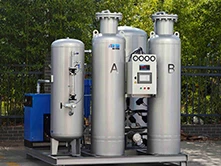


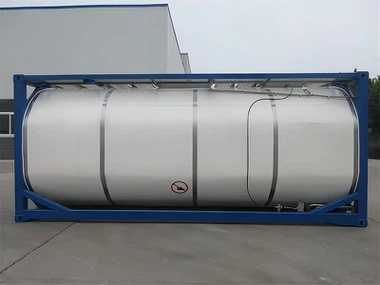

Development Of PSA Oxygen Production Technology in Non-ferrous Metal Smelting
May 30, 2025
Leave a message
In the non-ferrous metal smelting industry, the development of oxygen production technology is crucial to improving production efficiency, reducing costs and improving product quality. As an advanced technology that can produce low-concentration oxygen-enriched oxygen, PSA oxygen production technology has gradually emerged in the field of non-ferrous metal smelting and has shown broad application prospects.

1. Principle and process of PSA oxygen production equipment
Principle
PSA oxygen production equipment uses pressure changes to achieve adsorption and desorption. Its core is to let compressed air pass through a tower equipped with an adsorbent (such as zeolite molecular sieve, 5A zeolite molecular sieve is often used, that is, calcium-containing aluminum silicate). The adsorbent preferentially adsorbs nitrogen based on the principle of selective adsorption, thereby enriching oxygen. From the perspective of adsorption equilibrium, when air passes through the adsorbent, the amount of nitrogen adsorbed is much greater than that of oxygen, and nitrogen is enriched in the adsorbent. The first thing that passes through is oxygen-enriched air. Compared with the TSA (thermal swing adsorption) method that uses temperature changes to achieve different adsorption amounts, PSA in actual devices is nearly adiabatic in adsorption, and the adsorption heat causes the temperature to rise, often deviating from the isothermal adsorption line, but it has a unique advantage in the field of oxygen production by virtue of the adsorption and desorption mechanism of pressure changes.
Process
The raw air first passes through an air filter to remove dust and mechanical impurities, then enters the air compressor to be compressed to about 0.3MPa, then cools down through a cooler and removes water through a water separator. The compressed air after dehydration enters the program control system and enters the adsorption tower according to the preset program. In the adsorption tower, the air is compressed to 0.3MPa, and the nitrogen, carbon dioxide, water, hydrocarbons, etc. in it are adsorbed by the adsorbent, and oxygen is extracted from the upper part of the adsorber. After the oxygen is extracted, the adsorption tower is depressurized to atmospheric pressure for denitrification. In order to make the denitrification more thorough, oxygen is also introduced for blowing. Repeating the three processes of adsorption, oxygen production, and desorption can continuously produce oxygen. The product oxygen pressure is generally greater than 0.2MPa. If a higher pressure is required, an oxygen compressor and a buffer gas storage tank can be set.
2. Advantages of PSA oxygen production equipment
Low energy consumption
Electricity consumption is an important indicator to measure whether the oxygen production equipment is advanced or not. Taking the 2200Nm³/h PSA oxygen generator of Linde Company in West Germany as an example, its power consumption is 0.43KWH/Nm³O₂, the power consumption of the ZY1500-1 VPSA oxygen generator of Sichuan Air Separation Equipment Plant in my country is 0.45KWH/Nm³O₂, and the power consumption of the oxygen generator of the deep cold method 10000Nm³/h oxygen generator is about 0.46KWH/Nm³O₂. It can be seen that the power consumption of PSA oxygen generator is not high.
Easy to operate
The operation is simple and can be fully automatic. Press the start button and it only takes a few minutes to get the rated oxygen output. One equipment only needs one patrol inspector, which greatly reduces the labor cost and operation difficulty.
Small footprint
Small footprint and building space. The 1170Nm³/h PSA oxygen generator of Mitsubishi Corporation of Japan occupies an area of only 20×13m², and the highest part is only 11 meters; the size of ZY1500-1 is 16×16×6.5M, while the deep-cold 10000Nm³/h oxygen generator occupies an area of more than 10,000 square meters, which has obvious advantages in smelters with tight space.
Adjustable output
The output can be adjusted from 50-100%, which can well adapt to the situation of large changes in oxygen load in non-ferrous metal smelting, avoid oxygen waste, and improve energy utilization efficiency.
Safe and reliable
Operating at room temperature, no complex low-temperature equipment and special low-temperature protection measures are required, reducing the safety hazards caused by low temperature, and high safety and reliability.

3. NETWEK's contribution to PSA oxygen production technology
NETWEK plays an important role in the development of PSA oxygen production technology. The company has long been focusing on the research and development and innovation of oxygen production technology, and has a research and development team composed of senior industry experts and professional technicians. They have conducted in-depth research on the characteristics of oxygen demand in the non-ferrous metal smelting industry and continuously optimized the performance of PSA oxygen production equipment.
In terms of equipment manufacturing, NETWEK adopts advanced production processes and high-quality raw materials. The PSA oxygen production equipment it produces is unique in the selection and filling process of adsorbents, ensuring that the adsorption effect is stable and efficient, thereby increasing the oxygen enrichment concentration and oxygen production output. The equipment produced by the company can accurately control parameters such as pressure and temperature during the adsorption and desorption process, further improving the stability and reliability of the equipment.
In terms of application promotion, NETWEK actively cooperates with non-ferrous metal smelting enterprises to tailor oxygen production solutions for enterprises. In response to the special requirements of different smelting processes, the company makes personalized adjustments and optimizations to the equipment to help enterprises achieve the goals of energy conservation, emission reduction and cost reduction. For example, in a technical transformation project of a large copper smelter, the PSA oxygen production equipment provided by NETWEK successfully met the plant's continuous, stable and oxygen-rich concentration demand, greatly improving the plant's smelting efficiency while reducing oxygen production costs and energy consumption, which was highly recognized by the company.
In addition, NETWEK also pays attention to after-sales service and has established a complete after-sales guarantee system. The professional after-sales team can respond to customer needs in a timely manner and provide customers with a full range of services such as equipment maintenance, troubleshooting, and technical consultation to ensure that customers' PSA oxygen production equipment always maintains a good operating state.
4. Application Status and Challenges of PSA Oxygen Generation Technology in Nonferrous Metal Smelting
At present, PSA oxygen generation technology has been widely used in the nonferrous metal smelting industry, especially in some smelting processes that do not require extremely high oxygen enrichment concentration and have large fluctuations in oxygen load. Many smelters have effectively increased the smelting reaction rate and reduced fuel consumption and flue gas treatment costs by adopting PSA oxygen generation equipment.
However, PSA oxygen generation technology also faces some challenges. On the one hand, the oxygen enrichment concentration produced by PSA oxygen generation equipment is generally around 93%, and it is difficult to produce high-purity nitrogen at the same time. Its application is limited in some special smelting processes that have higher requirements for gas purity. On the other hand, due to technical and economic limitations, its production scale generally does not exceed 3000Nm³/h. For smelting enterprises that use oxygen on a large scale, it may not be able to fully meet the needs, and multiple devices need to be connected in parallel or combined with other oxygen generation technologies.
5. Future Outlook
With the continuous development of the non-ferrous metal smelting industry and the increasing requirements for energy conservation and emission reduction, PSA oxygen production technology is expected to make further breakthroughs in the following aspects. First, in terms of technology research and development, the oxygen enrichment concentration and production scale are continuously improved, and the existing technical bottlenecks are overcome by improving the adsorbent performance, optimizing the equipment structure and process flow. Second, strengthen the integration with other oxygen production technologies, such as combining with cryogenic oxygen production technology, learn from each other's strengths and weaknesses, and provide non-ferrous metal smelting enterprises with more complete oxygen production solutions. Third, with the development of intelligent technology, PSA oxygen production equipment will move towards intelligence, achieving more accurate parameter control and more efficient operation management.
In short, PSA oxygen production technology has shown strong vitality in the field of non-ferrous metal smelting. Despite the challenges, with the joint efforts of industry enterprises and technology innovators like NETWEK, its future development prospects are still broad and will continue to provide strong support for the development of the non-ferrous metal smelting industry.