

 日本語
日本語 한국어
한국어 Français
 Deutsch
 Español
 Italiano
 Português
 Việt Nam
 Türkçe
 عربي
عربي  русский
  简体中文
简体中文 Čeština
 ไทย
ไทย Eesti
Eesti Gaeilgenah Éireann
 Bai Miaowen
 íslenska
 Cymraeg
 Български
 اردو
اردو Polski
 hrvatski
 українська
 bosanski
 فارسی
فارسی Lietuvių
 Latviešu
 עברית
עברית România limbi
 Ελληνικά
 dansk
dansk magyar
 Norsk
Norsk suomi
suomi Nederlands
 Svenska
 slovenčina
 slovenščina
 हिंदी
हिंदी Indonesia
 Melayu
 Malti
Malti Kreyòl Ayisyen
 Català
 বাংলা
বাংলা Srbija jezik (latinica)
 O'zbek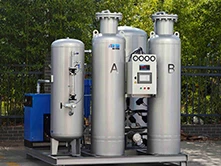



Application Technology Of Molecular Sieve in PSA Oxygen Generator
Apr 29, 2025
Leave a message
PSA oxygen generators produce oxygen based on the difference in oxygen and nitrogen adsorption rates of molecular sieves. They have the advantages of simple process, fast gas production, and low energy consumption, and are widely used in industrial and medical fields. As a key medium, the performance of molecular sieves directly affects the oxygen production effect, and research on their application technology is of great significance.

contents
1.PSA oxygen generators process flow
1.1 Classification of oxygen generator structure
1.2 Analysis of typical process flow
2. Types of molecular sieves for oxygen production and their preparation methods
2.1 Definition and structural basis of molecular sieves
2.2 Types of oxygen molecular sieves
1.PSA oxygen generators process flow
1.1 Classification of oxygen generator structure
PSA oxygen generators are generally divided into single-tower, double-tower, four-tower and multi-tower structures. The double-tower oxygen production process is relatively widely used because of its high oxygen production efficiency, good energy-saving effect, good oxygen supply stability, low cost and easy installation and use. The single-tower oxygen generator is suitable for intermittent or combustion-supported oxygen supply scenarios. The multi-tower oxygen generator has a relatively complex structure and is suitable for small-flow oxygen supply scenarios with space restrictions.
Nitrogen and oxygen are the main components of air. The adsorption capacity of nitrogen on zeolite molecular sieves is stronger than that of oxygen (nitrogen has a strong interaction with the surface ions of the molecular sieve). When air passes through an adsorption bed filled with zeolite molecular sieve adsorbent under pressure, nitrogen is adsorbed by the molecular sieve. Oxygen is enriched in the gas phase due to less adsorption and flows out of the adsorption bed, so that oxygen and nitrogen are separated to obtain oxygen. When the molecule adsorbs nitrogen to saturation, stop passing air and reduce the pressure of the adsorption bed. The nitrogen adsorbed by the molecular sieve is analyzed, and the molecule is regenerated and can be reused. Oxygen can be produced continuously by switching between two or more adsorption beds. However, since the adsorption performance of argon and oxygen is not much different, it is difficult to separate the two and they are enriched in the mixed gas phase, so that the oxygen purity obtained by the pressure swing adsorption oxygen generator is generally (93±3)%.
1.2 Analysis of typical process flow
Figure 1 is a commonly used energy-saving double-tower molecular sieve oxygen generator process flow, which includes a multi-stage filter, a cold dryer, an air buffer tank, a double-tower oxygen generator, an oxygen process tank and other components. The air provided by the air compressor enters the first group of filters for filtration, and then is dried by the cold dryer and filtered by the second group of filters, and enters the air storage tank. The air storage tank provides a pure gas source for the double-tower oxygen generator. The oxygen generator adopts a double-tower structure and uses the molecular sieve adsorption principle to prepare oxygen. The prepared oxygen enters the oxygen process tank from the top pipeline and is then supplied to the oxygen terminal through a flow meter, a solenoid valve, etc. The process in Figure 1 effectively purifies the air before separation by setting up a double set of filters and a cold dryer at the front end, removing impurities such as particles, water vapor, and oil in the air. The moisture content of the air after drying will be below 0.05 g/m³, which improves the nitrogen and oxygen separation efficiency of the molecular sieve in the later stage. A cycle working mode of A adsorption (B desorption) → AB equalization → A desorption (B adsorption) → B adsorption (A desorption) → BA equalization → B desorption (A adsorption) is formed between adsorption tower A and adsorption tower B, which effectively saves energy, reduces oxygen production costs, and produces oxygen with a purity of ≥ 90% (V/V).
2. Types of molecular sieves for oxygen production and their preparation methods
2.1 Definition and structural basis of molecular sieves
Molecular sieves refer to a synthetic or natural hydrated aluminosilicate (zeolite) with a chemical formula of (M'2M)O・Al2O3・xSiO2・yH2O, where M' and M represent monovalent or divalent cations. The substance is mainly composed of silicon dioxide-alumina through oxygen bridges to form an open skeleton structure. It is precisely because of the rich skeleton types inside the molecular sieve that the molecular sieve has efficient adsorption and catalytic properties, making it an important material in the technical fields of air separation equipment, environmental chemistry, etc. in recent years. There are many types of zeolites, among which 3A, 4A, 5A, X, and 13X are the most widely used zeolites.
2.2 Types of oxygen molecular sieves
As an important application field of molecular sieves, oxygen molecular sieves are mainly used in the pressure swing adsorption oxygen production process of pressurized adsorption and atmospheric desorption, which usually requires a high nitrogen adsorption capacity and an excellent nitrogen-oxygen separation coefficient. Commonly used oxygen-generating molecular sieves include 5A, X-type, 13X, Li-LSX, etc. Among them, X-type and 13X are sodium-based molecular sieves with the molecular formula of Na2O・Al2O3・2.45SiO2・6.0H2O, which is a sodium X-type aluminosilicate crystal.
| Types of Oxygen Generation Molecular Sieves | Particle Diameter (mm) | Static Water Adsorption (25°C, Saturated Salt Water, 24h) | Crushing Resistance (N) | Tap Density (g/mL) | Nitrogen-Oxygen Separation Coefficient [Adsorption Temperature (25±1) °C] | Abrasion Rate |
|---|---|---|---|---|---|---|
| Type X Molecular Sieve | 1.6~2.5 | ≥ 29.5% | ≥ 30 | ≥ 0.62 | ≥ 4.2 | ≤ 0.3% |
| 13X- Ⅲ Type Molecular Sieve | 1.6~2.5 | ≥ 30% | ≥ 25 | ≥ 0.65 | / | ≤ 0.3% |
| 13X Type Molecular Sieve | 1.6~2.5 | ≥ 25% | ≥ 22 | ≥ 0.63 | / | ≤ 0.3% |
| Li-LSX Type Molecular Sieve | 1.6~2.5 | ≥ 32% | ≥ 35 | ≥ 0.68 | ≥ 6.5 | ≤ 0.2% |
2.3 Preparation method of oxygen-generating molecular sieve
Hydrothermal synthesis method
The hydrothermal synthesis method is to mix alkali, aluminum oxide, silicon oxide, and water in a certain proportion and stir them evenly, then put them in a closed container, heat them with a hot water solution, and generate molecular sieves through steps such as nucleation, growth, and crystallization. The hydrothermal synthesis method is the most common method for preparing zeolite at present. Its advantage lies in the efficient dissolution of water, which can evenly dissolve the raw materials in water. The hydrothermal synthesis method can be divided into two categories according to the crystallization temperature: low temperature (25~150℃) and high temperature (>150℃).
Gas phase transfer method
The gas phase transfer method is a method for synthesizing zeolite molecular sieves and zeolite membranes. In this process, the reaction materials are first mixed to form an amorphous colloid, and then the colloid is placed in a special reactor. In a perforated sieve vessel, the organic amine and water in the liquid at the bottom of the reactor are not in contact with the solid reactants, but are heated at a specific temperature to form a zeolite molecular sieve or zeolite membrane. The gas phase transfer method is used to prepare molecular sieves, which has the advantages of solid-liquid phase separation, avoiding mutual contamination between the two systems, and recycling solvents. However, the operation process of this method is relatively cumbersome, the synthesis cycle is long, and it is easy to produce impurities. These problems limit its application in actual industrial production.
Ion thermal synthesis method
The ion thermal synthesis method uses ionic liquid as a solvent, mixes a variety of different reaction raw materials under specific conditions, and then reacts in a reactor to finally obtain a molecular sieve. This method has created a new way to synthesize phosphate zeolites. The advantage is that ionic liquids can be used as both solvents and structure-directing agents, which can be completed at room temperature. It also has the characteristics of high efficiency and safety. However, the ion thermal synthesis method has problems such as high synthesis energy consumption and immature process, and is still in the exploration stage.
Dry powder system synthesis method
This method adsorbs the template by stirring the reaction raw materials, then crystallizes at a specific temperature, and finally elutes and dries the product to obtain a molecular sieve. Compared with other methods, the dry powder synthesis method reduces the consumption of organic matter, so it can reduce costs and has a relatively small impact on the environment. However, there are still many problems in the preparation of molecular sieves, such as the selection of powder drying materials, the process and operation of powder drying reaction, etc., which require further in-depth research. This is the reason why large-scale industrial production has not yet been achieved.
After a period of use, molecular sieves will have problems such as long adsorption and analysis process, poor adsorption capacity, and insufficient analysis, which will lead to a decrease in oxygen purity and the molecular sieve will gradually fail and need to be replaced. Through practical comparative analysis, the failure principle of molecular sieves is usually caused by internal oil and water accumulation, as well as the pulverization of the molecular sieve itself; and the factors affecting the service life of molecular sieves mainly include the following four: ① The quality of the molecular sieve itself; ② The molecular sieve filling process; ③ The molecular sieve pressing device; ④ The purity of the gas entering the molecular sieve.
4. NEWTEK's technical strength and product advantages
As a world-leading high-tech gas system manufacturer, NEWTEK has made great achievements in the fields of oxygen, nitrogen, argon and other gas power generation devices and cylinder filling generators. With its deep experience in on-site gas generators and factory system construction, the company has successfully installed about 350 generators and factories around the world, demonstrating strong technical implementation capabilities and project execution capabilities.
Its core product lines cover multiple fields such as PSA/VPSA oxygen and nitrogen plants, low-temperature oxygen/nitrogen/argon plants, and its products have significant technical advantages. Taking PSA oxygen production equipment as an example, NEWTEK deeply integrates the cutting-edge application technology of molecular sieves and accurately selects models for different industry needs. For example, the oxygen production system customized for the medical industry uses Li-LSX lithium-based modified molecular sieves. With its ultra-high nitrogen-oxygen separation coefficient and nitrogen adsorption capacity, it can stably produce medical oxygen with a purity of ≥90%, meeting the strict clinical use standards; oxygen production equipment for the industrial field uses molecular sieve types suitable for different working conditions, taking into account oxygen production efficiency and energy consumption costs.
In the product design and manufacturing process, NEWTEK relies on advanced production processes and strict quality control systems to ensure stable and reliable equipment performance. Its equipment adopts an optimized double-tower oxygen production process, combined with an efficient air purification pretreatment system, to ensure the service life and oxygen production efficiency of the molecular sieve from the source. At the same time, the company attaches great importance to the personalized needs of users and provides a full range of customized services. From equipment scale, oxygen production purity to system integration solutions, they can be flexibly adjusted according to the actual needs of customers. Whether it is a small-flow oxygen supply scenario with limited space or large-scale industrial production needs, NEWTEK can provide a suitable solution and continue to empower global customers with technological innovation and professional services.