

 日本語
日本語 한국어
한국어 Français
 Deutsch
 Español
 Italiano
 Português
 Việt Nam
 Türkçe
 عربي
عربي  русский
  简体中文
简体中文 Čeština
 ไทย
ไทย Eesti
Eesti Gaeilgenah Éireann
 Bai Miaowen
 íslenska
 Cymraeg
 Български
 اردو
اردو Polski
 hrvatski
 українська
 bosanski
 فارسی
فارسی Lietuvių
 Latviešu
 עברית
עברית România limbi
 Ελληνικά
 dansk
dansk magyar
 Norsk
Norsk suomi
suomi Nederlands
 Svenska
 slovenčina
 slovenščina
 हिंदी
हिंदी Indonesia
 Melayu
 Malti
Malti Kreyòl Ayisyen
 Català
 বাংলা
বাংলা Srbija jezik (latinica)
 O'zbek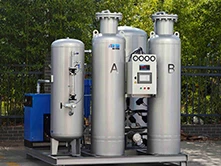


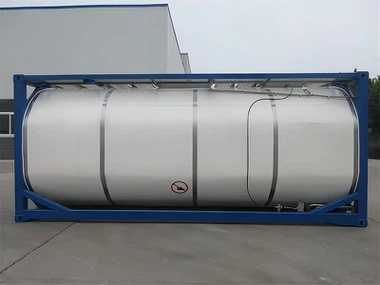

Air Separation Unit For Chemical
Apr 08, 2025
Leave a message
Cryogenic air separation technology has been successfully used for many years to provide oxygen for gasification of various hydrocarbon feedstocks to produce syngas for the production of fuels, chemicals, and other valuable products. Examples include the
conversion of liquid and solid waste from refineries to hydrogen for use inside refineries, as well as the co-production ofelectricity, and the growing interest in natural gas liquefaction processes that convert natural gas into synthetic crude oil, waxes and fuels. In recent years,in order to reduce equipment cost or improve efficiency, the combination of oxygen production process and downstream hydrocarbon processing plant has received more and more attention. Traditional and developing oxygen production processes and integrated schemes to improve the economy of these facilities are described.
Contents
1.Overview of Non-cryogenic Industrial Gas Processing Technology
1.1 Adsorption
1.2 Polymer membrane system
2.Low temperature industrial gas processing technology
2.1 Overview of cryogenic processing
2.2 Compression cycleCompression cycle
2.3 Pumping liquid cyclePumping liquid cycle
2.4 Low-pressure and high-pressure cycles
3.Comparison of process alternatives and technology improvements
4.Conclusion
1.Overview of Non-cryogenic Industrial Gas Processing Technology
1.1 Adsorption
The adsorption process is based on the ability of some natural and synthetic materials to preferentially adsorb nitrogen. In the case of zeolites, an inhomogeneous electric field exists in the void spaces of the material, resulting in the preferential adsorption of molecules that are more polarized, such as those with larger electrostatic quadrupole moments. Thus, in air separation, nitrogen molecules are more strongly adsorbed than oxygen or argon molecules. As air passes through a layer of zeolite material, the nitrogen is retained and an oxygen-rich stream leaves the zeolite layer. Carbon molecular sieves are of the same order of magnitude as air molecules. Since oxygen molecules are slightly smaller than nitrogen molecules, they diffuse into the cavities of the adsorbent more rapidly. Thus, carbon molecular sieves are selective for oxygen and molecular sieves are selective for nitrogen. Zeolites are commonly used in adsorption-based oxygen production processes. Compressed air is fed into a vessel containing the adsorbent. Nitrogen is adsorbed and an oxygen-rich wastewater stream is produced until the bed is saturated with nitrogen. At this point, the feed air is switched to a fresh vessel and regeneration of the first bed can begin. Regeneration can be achieved by heating the bed or reducing the bed pressure, thereby reducing the equilibrium nitrogen content of the adsorbent. Heating is usually referred to as temperature swing adsorption (TSA) and reducing the pressure is usually referred to as pressure swing or vacuum swing adsorption (PSA or VSA). Reduced pressure has a short cycle and is simple to operate, making it the preferred process for air separation plants. Process variations that affect operating efficiency include pretreatment of the air to remove water and carbon dioxide separately, multiple beds to allow pressure energy recovery during bed switching, and vacuum operation during reduced pressure. The system is optimized based on product flow, purity, pressure, energy consumption, and expected service life. Oxygen purity is typically 93% to 95% by volume.
1.2 Polymer membrane system
Membrane processes using polymeric materials are based on the differences in the diffusion rates of oxygen and nitrogen through a membrane that separates high-pressure and low-pressure process streams. Flux and selectivity are two properties that determine the economics of a membrane system, and both are functions of the specific membrane material. Membrane flux determines the surface area of the membrane and is a function of the pressure difference divided by the membrane thickness. The proportionality constant that varies with the type of membrane is called the permeability. Selectivity is the ratio of the permeabilities of the gases to be separated. Most membrane materials are more permeable to oxygen than to nitrogen due to the smaller size of the oxygen molecule. Membrane systems are generally limited to the production of oxygen-enriched air (25% to 50% oxygen). Active or facilitated transfer membranes contain an oxygen complexing agent to increase oxygen selectivity and are a potential method of increasing oxygen purity in membrane systems, assuming that membrane materials compatible with oxygen are also available. A major advantage of membrane separation is the simplicity of the process, its continuity, and its operation at near-ambient conditions. The blower provides sufficient head pressure to overcome the pressure drop across the filters, membrane tubes, and piping. Membrane materials are usually assembled into cylindrical modules that are linked together by multiple connections to provide the required production capacity. Oxygen permeates through the fibers (hollow fiber type) or through the sheets (spiral wound type) and is extracted as a product. A vacuum pump usually maintains the pressure differential across the membrane and delivers the oxygen at the required pressure. Carbon dioxide and water are usually present in the oxygen-enriched air product because they are more permeable than oxygen to most membrane materials. However, membrane systems are easily adapted to applications of up to 20 tons per day, where the purity of the air enriched with water and carbon dioxide contaminants can be tolerated. This technology is newer than adsorption or cryogenic technologies, and improvements in materials can make membranes more attractive for larger oxygen demands.

Best Air Separation Unit Manufacturers in China
Newtek is a high-tech company, focusing on the design and manufacture of gas system for oxygen, nitrogen, argon,acetylene, nitrous oxide and carbon dioxide power generation devices/cylinder filling generators. As one of the world's leading manufacturers with extensive experience in on-site gas generators and plant systems, around 350 plants have been installed worldwide. Our product line is very flexible and is constantly expanding to meet the needs of our customers.
2.Low temperature industrial gas processing technology
2.1 Overview of cryogenic processing
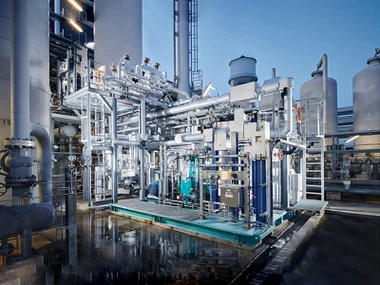
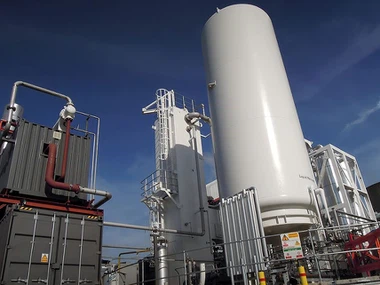
Cryogenic air separation technology is currently the most efficient and cost-effective technology for producing large quantities of gaseous or liquid oxygen, nitrogen, and argon. Air separation units (ASUs) use a conventional multi-column cryogenic distillation process to produce oxygen from compressed air at high recovery and purity. Cryogenic technology can also produce high-purity nitrogen as a useful byproduct stream at relatively low incremental cost. In addition, liquid argon, liquid oxygen, and liquid nitrogen can be added to the product slate for storage of product backup or byproduct sales at low incremental capital and electricity costs. Research continues on ways to increase the productivity of individual equipment trains as a means of reducing unit costs through economies of scale. Most equipment uses conventional electric motors to drive the equipment to compress air feed to the ASU, as well as oxygen and other product streams. It is noteworthy that IGCC facilities receive all of their air supply by extracting air from the gas turbines used in the combined cycle to produce electricity from coal synthesis gas.
2.2 Compression cycleCompression cycle
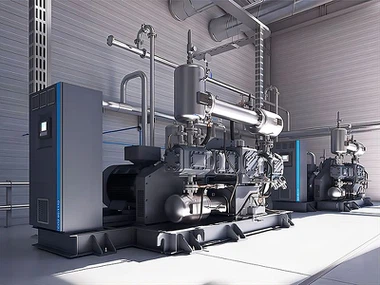
Air separation processes typically produce a gas product stream at slightly above atmospheric pressure and near ambient temperature. Typically the product oxygen leaves the main heat exchanger at low pressure, ranging from 3.5 to 70.0 MPa, and a centrifugal compressor train with a relatively high inlet volume flow rate delivers the product at the required pressure.
2.3 Pumping liquid cyclePumping liquid cycle
Liquid products can be taken from the cryogenic heat exchangers upstream of the distillation section for evaporation and heating. These products can be pumped to the desired delivery pressure or intermediate pressure. However, since the power required to produce liquid products from a distillation system is 2 to 3 times that of producing gaseous products, the cycle must be efficient in recovering the refrigerant contained in the pumped product stream. This is accomplished by condensing the evaporated product stream in the cryogenic heat exchanger against a high pressure air or nitrogen feed stream. The liquefied air or nitrogen feed is returned to the distillation section for refrigeration. Pumped liquid process cycles that pump product streams to an intermediate pressure at the outlet of the air separation unit are called partial pumped liquid cycles and require additional equipment to compress the product stream to the final delivery pressure. Full or partial pumping of the product streams adds another degree of freedom in optimizing the cryogenic cycle and can eliminate or reduce the size of the oxygen compressor.
2.4 Low-pressure And High-pressure Cycles
Low pressure (LP) air separation unit cycles are based on compressing the feed air only with the pressure requirement to reject the nitrogen byproduct at atmospheric pressure. Therefore, feed air pressures typically vary between 360 and 6 000 MPa, depending on oxygen purity and the desired level of energy efficiency. High-pressure ASU cycles produce product and byproduct streams at pressures well above atmospheric pressure, typically requiring smaller and more compact cryogenic components, which can save costs. EP cycles typically use feed air pressures in excess of 700 MPa. The EP cycle may be appropriate when all or nearly all of the nitrogen byproduct is compressed as a product stream. In addition, the EP cycle is often selected to integrate the ASU with other process units, such as gas turbines.


3.Comparison of process alternatives and technology improvements
Adsorption and polymer membrane processes will continue to improve in cost and energy efficiency through continued research and development of adsorbents and membrane materials. Neither technology is expected to challenge cryogenic technology in its ability to produce large quantities of oxygen, especially at higher purities. Both adsorption and membrane systems produce byproduct nitrogen that contains significant amounts of oxygen. If high purity nitrogen is required, additional deoxygenation or other purification systems must be employed to improve the nitrogen quality. Neither process can directly produce argon or noble gases. The production of liquid oxygen or nitrogen for system backup requires additional cryogenic equipment or product transport from plant equipment. On the other hand, adsorption and membrane processes are simpler and more passive than cryogenic technologies. Air extracted from the gas turbine compressor can partially or completely meet the feed requirements of the ASU. In a simple configuration, the ASU distillation pressure will set the extraction air pressure. If the extraction air flow is less than the total ASU required, an auxiliary air compressor will be used, whose discharge pressure will match the extraction air pressure. If the extracted air supply is approximately one-quarter of the total ASU demand, the ASU distillation pressure can be established independently and a pumped liquid process can be employed.
The high pressure extraction air boils pressurized liquid oxygen or nitrogen in the cryogenic heat exchange zone. The auxiliary compressed air supply sets the ASU distillation pressure.


In facilities using gas turbines, air may be extracted for a variety of reasons.
As feed to an air separation unit, as "exhaust" cooling air for the turbine itself, or other requirements for pressurized air within the facility. The extracted air contains valuable heat that can be recovered by boiling liquid at discrete temperature levels, or by sensible heat transfer to another liquid. One class of applications that utilizes recovered heat is solvent regeneration, which is a process that first performs a gas/liquid absorption step and then transfers heat to the liquid to desorb gaseous products or contaminants. This step possesses the property that Examples of processes that can benefit from this heat integration include, but are not limited to, the following unit operations that can be found in hydrocarbon gasification or hydrocarbon processing facilities. Regeneration of a liquid-based air pretreatment system as part of a cryogenic air separation unit. Liquid-based absorption steps to remove contaminants from air feed streams to air separation plants can benefit from extractive air heat recovery. In one embodiment, hot air is cooled relative to the liquid bottoms from an absorber column. The cooled air enters the column and contacts the liquid absorbent, where impurities in the air stream are absorbed into the liquid. The air-to-absorbent heating step desorbs the contaminants from the absorbent liquid, which is then returned to the absorbent column. The absorption system may include one or more fluids in several absorption steps to increase efficiency removal or use specific absorbents to remove specific impurities from the air stream. Absorbent regeneration may include heating from other sources, combined with heating to reduce pressure to desorb impurities. Heat from the extracted air may be recovered by indirect contact of the hot air with a process fluid, or by heat transfer from air to a working fluid such as steam or an inert gas. In this example, the high level of heat generated from the extracted air source is transferred to the nitrogen stream returning to the gas turbine. The extracted air is further cooled by contact with the absorber enriched bottoms used to pre-treat air feed to the ASU.
This heat transfer step can also be accomplished in other absorption systems within the POX or POX product work area of the plant. Depending on the solvent and absorption material, high level heat recovery steps may be eliminated and all of the extracted air heat used for absorber regeneration.
The CO2 can be processed and sold as a by-product, or used within the plant. An example is to return the CO2 to the gas turbine as an added diluent.
4.Conclusion
Cryogenic processes are currently the preferred method for supplying industrial gases to large facilities. Integration of heat, refrigeration, process and waste streams between industrial gas processes and other units throughout the facility can improve efficiency and reduce costs. Advanced heat integration concepts may facilitate the use of chemical or ITM processes in the future.