

 日本語
日本語 한국어
한국어 Français
 Deutsch
 Español
 Italiano
 Português
 Việt Nam
 Türkçe
 عربي
عربي  русский
  简体中文
简体中文 Čeština
 ไทย
ไทย Eesti
Eesti Gaeilgenah Éireann
 Bai Miaowen
 íslenska
 Cymraeg
 Български
 اردو
اردو Polski
 hrvatski
 українська
 bosanski
 فارسی
فارسی Lietuvių
 Latviešu
 עברית
עברית România limbi
 Ελληνικά
 dansk
dansk magyar
 Norsk
Norsk suomi
suomi Nederlands
 Svenska
 slovenčina
 slovenščina
 हिंदी
हिंदी Indonesia
 Melayu
 Malti
Malti Kreyòl Ayisyen
 Català
 বাংলা
বাংলা Srbija jezik (latinica)
 O'zbek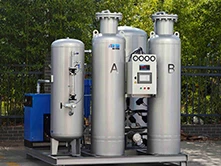
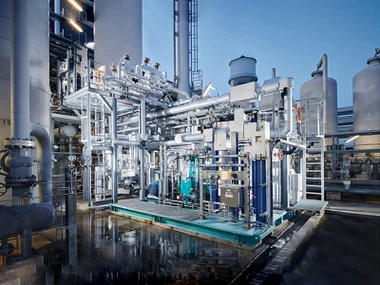
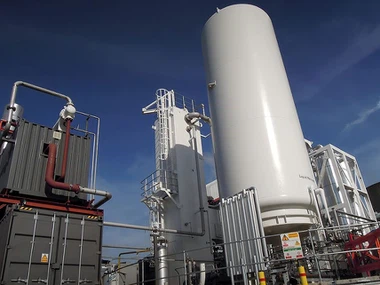


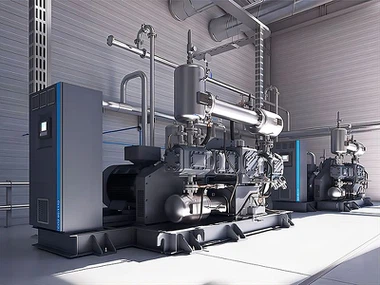
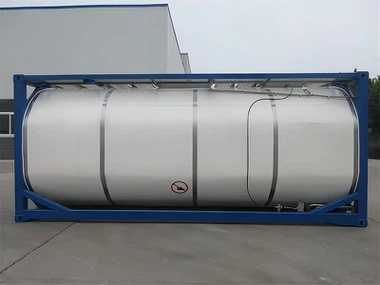


Industrial Liquid Oxygen Plant
Description
Technical Parameters
● High Purity Output:
Produces ultra-high-purity liquid oxygen, crucial for applications requiring minimal contamination.
● Efficiency:
Designed for energy-efficient operations, with advanced processes to minimize energy consumption.
● Scalability:
Available in various sizes to meet both small-scale and large-volume production demands.
● Reliability:
Robust and automated systems ensure 24/7 operation and minimal downtime for critical industries.
● Cost-Effectiveness:
Economical for high-volume production due to lower operational costs over time.
● Environmental Benefits:
Uses physical separation methods (no chemical additives) and can incorporate energy recovery systems to reduce the carbon footprint.

Liquid oxygen plants primarily use cryogenic air separation to produce liquid oxygen. The operating principle is as follows:
Air compression and cooling
Extracting oxygen from air requires compressing, purifying, and cooling it to a liquefiable state.
Cryogenic distillation
The cooled and liquefied air enters a distillation tower where, through multiple partial evaporation and condensation processes, the difference in boiling points between oxygen and nitrogen is exploited to separate them.
Oxygen extraction
The separated liquid oxygen is highly pure and stable and can be collected, pumped to a liquid oxygen pump, and then transported to liquid oxygen storage tanks.
Liquid oxygen storage and transportation
Because liquid oxygen easily vaporizes at room temperature, it must be stored in well-insulated cryogenic containers.
Why choose to cooperate with NEWTEK?
NEWTEK provides you with high-end liquid oxygen solutions!

✅Full Product Chain
Covers PSA/VPSA oxygen/nitrogen plants, air separation units, CO₂ equipment, plus gas compressors & ISO tanks – meeting diverse industrial gas needs.
✅One - stop &
End - to - end solutions (design → procurement → construction → operation) fix coordination issues, ensuring on - time delivery and low management costs.
✅ Proven Experience
World - class gas group with 9,000 + global systems; landmark air separation projects (51k Nm³/h in PH, 40k Nm³/h in Peru).
✅Authoritative Partnerships
Cooperates with leaders like Hangzhou Oxygen Plant , boosting solution reliability.
✅Low - Carbon Focus
Specializes in CCUS tech; offers green solutions to cut carbon and improve efficiency.
✅Worry - free Support
Comprehensive after - sales (service, parts) for stable system operation.
fAQ
1.What core technology does an industrial liquid oxygen plant rely on to produce liquid oxygen?
It mainly depends on air separation technology. First, ambient air is filtered, compressed, and cooled to remove impurities, moisture, and oil; then the treated air is liquefied by heat exchange with low-temperature return gas; finally, in the distillation tower, liquid oxygen and liquid nitrogen are separated by their boiling point differences (liquid nitrogen boils at -196℃, liquid oxygen at -183℃), and high-purity liquid oxygen is obtained at the bottom of the tower.
2.Which industries have high demand for the liquid oxygen produced by this equipment?
The liquid oxygen it produces is widely used in key industries. In metallurgy, it supports oxygen-enriched combustion in steelmaking to improve smelting efficiency; in chemicals, it acts as an oxidant for high-temperature reactions; in aerospace, it serves as a rocket propellant oxidizer; in medical care, it provides a stable oxygen source for large hospitals; it also aids efficient fuel combustion in the energy sector.
3.What are the key points to avoid safety risks during the operation of this device?
Safety operation focuses on three aspects. First, prevent leakage-leaked liquid oxygen will vaporize rapidly, causing low-temperature frostbite and increasing fire/explosion risks due to high oxygen concentration. Second, ensure the device's insulation and sealing are intact to avoid equipment damage or personnel injury from low temperatures. Third, regularly monitor pressure, temperature, and other parameters, and only allow professionally trained personnel to operate it in accordance with procedures.
4.How to optimize the production efficiency of this liquid oxygen production equipment?
Efficiency optimization can be achieved through four measures. Optimize the air compression and cooling system to enhance air processing speed; adjust the distillation tower's internal temperature, pressure, and reflux ratio to improve separation efficiency; conduct regular maintenance to avoid efficiency losses caused by component failures; and adopt advanced automatic control technology to real-time adjust the production process for optimal operation.
Hot Tags: industrial liquid oxygen plant, China industrial liquid oxygen plant , suppliers, factory, Liquid Oxygen Production Plant, liquid oxygen gas plant, liquid oxygen nitrogen plant, Liquid Oxygen Plant
Send Inquiry
Get in Touch
Write Your Message


