

 日本語
日本語 한국어
한국어 Français
 Deutsch
 Español
 Italiano
 Português
 Việt Nam
 Türkçe
 عربي
عربي  русский
  简体中文
简体中文 Čeština
 ไทย
ไทย Eesti
Eesti Gaeilgenah Éireann
 Bai Miaowen
 íslenska
 Cymraeg
 Български
 اردو
اردو Polski
 hrvatski
 українська
 bosanski
 فارسی
فارسی Lietuvių
 Latviešu
 עברית
עברית România limbi
 Ελληνικά
 dansk
dansk magyar
 Norsk
Norsk suomi
suomi Nederlands
 Svenska
 slovenčina
 slovenščina
 हिंदी
हिंदी Indonesia
 Melayu
 Malti
Malti Kreyòl Ayisyen
 Català
 বাংলা
বাংলা Srbija jezik (latinica)
 O'zbek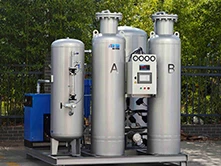



VPSA Oxygen Plant Process Description
Aug 05, 2023
Leave a message
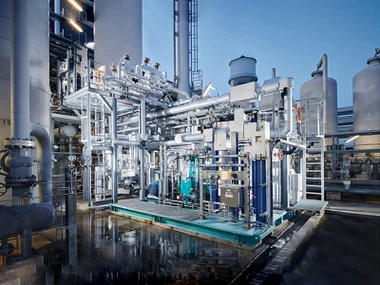
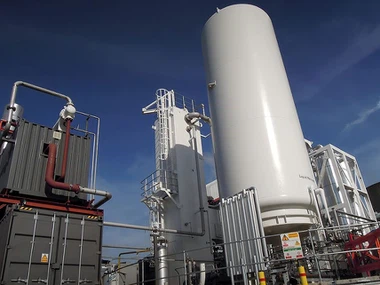
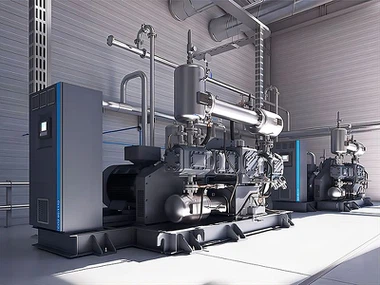
The VPSA oxygen producing system is mainly composed of blower, vacuum pump, switching valve, adsorber and oxygen balancing tank. After the dust particles are removed by the suction filter, the raw air is pressurized by the Roots blower to 0.3-0.5barg and enters one of the adsorbers. The adsorber is filled with adsorbent, in which water, carbon dioxide, and a small number of other gas components are adsorbed by activated alumina at the entrance of the adsorber, and then nitrogen is adsorbed by zeolite molecular sieve loaded on the upper part of activated alumina. Oxygen (including argon) is a non-adsorbent component and is discharged as product gas from the top outlet of the adsorber to the oxygen balancing tank.
When the adsorbent is absorbed to a certain extent, the adsorbent in it will reach a saturated state, and then the vacuum pump is used to vacuum it through the switching valve (opposite to the adsorption direction), and the vacuum degree is 0.65-0.75barg. Adsorbed water, carbon dioxide, nitrogen and a small amount of other gas components are extracted and discharged into the atmosphere, and the adsorbent is regenerated.
Each adsorber of VPSA performs the following steps alternately:
-- Adsorption -- desorption -- stamping
The above three basic process steps are automatically controlled by PLC and switching valve system.
VPSA type oxygen generator 1, energy consumption is relatively low. The higher the oxygen production, the lower the energy consumption. 2, low maintenance cost, dynamic equipment for Roots blower and Roots vacuum pump, because of its working principle are positive displacement, no oil, easy to maintain. 3, the whole equipment has a high degree of automation, the dynamic equipment and the oxygen generator are synchronous control, just press the start button, the whole equipment can operate normally. 4, suitable for medium and large output.