

 日本語
日本語 한국어
한국어 Français
 Deutsch
 Español
 Italiano
 Português
 Việt Nam
 Türkçe
 عربي
عربي  русский
  简体中文
简体中文 Čeština
 ไทย
ไทย Eesti
Eesti Gaeilgenah Éireann
 Bai Miaowen
 íslenska
 Cymraeg
 Български
 اردو
اردو Polski
 hrvatski
 українська
 bosanski
 فارسی
فارسی Lietuvių
 Latviešu
 עברית
עברית România limbi
 Ελληνικά
 dansk
dansk magyar
 Norsk
Norsk suomi
suomi Nederlands
 Svenska
 slovenčina
 slovenščina
 हिंदी
हिंदी Indonesia
 Melayu
 Malti
Malti Kreyòl Ayisyen
 Català
 বাংলা
বাংলা Srbija jezik (latinica)
 O'zbek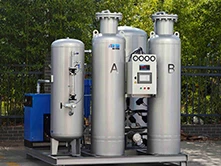


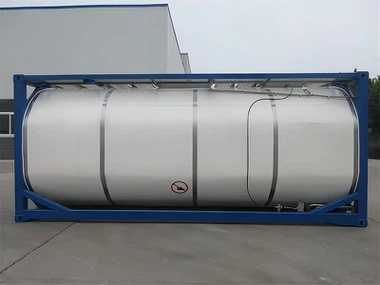

VPSA Oxygen Generator Vs. VPSA Oxygen Plant
Feb 15, 2025
Leave a message
In the industrial and medical oxygen supply sector, VPSA (Vacuum Pressure Swing Adsorption) technology has become a cornerstone for on-site oxygen generation. However, the terms VPSA Oxygen Generator and VPSA Oxygen Plant are often used interchangeably, leading to confusion. This article clarifies their differences in design, capacity, applications, and operational requirements, helping businesses and institutions make informed decisions.
1. Scale and Oxygen Output
VPSA Oxygen Generator
Output Range: Designed for small to medium-scale production, typically generating 1–50 Nm³/h (normal cubic meters per hour).
Applications: Ideal for localized or intermittent demand:
Medical oxygen supply (hospitals, clinics).
Small-scale industries (welding, water treatment).
Laboratories and emergency backup systems.
VPSA Oxygen Plant
Output Range: Built for large-scale, continuous production, delivering 100–10,000+ Nm³/h.
Applications: Suited for heavy industries requiring bulk oxygen:
Steelmaking (blast furnace enrichment).
Chemical processing (ethylene oxidation, methanol production).
Glass manufacturing and pulp/paper industries.
2. System Complexity and Integration
VPSA Oxygen Generator
Design: Compact, modular units focused on core oxygen generation.
May exclude auxiliary systems (e.g., storage, advanced compression).
Simplified installation with plug-and-play functionality.
Purity: Typically delivers 90–95% oxygen purity, sufficient for non-critical applications.
VPSA Oxygen Plant
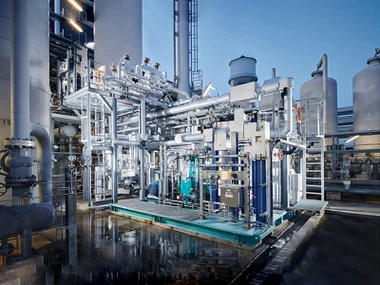
Design: Fully integrated industrial facility with subsystems:
Air pretreatment (filtration, drying).
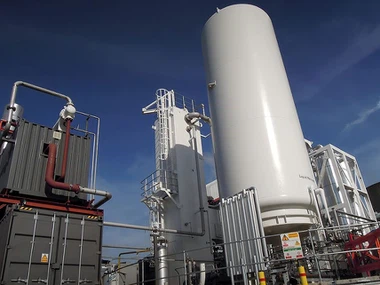
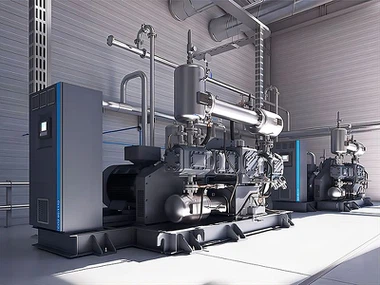
Oxygen compression, liquefaction, and storage tanks.
Advanced automation (PLC/SCADA controls, real-time monitoring).
Purity: Customizable to achieve ≥95% purity, meeting stringent industrial standards.
3. Infrastructure and Operational Needs
VPSA Oxygen Generator
Space: Requires minimal footprint, suitable for confined spaces.
Power: Lower energy consumption due to smaller scale.
Maintenance: Simplified upkeep with standardized components.
VPSA Oxygen Plant
Space: Demands dedicated infrastructure (e.g., industrial buildings, pipelines).
Power: High-voltage supply and energy-intensive operations.
Maintenance: Requires specialized technicians for optimization and troubleshooting.
4. Cost Considerations
| Factor | VPSA Oxygen Generator | VPSA Oxygen Plant |
|---|---|---|
| Initial Investment | Lower (50k–50k–500k) | Higher (1M–1M–20M+) |
| Operational Cost | Moderate (scales with usage) | High upfront, but lower per-unit cost at scale |
| ROI Timeline | Shorter (1–3 years) | Longer (3–7 years) |
5. Application Comparison
| Scenario | VPSA Generator | VPSA Plant |
|---|---|---|
| Medical Facilities | ✔️ Primary/backup supply | ❌ Overcapacity |
| Small Workshops | ✔️ Cost-effective solution | ❌ Impractical |
| Metallurgy/Chemicals | ❌ Insufficient output | ✔️ Critical for production |
| Emergency Oxygen | ✔️ Rapid deployment | ❌ Infrastructure limitations |
How to Choose Between Them?
Assess Demand: Calculate daily/hourly oxygen requirements.
Purity Needs: Determine if ≥95% purity is mandatory (e.g., for ozone generation).
Budget: Balance upfront costs against long-term savings.
Space: Evaluate installation feasibility (generators suit urban/remote areas).
FAQ 1: How do I decide whether a VPSA Oxygen Generator or Plant is better for my needs?
Answer:
Assess your oxygen demand:
<100 Nm³/h: Choose a VPSA Oxygen Generator (e.g., hospitals, small workshops).
>100 Nm³/h: Opt for a VPSA Oxygen Plant (e.g., steel mills, chemical plants).
Consider future scalability:
Generators are modular and can be combined for incremental capacity.
Plants are designed for fixed large-scale output; expansion may require additional units.
Budget constraints:
Generators have lower upfront costs but higher per-unit oxygen costs.
Plants require significant capital but offer economies of scale for long-term use.
FAQ 2: What are the maintenance requirements for each system?
Answer:
VPSA Oxygen Generator:
Routine tasks: Filter replacements, adsorbent checks (every 6–12 months).
Downtime: Minimal; most components are standardized and easy to replace.
Cost: Annual maintenance typically costs 3–5% of the initial investment.
VPSA Oxygen Plant:
Complex upkeep: Requires trained technicians for compressor servicing, valve calibration, and purity monitoring.
Downtime risk: Higher due to system complexity; preventive maintenance is critical.
Cost: Maintenance ranges from 5–10% of initial investment annually, depending on automation levels.
FAQ 3: Can these systems be customized for specific purity or pressure requirements?
Answer:
VPSA Oxygen Generator:
Purity: Most units deliver 90–95% O₂, suitable for medical or general industrial use.
Pressure: Standard output is 3–5 bar; optional boosters can increase pressure (e.g., for cylinder filling).
Customization limits: Limited to add-ons like IoT monitoring or compact designs.
VPSA Oxygen Plant:
Purity: Can be tailored to ≥95–99% for specialized applications (e.g., ozone generation, electronics manufacturing).
Pressure: Supports 10–30 bar with integrated multi-stage compressors.
Full customization: Plants are often engineered to client specs, including integration with existing pipelines or liquefaction units.
While both VPSA Oxygen Generators and VPSA Oxygen Plants leverage the same adsorption technology, their differences lie in scale, integration, and operational scope. Generators excel in flexibility and affordability for small to mid-sized users, whereas plants dominate in heavy industries requiring massive, uninterrupted oxygen flows. By aligning your choice with production needs, purity standards, and budget, you can optimize efficiency and ROI.
Keywords: VPSA Oxygen Generator vs. Plant, VPSA oxygen production, industrial oxygen systems, medical oxygen generator, VPSA technology comparison.