

 日本語
日本語 한국어
한국어 Français
 Deutsch
 Español
 Italiano
 Português
 Việt Nam
 Türkçe
 عربي
عربي  русский
  简体中文
简体中文 Čeština
 ไทย
ไทย Eesti
Eesti Gaeilgenah Éireann
 Bai Miaowen
 íslenska
 Cymraeg
 Български
 اردو
اردو Polski
 hrvatski
 українська
 bosanski
 فارسی
فارسی Lietuvių
 Latviešu
 עברית
עברית România limbi
 Ελληνικά
 dansk
dansk magyar
 Norsk
Norsk suomi
suomi Nederlands
 Svenska
 slovenčina
 slovenščina
 हिंदी
हिंदी Indonesia
 Melayu
 Malti
Malti Kreyòl Ayisyen
 Català
 বাংলা
বাংলা Srbija jezik (latinica)
 O'zbek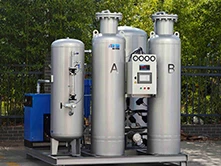


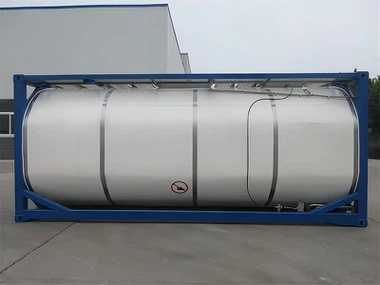

Cryogenic Air Separation Vs PSA: Which Technology Fits Your Gas Needs?
Dec 25, 2025
Leave a message

In the evolving landscape of industrial gas applications-from steel manufacturing and electronics to medical oxygen and hydrogen energy-efficient on-site gas separation is becoming increasingly crucial. Among the various gas generation technologies, two have emerged as mainstream choices: Cryogenic Air Separation Units (ASU) and Pressure Swing Adsorption (PSA) systems. Each offers distinct technical strengths and fits different operational contexts, particularly when it comes to separating oxygen and nitrogen.
As a global high-end gas solution provider, NEWTEK specializes in both cryogenic air separation and PSA oxygen systems, with over 9,000 systems installed worldwide. This article aims to demystify the question: Which technology is right for your gas needs? By comparing cryogenic ASUs and PSA systems across five core dimensions-purity, capacity, energy efficiency, footprint, and flexibility-we address the core concerns of engineering teams, project investors, and industrial gas planners.
Whether you're operating a steel plant requiring 99.999% oxygen or managing a packaging line that needs flexible mid-purity nitrogen, understanding the trade-offs between PSA and cryogenic separation can help you avoid overinvestment, underperformance, or design mismatch. Let's break down the science, economics, and real-world fit of both technologies-backed by NEWTEK's global project experience-to guide your next decision.
Overview of the Two Technologies
In modern industrial gas supply, choosing the right separation technology is crucial for controlling costs, ensuring gas quality, and maintaining system stability. The two mainstream oxygen/nitrogen technologies are Cryogenic Air Separation (ASU) and Pressure Swing Adsorption (PSA). They are based on different physical principles and are suitable for different application scenarios-both of which are core offerings of NEWTEK .
Cryogenic Air Separation

Working Principle
Cryogenic Air Separation technology relies on the difference in boiling points of different gases in the air. It cools air to -180°C or lower, liquefies it, and feeds the liquid air into a distillation column for fractionation to separate high-purity oxygen, nitrogen, argon, and other gases. This is the core technology behind NEWTEK's large-scale projects, such as the 4x40000Nm³/h ASU in Peru and the 51000Nm³/h system in the Philippines.
Core Features
Oxygen purity can reach ≥99.5%, nitrogen ≥99.999%, and argon can be co-produced.
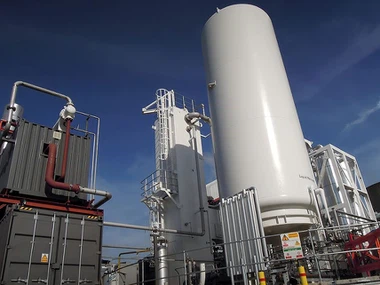
System integrates compressors, cold boxes, heat exchangers, distillation towers, and liquid storage tanks-engineered for long-term stability.
Optimized for large-scale, continuous gas demand with energy-efficient designs (as demonstrated in NEWTEK's 45,000m³/h ASU energy optimization project).
Typical Application Scenarios
Iron and Steel Metallurgy: Oxygen blowing and refining (NEWTEK's Peru project supports large-scale steel production).
Large-Scale Chemical Industry: Raw material gas and protective gas supply.
Power Plants: Oxygen fueling for cleaner combustion.
Gas Companies: Bottled or liquid gas sales (leveraging NEWTEK's cryogenic liquefaction capabilities).
✅ Technical highlights: High output, high purity, multi-gas co-production, energy-efficient at scale.❌ Limitations: Higher initial investment, longer start-up time, less suitable for frequent load adjustments.
PSA (Pressure Swing Adsorption)

Working Principle
PSA utilizes the difference in adsorption capacity of molecular sieve materials (e.g., carbon molecular sieve, Zeolite 13X) for different gases under high pressure. It directionally adsorbs a specific component in air (e.g., nitrogen or oxygen) at high pressure, while other gases are output. When pressure decreases, the adsorbed gas is released, and the molecular sieve is regenerated-enabling continuous operation.
Core Features
Oxygen purity typically ranges from 90% to 95%; nitrogen purity from 95% to 99.5%.
Adopts dual-tower alternating operation for stable adsorption and regeneration cycles.
Modular, skid-mounted design for rapid deployment (a key advantage of NEWTEK's PSA systems for medical and small-scale industrial use).
Typical Application Scenarios
Medical Institutions: Oxygen supply systems for government hospitals (as deployed by NEWTEK in the Philippines).
Food Industry: Nitrogen preservation and packaging.
Metal Processing: Laser cutting oxygen supply.
Laboratories, Breeding, and Ozone Generators: Small to medium flow oxygen/nitrogen demand.
✅ Technical highlights: Fast start-up (minutes), low energy consumption, compact footprint, easy maintenance.❌ Limitations: Cannot produce high-purity argon, gas purity limited by adsorption selectivity.
| Technology Direction | Gas Type | Oxygen/Nitrogen Purity | Start-up Time | Applicable Scenarios | Scalability | Energy Consumption |
|---|---|---|---|---|---|---|
| Cryogenic Air Separation | Oxygen, Nitrogen, Argon | ≥99.5% (oxygen); ≥99.999% (nitrogen) | Hours | Large industrial sites | One-time design with high capacity | High overall, low unit cost at scale |
| PSA Adsorption | Oxygen, Nitrogen | 90-95% (oxygen); 95-99.5% (nitrogen) | Minutes | Distributed/small and medium-sized factories | Modular expansion | Low, energy-efficient for small to medium capacities |
Comparison Criteria
The process of choosing a gas separation technology is essentially a weighing of multi-dimensional factors such as purity requirements, production scale, operation and maintenance difficulty, and economics. Below is a comparative analysis of Cryogenic Air Separation and PSA from five core dimensions-enhanced with insights from NEWTEK's global project experience.
Gas Purity & Type of Gases Produced
Cryogenic Air Separation
Technical advantage lies in ultra-high purity separation: Oxygen ≥99.5%, nitrogen ≥99.999%, and co-producible argon (used in welding and rare gas recovery).
Ideal for scenarios requiring high purity and multi-gas co-production, such as electronic grade manufacturing, high-end steel refining, and chemical synthesis-all key markets for NEWTEK.
PSA Adsorption
Oxygen purity: 90-95%; nitrogen purity: 95-99.5%; cannot separate argon.
Suitable for industries with medium purity requirements but high stability demands, such as food encapsulation, medical oxygen supply, and ozone systems-fields where NEWTEK's modular PSA systems excel.
Summary
Choose Cryogenic if you need ultra-high purity gases or argon co-production (e.g., large steel mills or chemical parks).
Choose PSA for cost-effective continuous supply of single medium-to-high purity gases (e.g., hospitals or small manufacturing plants).
Production Capacity
Cryogenic Air Separation
Starting capacity: ≥500 Nm³/h, scalable to 100,000 Nm³/h (NEWTEK's Peru 4x40000Nm³/h project is a prime example).
Customized projects suitable for oxygen stations, iron and steel mills, and large chemical parks.
PSA Adsorption
Starting capacity: Flexible, from 10 Nm³/h to 500 Nm³/h.
Modular structure supports multi-point distribution and on-demand deployment-ideal for hospitals, laboratories, and mobile oxygen supply (NEWTEK's Philippine medical oxygen systems use this design).
Summary
Cryogenic: For large-scale gas production and centralized gas supply.
PSA: For flexible capacity expansion and point-to-point applications.
Energy Efficiency & Operational Costs
Cryogenic Air Separation
Higher initial investment (customized projects), but under large-scale operation, unit gas energy consumption (kWh/Nm³) decreases-delivering economic advantages.
NEWTEK's energy optimization for 45,000m³/h ASUs achieved measurable reductions in steam consumption and compressor load, enhancing long-term cost-effectiveness.
PSA Adsorption
Lower initial investment and operating costs, often equipped with inverter compressors for energy savings.
Simple system, easy maintenance, and low failure rate-suitable for "less manned" scenarios (a key benefit highlighted by NEWTEK's long-term clients).
Summary
Choose Cryogenic for long-term bulk gas supply cost savings.
Choose PSA for flexible energy consumption control and low maintenance requirements.
Footprint & Installation Complexity
Cryogenic Air Separation
System includes cold boxes, distillation towers, and liquid storage tanks-requires a larger footprint.
Longer infrastructure construction cycle but designed for permanent, large-scale operations (e.g., NEWTEK's Ghana 30000Nm³/h project).
PSA Adsorption
Integrated cabinet or skid-mounted module design, compact footprint.
Short installation cycle (operational within 1 week) with no special foundation required-ideal for space-constrained sites (NEWTEK's modular PSA systems support rapid deployment).
Summary
Cryogenic: Suitable for projects with fixed plants and sufficient infrastructure.
PSA: Preferred for space-restricted sites or projects needing rapid/mobile deployment.
System Flexibility & Scalability
Cryogenic Air Separation
Slow response to load changes; not ideal for frequent start/stop or flow adjustments.
Requires ≥24 hours of stable operation to reach peak efficiency-suited for continuous, large-scale production.
PSA Adsorption
Supports automatic frequency conversion and graded operation.
Flexible capacity expansion via modular addition; easy integration with SCADA/remote control systems (NEWTEK's intelligent PSA solutions offer real-time monitoring).
Summary
Choose Cryogenic for stable, continuous operation and long-term projects.
Choose PSA if gas load fluctuates significantly or staged operation is needed.
Technology Comparison Table
| Comparison Dimensions | Cryogenic Air Separation | PSA Pressure Swing Adsorption |
|---|---|---|
| Gas Purity | Oxygen ≥99.5%, Nitrogen ≥99.999%, co-producible argon | Oxygen 90-95%, Nitrogen 95-99.5%, no argon |
| Individual Unit Capacity | ≥500 Nm³/h (scalable to 100,000 Nm³/h) | 10-500 Nm³/h (flexible configurations) |
| Initial Investment | High (customized + civil + cold box system) | Medium (skid-mounted, ready-to-use) |
| Operational Energy Consumption | Low unit cost for large production (optimized by NEWTEK) | More energy-efficient at small and medium capacities |
| Footprint and Construction | Large system, long cycle | Modular, small footprint, rapidly deployable |
| Control and Expansion | High stability, slow response | Dynamic operation, AI-compatible, easy expansion |
Application Scenarios and Industry Fit
When choosing oxygen/nitrogen separation technology, industrial users must combine actual application scenarios and industry characteristics. Below is a summary of typical industry suitability for both technologies-backed by NEWTEK's global project experience.
Industries Suitable for Cryogenic Air Separation
Cryogenic air separation is ideal for heavy industries requiring large-scale stable gas supply or ultra-high purity, leveraging its high output, multi-gas co-production capabilities:
| Industry Scenarios | Application Notes | Core Requirements |
|---|---|---|
| Iron and Steel Smelters | Blast furnace blowing, converter oxygenation, steel decarburization | Continuous supply of high-flow oxygen (≥5000Nm³/h) |
| Liquid Gas Suppliers | Liquid oxygen, liquid nitrogen, liquid argon filling, transportation, and sales | Ability to produce liquefied gases for storage and transportation |
| Aerospace | Oxygen combustion support, ultra-high purity nitrogen encapsulation | Nitrogen purity ≥99.999%, stable performance |
| Petrochemicals | Refinery crackers, hydrogen-oxygen combustion processes | Stable co-production of multiple gases |
| Large Chemical Parks | Regional centralized gas supply | Uniform gas distribution for multiple users, cost sensitivity |
Industries Suitable for PSA Technology
PSA technology is widely used in small and medium-sized enterprises, experimental scenarios, or flexible deployments due to its modularity, miniaturization, and low energy consumption:
| Industry Scenarios | Application Notes | Core Requirements |
|---|---|---|
| Medical Institutions, ICU Wards | Medical-grade oxygen supply, on-site oxygen stations | Stable oxygen supply, high safety, 24/7 operation (NEWTEK's Philippine government hospital projects) |
| Nitrogen-Filled Food Packaging | Nitrogen filling to prevent oxidation and preserve freshness | Nitrogen purity ≥99%, excellent stability |
| Laser Cutting, Welding Workshops | Oxygen for high-precision metal processing | Medium oxygen flow rate, fast response, stable purity |
| Aquaculture, Ozone Generators | Water oxygenation, ozone reaction source | Oxygen ≥93%, small size, continuous operation |
| Laboratories, Universities, Scientific Research | Nitrogen/oxygen for experimental analysis and reactions | Medium-low flow rate, precise control, compact footprint |
Technology and Scenario Matching Comparison Table
| Industry Type | Recommended Technologies | Reason Analysis |
|---|---|---|
| Steel/Chemical/Power | Cryogenic Air Separation | High purity + high flow rate + multi-gas co-production |
| Medical Oxygen | PSA | ≥93% stable oxygen supply, no liquid oxygen transportation required |
| Food Packaging | PSA | Flexible deployment, fast start-up, energy savings |
| Gas Filling | Cryogenic | Can produce liquefied gases, suitable for filling, storage, and transportation |
| Laboratory | PSA | High control precision, small footprint, easy maintenance |
| Gas Suppliers | Cryogenic | Oxygen/nitrogen/argon triple production, suitable for bulk sales |
Hybrid Solutions and Emerging Trends
As industrial scenarios demand greater balance between purity, flexibility, and cost, single technology models (Cryogenic or PSA alone) are increasingly insufficient. More gas systems are evolving into "hybrid models" that integrate the advantages of different technologies-an area where NEWTEK leads with innovative solutions.
Cryogenic + PSA Combined Gas Supply System: Combining High Purity and Flexibility
Application Background
In large-scale parks (steel, power, chemical), some equipment (e.g., converters, blast furnaces) requires high-purity oxygen, while other processes only need 90-93% medium-purity oxygen.
Technical Solution
Cryogenic air separation mainframe (e.g., NEWTEK's 4x40000Nm³/h system) produces high-purity oxygen for key production.
PSA serves as a "distributed auxiliary unit" to flexibly supplement regional or medium-purity demand.
PLC-based centralized management and pipeline network scheduling enable "ladder oxygen supply."
Advantages
Reduces load and energy consumption of the cryogenic mainframe (building on NEWTEK's energy optimization expertise).
PSA's quick start/stop adapts to fluctuating gas consumption.
Single system meets multi-level purity requirements, improving overall energy utilization.
Typical Applications
Metallurgical parks, regional gas centers, urban centralized oxygen supply pipeline networks.
PSA + Membrane Separation/TSA Technology Combination Trend
Technology Integration Logic
Membrane Separation + PSA: Membrane systems initially enrich nitrogen/oxygen (purity up to 90-95%), then PSA performs deep purification to 99.5%-99.999%-ideal for electronics, bottled gas stations.
TSA + PSA (Temperature Swing Adsorption + Pressure Swing Adsorption): TSA focuses on drying/impurity removal, while PSA completes gas separation-suited for humid, high-dust, or corrosive environments.
Advantageous Analysis
Multi-stage separation reduces PSA load and enhances efficiency/purity.
Improves system adaptability and extends core component lifespan (aligning with NEWTEK's focus on long-term operational stability).
Suitable Users
Fine chemicals, semiconductor plants, bottled gas processing enterprises.
Evolution of Small Air Separation Modular Equipment
Market Pain Points
Traditional air separation systems are large and have long deployment cycles, making them inaccessible to medium-sized industrial sites (e.g., glass factories, fertilizer plants consuming <2,000 tons of oxygen per year).
Development Trend
Highly integrated modular skid design (occupies <10m²) for continuous output of 95-99.5% oxygen.
Parallel module connection for capacity expansion, easy maintenance, and replacement-developed by NEWTEK to serve medium-sized users.
Practical Value
Expands high-purity oxygen access for medium-sized users.
Reduces civil construction and deployment time.
Lowers initial investment and later maintenance thresholds.
Typical Applications
Medium-sized glass plants, ozone generator manufacturers, precision welding sites.
Mixed Trend Value Overview
| Hybrid Technology Path | Solving Pain Points | Scenarios |
|---|---|---|
| Cryogenic + PSA | High Purity + Flexible Adjustment | District gas supply, steel parks |
| Membrane + PSA / TSA + PSA | High-Efficiency Purification, Moisture/Corrosion Resistance | Semiconductors, bottled oxygen, tropical humid zones |
| Modular Air Separation + PSA | Lack of Pipeline Networks, High Purity Requirements | Medium-sized manufacturing plants, remote sites |
Conclusion
When selecting between cryogenic air separation and PSA technology, the decision ultimately depends on your gas purity requirements, consumption scale, operating flexibility, and project budget. Cryogenic ASU is unmatched in ultra-high purity (>99.5%) and large-volume output, making it the ideal solution for steel plants, industrial parks, and gas suppliers serving multiple users-exemplified by NEWTEK's large-scale projects in Peru, Ghana, and beyond.
PSA, on the other hand, is favored for its cost-efficiency, compact footprint, quick start-up, and ease of automation-perfect for small-to-medium-scale users in food packaging, laser cutting, and decentralized medical oxygen supply. NEWTEK's modular PSA systems have been trusted by government hospitals and small enterprises worldwide for their reliability and flexibility.
For businesses seeking tailored oxygen or nitrogen generation systems, NEWTEK offers a full portfolio of cryogenic, PSA, and hybrid gas solutions that balance performance and cost. Our systems feature modular design, PLC-based intelligent control, and energy-efficient components-backed by over 9,000 installed systems and a commitment to sustainability (including CCUS integration for low-carbon operations).
Whether you need high-purity oxygen for metallurgy, energy-saving PSA for packaging lines, or a hybrid system for multi-scenario use, NEWTEK's engineering team is ready to help you deploy the right technology-securely, sustainably, and at scale. Join hands with NEWTEK to make wonders in your gas supply journey.